In the modern digital landscape, the tech industry frequently obsesses over the "how"—the technical frameworks, the aesthetic trends, and the deployment pipelines. However, in this rush to innovate, the industry often overlooks the "why." Digital accessibility is not merely a checklist of technical standards or a defensive measure against litigation; it is the fundamental commitment to providing an "equivalent experience" for every user, regardless of their device, physical ability, or cognitive approach to technology.
An equivalent experience is defined as an interaction that has been deliberately conceived and built to be usable by the widest possible range of people. It is not about providing a "special" version of a site for users with disabilities, but about ensuring that the intent of a digital product—the core motivation behind a website or application—is accessible to all.
The State of Things: Design Biases and the "Default" User
Despite living in a multi-device era defined by smartphones, augmented reality, voice assistants, and IoT, the industry remains shackled to a narrow, biased perspective of the "default" user. Many design and development workflows are still built by individuals who assume their own physical and cognitive circumstances represent the norm.
This bias manifests in products that perform flawlessly on a developer’s high-end laptop but fail under the constraints of different browsers, smaller viewports, or assistive technologies. When a developer says, "It works on my machine," they are ignoring the reality that they are not the only, or even the primary, audience for their work.
At its core, delivering an equivalent experience is about preserving intent. If a website is designed to allow a user to purchase a product or access a government service, that intent must be fulfillable by anyone. When a design prevents a user from zooming in on text, or when it forces a mobile user to pinch-and-pan across a non-responsive desktop site, the product is communicating a clear, if unintentional, message: You are not a priority.
Chronology: From Legal Precedent to Digital Rights
The conversation surrounding digital accessibility has evolved from a "best practice" recommendation to a critical civil rights issue.
- 1990: The Americans with Disabilities Act (ADA) is signed into law, establishing foundational protections for people with disabilities in the physical world.
- 2010s: As the web becomes the primary interface for essential services, the legal debate shifts toward whether websites constitute "places of public accommodation."
- 2017: In a landmark ruling, a federal court found the grocer Winn-Dixie in violation of the ADA because its website was not accessible to a blind user. This solidified the precedent that digital and physical storefronts are inextricably linked.
- 2019: The U.S. Supreme Court declined to hear an appeal from Domino’s Pizza, leaving in place a lower court ruling that the pizza chain’s inaccessible app violated the ADA. This effectively cemented the reality that failing to provide an accessible digital experience is a significant legal liability.
Today, these precedents are echoed in similar regulations across Europe and Asia, signaling a global shift toward viewing digital access as a fundamental human right rather than an optional feature.
The "Rube Goldberg" Effect: Accessible vs. Equivalent
A critical distinction must be made: an experience that is technically accessible is not always an equivalent one.
Consider a Rube Goldberg machine designed to pass a pepper shaker. It is a convoluted, inefficient, and fragile system that technically achieves the goal, but at a massive cost of time and effort. Many digital experiences function the same way for users with disabilities. While a screen reader user might eventually find a way to navigate a poorly coded site by jumping through hoops, the "cost of entry" is vastly higher than it is for a sighted, non-disabled user.

This "chilling effect" is profound. When a user is forced to expend extra physical or mental energy simply to perform a basic task, they are being taxed for their disability. This often leads to "internalization," where the user blames their own perceived failure rather than the system’s poor design, eventually leading them to abandon the platform entirely.
Supporting Data: The High Cost of Exclusion
The economic argument for accessibility is as compelling as the moral one. Industry reports suggest that businesses are leaving billions of dollars on the table by ignoring the needs of disabled users.
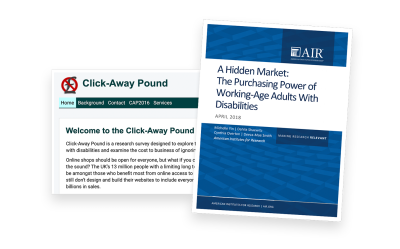
- The Click Away Pound Survey: This research highlighted that over 4 million people in the UK alone abandoned retail websites due to accessibility barriers, representing a loss of approximately 17.1 billion pounds (roughly $21.1 billion USD).
- Purchasing Power: A 2018 report by the American Institutes for Research found that working-age adults with disabilities possess an estimated $490 billion in disposable income.
When companies ignore accessibility, they are essentially shutting the door on a massive, loyal, and economically active consumer base. Furthermore, as more essential services—from grocery delivery to employment portals—move online, the lack of an equivalent experience creates a "digital divide" that prevents people from participating fully in society.

Official Responses and Industry Accountability
The response from many organizations when confronted with accessibility bugs is often one of dismissal. Common excuses include "nobody has complained before" or "it’s too expensive to fix."
However, experts in the disability community point out that "nobody complained" is a fallacy; users simply leave. When users do report issues, they are often shunted to departments—like marketing or support—that lack the technical authority to initiate a fix. This lack of urgency is a systemic failure.
To build an equivalent experience, organizations must adopt a transparent and reactive posture:
- Acknowledge and Validate: Treat accessibility reports with the same severity as critical security vulnerabilities.
- Commit to Transparency: Communicate clearly about the timeline for fixes.
- Empower Teams: Ensure that developers and designers are equipped with the training and tools necessary to maintain accessibility.
Implications for the Future of Design
The future of digital design must move beyond "compliance" and toward "inclusive innovation." Compliance is the legal minimum—it is the floor, not the ceiling. Truly equivalent experiences require a fundamental shift in mindset: questioning our own biases and recognizing that our users’ needs will change over time, even for those currently "temporarily able-bodied."
As we age, our vision, motor control, and cognitive processing change. Designing for accessibility is, in a very real sense, designing for our future selves.
Ultimately, the web was built on the principle of universal connectivity. It is the responsibility of every web professional to protect that promise. By prioritizing equivalent experiences, we do not just create more accessible products; we build a more equitable, efficient, and profitable digital world for everyone.
This article is the first in a two-part series. In the upcoming installment, we will explore the practical implementation strategies for delivering equivalent experiences in common digital interfaces.