In the high-pressure environment of modern software development, the "Design System" has become a ubiquitous mandate. Organizations invest thousands of hours curating pixel-perfect libraries of buttons, inputs, and cards. Yet, despite these investments, many teams find themselves mired in the same old problems: misalignment, siloed workflows, and a constant, friction-filled handoff between design and engineering.

The core issue, often overlooked, is that a collection of isolated elements—no matter how robust—is not a design system. True efficiency is found not in the atomic elements, but in the patterns that govern how those elements function together to solve product problems. By shifting the focus from "element-first" to "pattern-first" development, teams can unlock parallel workflows, eliminate bottlenecks, and build truly reusable modules that accelerate project timelines.

The Core Problem: Misalignment in Modern Teams
Collaboration between engineers and designers is the bedrock of superb product design, yet it remains one of the most volatile aspects of the software development lifecycle. In many organizations, even those populated by exceptionally talented individuals, the process breaks down because alignment is treated as an afterthought or a byproduct of excessive meetings.
Teams often embark on projects with a superficial understanding of their collective goals. It is not uncommon for a project to be well underway before the team realizes that designers and developers have fundamentally different visions for the underlying architecture. Whether the disagreement centers on the cost of building a custom component versus utilizing an existing one, or the inability to work simultaneously without blocking progress, the lack of a shared language creates "hidden" debt that manifests in stalled development and compromised user experiences.
A Chronology of Collaborative Failure and Evolution
The traditional trajectory of a software feature often follows a predictable, albeit broken, path:

- The Design Phase: A designer spends weeks crafting high-fidelity mockups in a vacuum.
- The Handoff: The design is pushed to engineering, where developers realize the technical constraints make the design impossible or prohibitively expensive to implement.
- The Negotiation: A flurry of meetings ensues to "compromise," often resulting in a diluted version of the original intent.
- The Build: Developers implement the interface, often deviating from the design due to missing documentation or time pressure.
- The Mismatch: The final product launches with inconsistent spacing, naming conventions, and interaction logic that diverges from the design system’s original documentation.
To combat this, the "Pattern-First" approach shifts the timeline. Instead of waiting for a finished design, the team starts with a "pattern discovery" phase. By identifying the repetitive, purposeful combinations of elements early—such as a "User Profile Card" or a "Project Booking Module"—the team creates a shared mental model. This document-driven collaboration allows developers to build functional stubs while designers iterate on the aesthetic, ensuring that both disciplines move in lockstep from day one.
Defining the "Design Pattern"
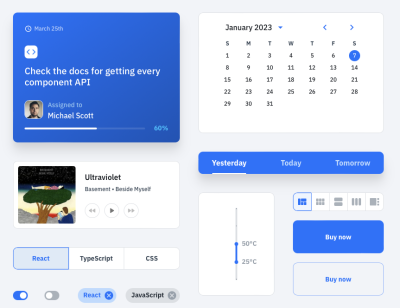
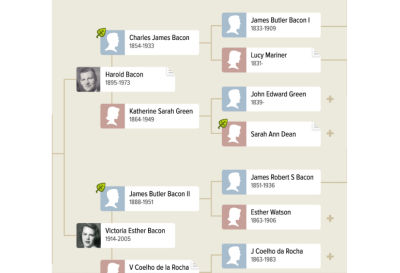
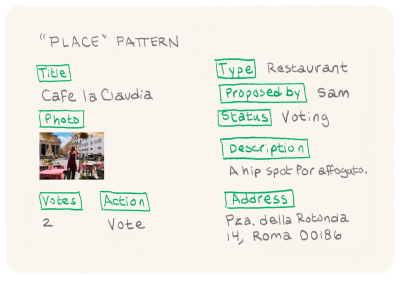
To understand why patterns outperform individual elements, we must redefine our terminology. In this context, an element is an isolated component (e.g., a button, a chip, or a card). A design pattern, conversely, is a reusable combination of elements designed for a specific product goal.

As architect Christopher Alexander famously noted in The Timeless Way of Building, "Even the most complicated, sophisticated things are defined by a small number of composable patterns."
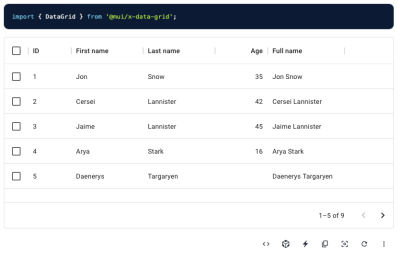
Most current design systems (like Material UI or Salesforce Lightning) offer "pre-built" components. While these are useful starting points, they are often too generic to solve the specific, nuanced problems of a unique product. A "Data Grid" from a library is a pattern, but it is rarely the right pattern for your specific user needs. The real value lies in defining product-specific patterns—the recurring modules that make your application unique.
Supporting Data: The Efficiency of Shared Documentation
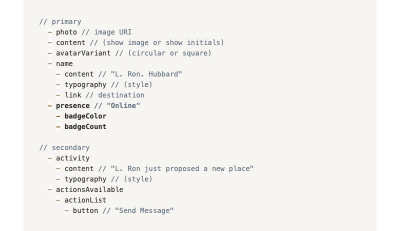
When a team adopts a pattern-based approach, the "source of truth" moves from a static Figma file to a living, collaborative document (such as a Notion page or a shared repository). This document tracks:
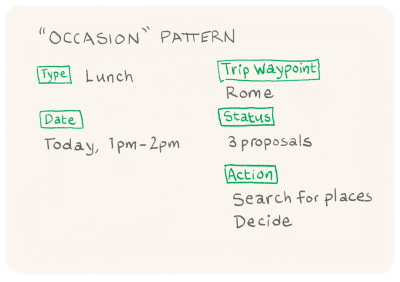
- Properties: The attributes of the pattern (e.g.,
isEditable,userPresence,loadingState). - Purpose: The specific user task the pattern addresses.
- Status: Whether the pattern is in wireframe, component development, or production-ready.
By using this document as a bridge, the team gains clear visibility into the "logic" of the application before a single line of production code is written. This reduces the cognitive load on engineers, who no longer need to interpret ambiguous designs, and empowers designers to understand technical constraints in real-time.
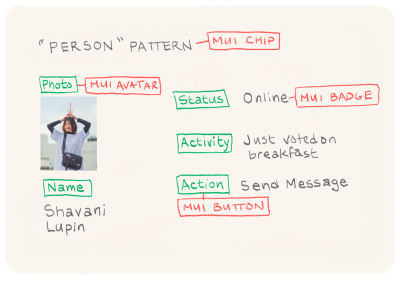
Illustrative Case Study: The "WeTrip" Project
Consider a hypothetical team building "WeTrip," an application designed to help groups plan trips. The team faces the classic hurdle: they need to ship an MVP quickly without waiting for a waterfall design process.
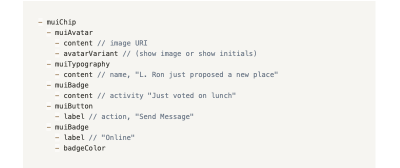
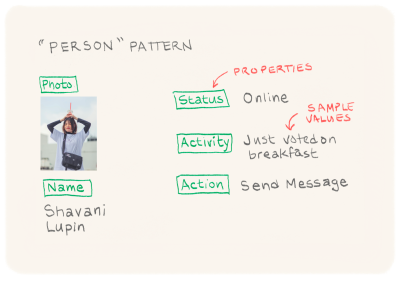
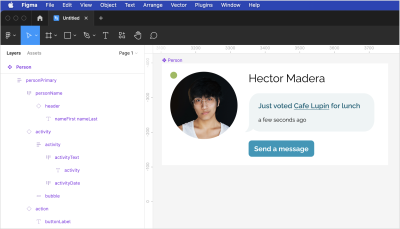
Instead of drawing screens, they meet to define the "Person" pattern. They whiteboard the properties of a person on a trip—name, status, and availability. By defining these properties collectively, an engineer can start building a TypeScript interface for the Person component while the designer begins drafting the visual layout in Figma.
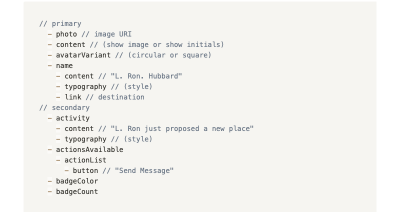
When the engineer realizes they need a presence property to handle live notifications, they update the shared document. The designer sees this immediately and adds a "presence indicator" to the visual design. Because they are aligned on the pattern—the underlying logic of what a "Person" is—they never have to stop to perform a "handoff." They are effectively working in parallel, with the design system growing organically to meet the requirements of the product.

Official Perspectives and Industry Implications
The industry is beginning to recognize that "Component Libraries" are only the first half of the equation. Leading design system advocates now argue that if we do not treat patterns as a core product, we are simply creating a well-organized pile of lego bricks that no one knows how to assemble.

Strategic Implications:
- Metric-Driven Development: Teams can track "Pattern Reuse" as a KPI. If a pattern is being copied and modified repeatedly, it is a clear indicator that the component needs to be hardened and added to the official system.
- Modular Scalability: As a team grows, these patterns can be broken into independent, federated modules. This prevents the "monolithic design system" trap, where a single change can break every application in the company.
- Developer Empowerment: By allowing engineers to contribute to the definition of patterns, the design system becomes a collaborative asset rather than a restrictive set of rules imposed by the design team.
Conclusion: The Harmony of Shared Language
The transition to a pattern-first methodology requires a cultural shift. It requires designers to be comfortable showing "rough" work and engineers to be involved in the conceptual phase of feature planning. However, the result is a significant reduction in friction and a marked increase in the quality of the final product.
Design systems are not just about visual consistency; they are about team velocity. When you focus on patterns, you stop arguing about whether a button should be 2px or 4px and start solving the actual problems your users face. You move from being a team of individuals working in silos to a synchronized unit capable of building complex, sophisticated products with ease.
As you move forward, consider the repetitive tasks your team performs daily. Those aren’t just redundant work—they are the seeds of your next great design pattern. By documenting them, sharing them, and refining them together, you can transform your design system from a burden into a powerful engine for innovation.