The rapid ascent of generative Artificial Intelligence (AI) has sent a tremor through the creative industries. From graphic designers and UX researchers to copywriters and strategists, the prevailing narrative suggests an impending "creative apocalypse." As AI tools become increasingly adept at churning out logos, writing marketing copy, and generating complex code in seconds, professionals are left questioning their future relevance. Is the designer being rendered obsolete by a machine that never sleeps?
The answer lies in understanding the distinction between technical execution and "designerly" intelligence. While AI is a powerful tool for synthesis and pattern recognition, it lacks the lived experience and emotional depth required to navigate the complexities of human-centric problem solving.

The Chronology of Disruption and Adaptation
The anxiety surrounding AI did not appear overnight. It began with simple automation—tools that helped us resize images or spell-check documents. However, the paradigm shifted significantly with the arrival of Large Language Models (LLMs) and sophisticated image-generation diffusion models.
- The Early Phase (Automation): Tools focused on mundane, repetitive tasks, allowing designers to bypass manual labor.
- The Generative Phase (Synthesis): With the arrival of tools like DALL-E, Midjourney, and ChatGPT, AI moved from the back-office to the front-line of creation. This triggered a defensive reaction across creative sectors.
- The Current Synthesis: Designers are now beginning to move beyond the fear of displacement toward an era of "augmented creativity," where AI handles the heavy lifting of data processing while the designer retains the mantle of strategic intent.
Supporting Data: The Capability Gap
To understand why designers remain essential, we must first accept that AI is not a conscious being. It is a probabilistic machine trained on vast datasets—by some estimates, the equivalent of a quarter of the Library of Congress.
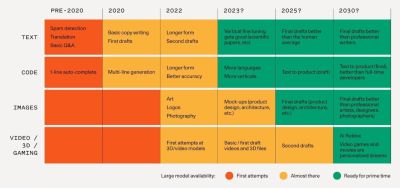
AI excels at "what is" and "what was." It is a master of analyzing large datasets to find the most probable next word or pixel. However, design is often about "what could be." It requires the ability to handle ambiguity, cultural nuance, and emotional stakes. Research from organizations like Sequoia Capital suggests that while AI will achieve proficiency in technical tasks, the "human-in-the-loop" model remains the gold standard for innovation. Machines can optimize, but they cannot empathize. They can simulate, but they cannot advocate.
The "Designerly" Framework: Head, Heart, and Hands
To survive and thrive, designers must lean into their uniquely human traits. Nigel Cross, a pioneer in design education, famously used the term "designerly" to describe the patterns of thinking that distinguish designers from engineers or scientists. These traits can be categorized into a "Head, Heart, and Hands" framework.
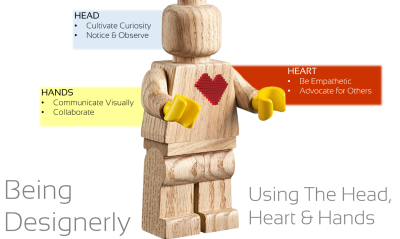
Head: Thinking Like a Designer
The cognitive side of design is dominated by curiosity and observation.
- Cultivating Curiosity: AI is limited by its training data; it can only traverse the boundaries of what it has already been fed. A human designer, however, possesses the ability to ask "Why?" to probe beyond the surface. By dedicating 20 minutes a day to exploring topics outside one’s immediate field, a designer can facilitate the "cross-pollination" of ideas that leads to truly novel solutions.
- Intentional Observation: Noticing is the precursor to insight. While AI can analyze trends, it cannot walk a mile in a user’s shoes. During the height of the pandemic, one designer famously bypassed the limits of virtual interviews by visiting physical retail spaces to observe how sales representatives interacted with tablets in freezing walk-in freezers. No algorithm could have predicted the physical friction caused by low lighting and heavy gloves; only human observation could.
Heart: The Emotional Core
Design is ultimately a service provided by humans to humans. Empathy and Advocacy are the primary drivers of this connection.
- Compassionate Empathy: This goes beyond simply identifying a user’s pain points; it is the act of stepping imaginatively into their world. AI can be trained to recognize the sentiment in a text string, but it cannot feel the frustration of a user who is struggling with a broken interface.
- User Advocacy: In a corporate environment, there are endless competing interests—profit margins, technical debt, and shareholder timelines. The designer serves as the user’s moral compass, advocating for the human experience when it is most convenient to ignore it. This requires ethical judgment, a capacity that is currently beyond the scope of any autonomous system.
Hands: Tangible Execution
The final domain is how we manifest our thoughts through visual communication and collaboration.
- The Power of Visuals: Humans are visual creatures. A rough sketch on a whiteboard can resolve a dispute that would take hours of verbal debate. AI can generate images, but it cannot "read the room." It doesn’t know which visual metaphor will resonate with a specific stakeholder or how to pivot a strategy in real-time based on a client’s non-verbal reaction.
- Collaboration: Innovation is rarely a solo endeavor. It requires navigating complex social dynamics, negotiating compromises, and adapting to live feedback. AI can suggest a design, but it cannot participate in the messy, human process of building consensus among diverse teams.
Implications: The Chef vs. The Recipe
The most effective way to view the relationship between humans and AI is through the lens of a professional kitchen. The AI is the kitchen equipment and the repository of every recipe ever written. It can chop vegetables with superhuman speed and suggest ingredient combinations that a human might never consider.

However, the "Chef" remains the designer. The chef decides which flavors will resonate with the diner, adjusts the seasoning based on the specific context of the meal, and manages the team to ensure the final dish is served perfectly. Robots may replace the manual labor of the sous-chef, but they cannot replace the intuition of the executive chef who understands the emotional experience of the guest.
Conclusion: The Path Forward
The fear of AI-induced redundancy is based on the false assumption that design is merely a production task. If a designer’s value was purely the technical ability to create a layout, they would indeed be at risk. But design has always been a strategic discipline centered on curiosity, empathy, and advocacy.
The future of the profession lies in augmentation. By leveraging AI to handle data analysis, ideation, and technical iteration, designers are freed to focus on the high-value strategic work that machines cannot touch. We must stop trying to out-calculate the machine and start leaning into the qualities that make us fundamentally, beautifully human.
When we integrate our head, heart, and hands, we don’t just survive the age of AI—we define it. The technology will change, but the need for human-centered, empathetic, and innovative design is more vital than ever before. We are not being replaced; we are being elevated.