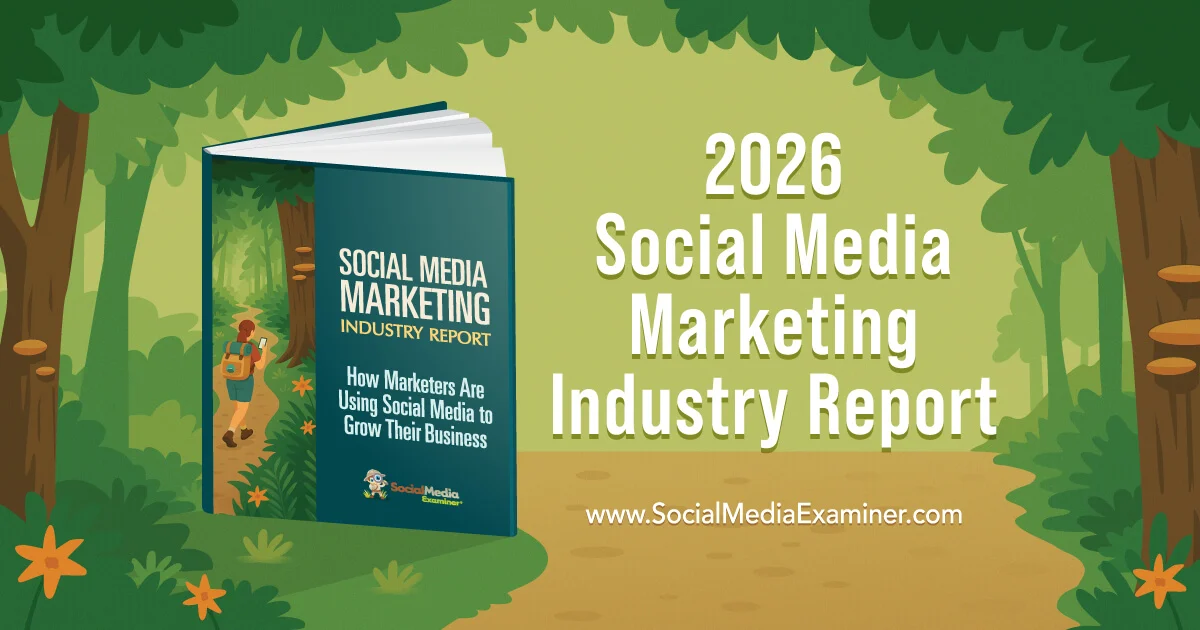
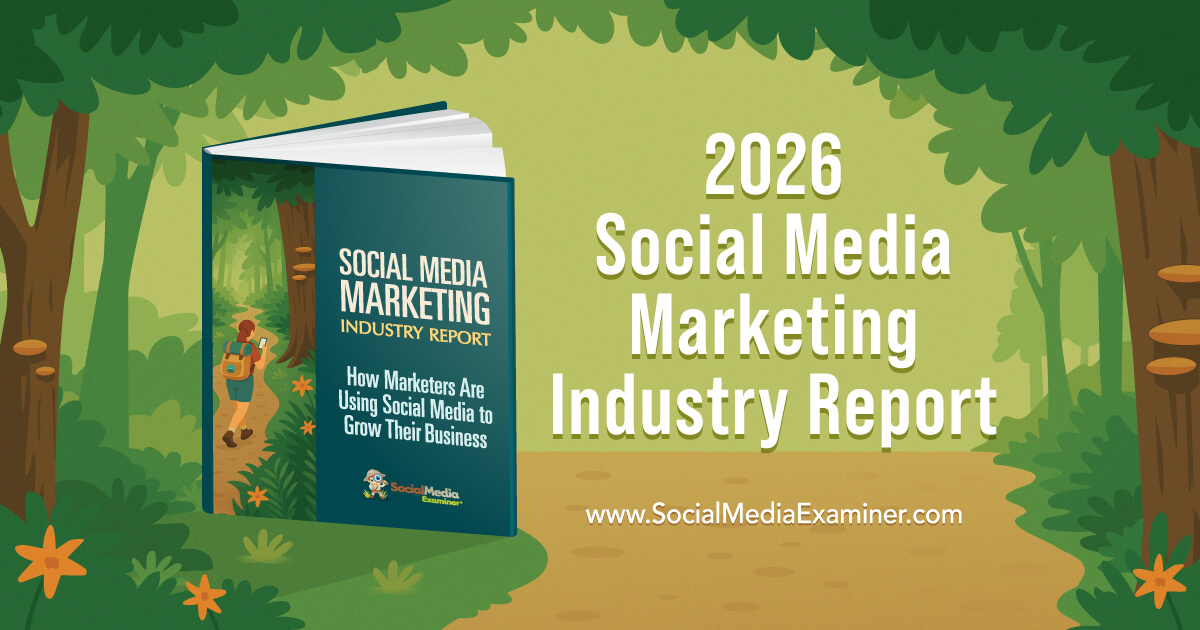
The digital landscape is shifting at an unprecedented velocity. As we move deeper into 2026, the strategies that defined success just eighteen months ago are rapidly becoming obsolete. To help professionals decipher this evolving terrain, Social Media Examiner has released its 18th annual Social Media Marketing Industry Report.
Spanning 44 pages and backed by over 50 data-rich charts, this year’s publication serves as a definitive roadmap for B2B and B2C marketers. By aggregating the intentions and behaviors of thousands of industry professionals, the report provides a unique lens through which we can view the future of paid media, organic engagement, and the inescapable rise of generative artificial intelligence.
The Core Findings: A Landscape in Flux
At its heart, the 2026 report addresses the primary anxiety facing modern marketers: platform fatigue. With the market splintered across emerging apps, legacy giants, and niche communities, the report offers clarity on where budgets are being allocated and where attention is being focused.
The primary takeaway from this year’s data is a move toward intentionality. Marketers are no longer pursuing a "post-everywhere" strategy. Instead, there is a clear migration toward platforms that offer measurable sales results and high-intent audiences. The report breaks down the critical divide between B2B and B2C priorities, highlighting that while some platforms are universal in their utility, others have become specialized silos for specific industry sectors.
A Chronology of Change: How We Got Here
To understand the findings of the 2026 report, one must look back at the historical trajectory of the industry. Since Social Media Examiner began tracking these trends nearly two decades ago, the industry has weathered several "paradoxical" shifts.
- 2008–2012: The Organic Gold Rush. The industry began with a focus on community building and viral organic reach.
- 2013–2018: The Pay-to-Play Pivot. Algorithms shifted, forcing marketers to adopt sophisticated paid advertising models to reach their own followers.
- 2019–2023: The Rise of Short-Form Video. The dominance of TikTok and the subsequent responses from Instagram (Reels) and YouTube (Shorts) transformed the content mix, moving away from static imagery toward high-production, high-engagement video.
- 2024–2026: The AI Integration Era. We are currently in the midst of a fundamental shift where generative AI has moved from a "novelty tool" to an "operational necessity."
The 2026 report captures this current inflection point, where human creativity is increasingly augmented by machine learning to manage the sheer volume of content required to stay relevant in the feed.
Supporting Data: The Numbers Behind the Strategy
The 2026 report is not merely anecdotal; it is a quantitative deep dive into the current state of marketing operations. Several key statistics from the report stand out as indicators of where the industry is headed.
1. The Instagram Renaissance
Despite the rise of newer, more experimental platforms, 56% of marketers report that they plan to increase their organic activity on Instagram this year. This signifies a return to the platform as a foundational hub for brand identity, likely driven by improvements in social commerce tools that bridge the gap between "scrolling" and "buying."
2. The Video Imperative
Video is no longer just a content type; it is the dominant language of the internet. A staggering 49% of marketers now cite video as the single most important content format in their arsenal. Furthermore, 70% of marketers are planning to ramp up their video production in the coming months, suggesting that those who fail to master video editing and storytelling will find themselves increasingly invisible to their target demographics.
3. The Generative AI Daily Workflow
Perhaps the most striking data point is the adoption rate of generative AI. The report reveals that 62% of marketers now utilize AI tools on a daily basis. This is not limited to simple text generation; it includes advanced image synthesis, video editing automation, and data analysis. This shift represents the most significant change in daily marketing operations since the introduction of the smartphone.
Official Industry Perspectives: The Strategic Shift
Experts contributing to the report emphasize that the "Social Media Manager" role is evolving into a "Content Strategist and Data Analyst" hybrid. The consensus among professionals is that the "spray and pray" method of content distribution is dead.
"The platforms are essentially black boxes," one industry analyst noted in the report’s commentary. "The 2026 report shows that marketers aren’t trying to ‘beat’ the algorithm anymore—they are trying to partner with it."
Official responses from early adopters mentioned in the report highlight that those who prioritize high-quality, long-form content for searchability, combined with short-form video for discovery, are seeing the highest ROI. The report serves as a validation of this "two-pronged" approach: using social platforms as both a search engine and an entertainment hub.
Implications: What This Means for Your Business
The data provided by Social Media Examiner offers more than just a snapshot; it provides a framework for future-proofing your business.
Identifying New Opportunities
The report identifies specific "underserved" platforms where organic competition is currently low but audience growth is high. For businesses that are struggling to stand out on crowded platforms like Instagram or LinkedIn, the report provides a roadmap for where to experiment next.
Overcoming Emerging Challenges
One of the most significant challenges identified in the 2026 report is the rising cost of paid advertising. With CPMs (Cost Per Mille) fluctuating, the report suggests that marketers must rely more heavily on "owned" audiences—such as email lists—while using social platforms as top-of-funnel discovery engines rather than final conversion points.
Refining Your Strategy
To stay one step ahead, the report recommends a three-phase approach for the remainder of 2026:
- Audit your current mix: Are you investing in video because it’s effective, or because you feel obligated to? Align your output with the data-backed preferences of your specific audience.
- Integrate AI into the workflow: If you are not part of the 62% using AI daily, you are operating at a competitive disadvantage. Use these tools to handle repetitive tasks so your team can focus on high-level creative strategy.
- Focus on Sales-Driven Platforms: The report provides a breakdown of which platforms are actually converting leads into sales. Align your budget with platforms that demonstrate high conversion metrics rather than vanity metrics like "likes" or "shares."
Conclusion: Accessing the Full Report
In an industry that moves as fast as social media, relying on intuition is a recipe for failure. The 2026 Social Media Marketing Industry Report is an essential resource for any business leader or marketing professional who intends to remain competitive in an increasingly complex digital ecosystem.
The insights detailed above—including the shift toward organic Instagram growth, the video content explosion, and the institutionalization of AI—are merely the beginning. The full 44-page report provides the granular detail needed to build a strategy that isn’t just reactive, but proactive.
How to secure your copy:
Social Media Examiner provides this comprehensive report at no cost to its subscribers. By registering for their community updates, you gain access to the full document, ensuring that your strategy is informed by the latest data, the most current trends, and the best practices of the world’s most successful marketers.
As we look toward the end of 2026 and into 2027, the gap between those who leverage data and those who "guess" will only widen. Download the report today to ensure your business remains on the right side of that divide.