The traditional grind of content creation—filming, editing, scripting, and repeating—has long been a bottleneck for creators and entrepreneurs. For many, the relentless pressure to maintain a consistent output leads to burnout before the audience even reaches a critical mass. However, a new paradigm is emerging: The "Outlier Video Method."
By leveraging AI agents—specifically through Claude Code—creators are now moving away from guesswork and toward a data-backed production pipeline. This approach, pioneered by digital strategist Sandy Lee, enables creators to reverse-engineer successful content, identify high-performing niches, and generate scripts that maintain a personal, authentic voice while scaling operations.
The Genesis of a Scalable System
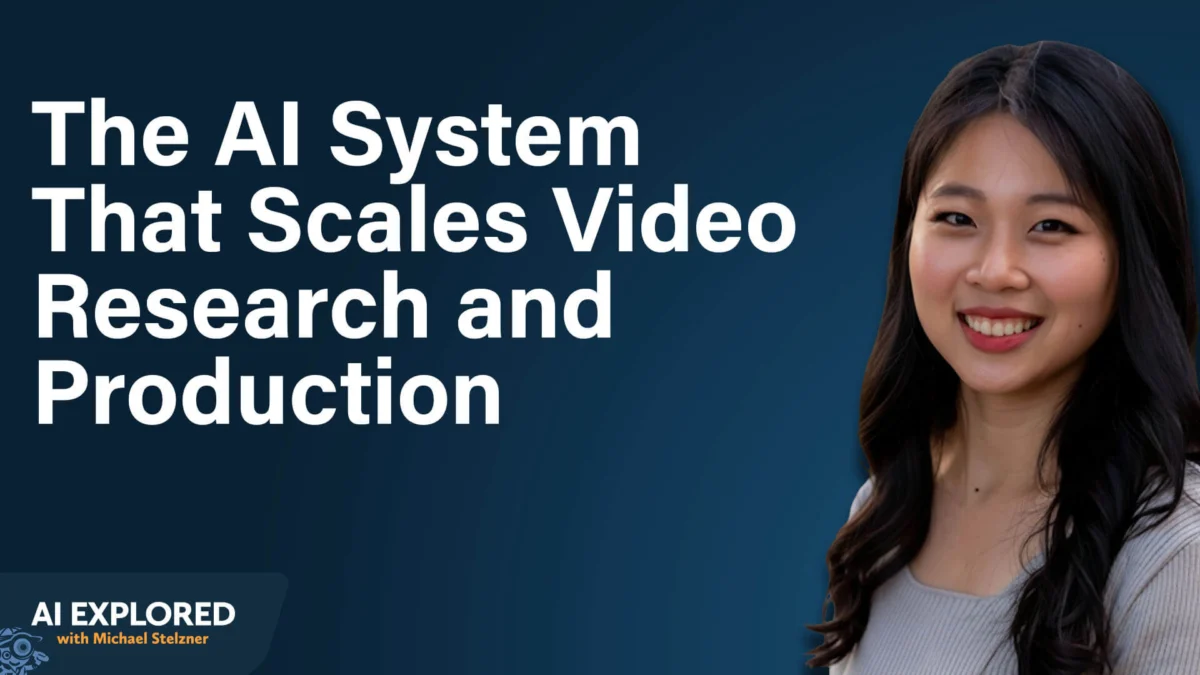
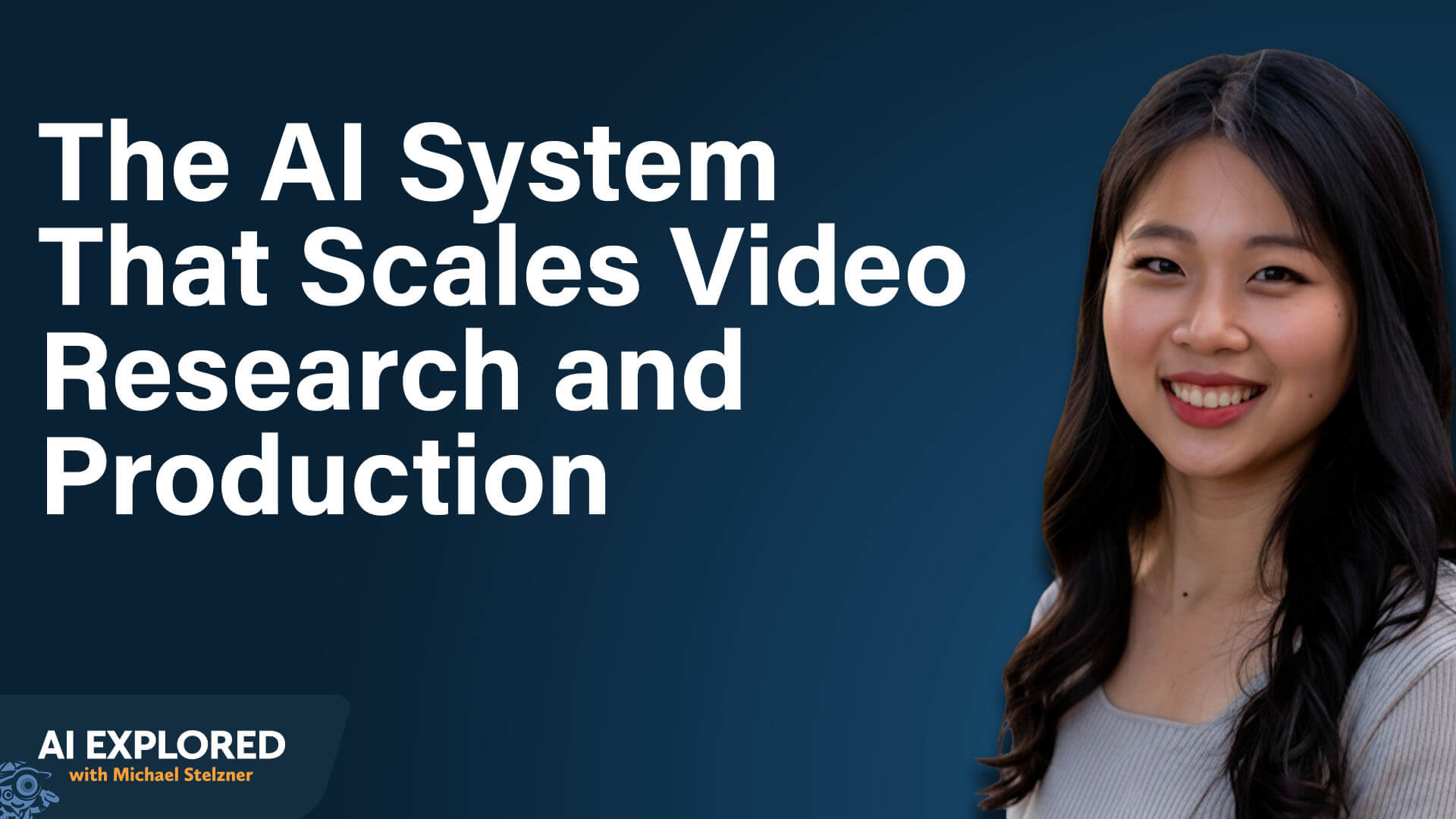
Sandy Lee, an expert in AI content strategy and founder of Slee Automation, understands the exhaustion of manual creation. Starting in 2018, she built a massive language-teaching presence across YouTube, TikTok, and Instagram, reaching 550,000 subscribers. Yet, the manual labor involved in maintaining that scale nearly drove her to quit.
Fast forward to late 2025: faced with the constraints of a full-time career, client obligations, and the demands of raising three young children, Lee realized that brute-force manual creation was no longer viable. Instead of simply using AI to generate captions or social media posts, she engineered a sophisticated, multi-layered system using seven distinct AI agents. By automating the research phase and delegating the analytical lifting to these agents, Lee successfully launched a new YouTube channel, growing it from 200 to 11,000 subscribers in less than 30 days while generating $10,000 in revenue.
Defining Your Content Identity: The "Inside Out" Approach
Before integrating AI into a workflow, Lee argues that creators must first define their core identity. This is the "Inside Out" method, which utilizes the Japanese concept of Ikigai—one’s "reason for being."
To build a sustainable content engine, creators are encouraged to answer four fundamental questions:
- What do you love doing?
- What are you exceptionally good at?
- What does the world need?
- What are people willing to pay for?
The intersection of these four pillars forms the bedrock of a creator’s brand. Lee emphasizes that this step must be performed manually to ensure authenticity. "Overthinking is a trap," Lee notes, suggesting that creators should commit no more than a single day to this discovery process. Once the internal framework is set, it is fed into an AI tool to develop an Ideal Customer Profile (ICP) and distinct Content Pillars. This provides the AI with the necessary constraints to ensure that every generated script, thumbnail idea, and video concept remains on-brand and target-focused.
The Mechanics of Data-Driven Research
The core innovation of the Outlier Video Method lies in its automated research pipeline. Instead of scrolling through competitor channels for hours, Lee’s system—powered by Claude Code and connected to the YouTube API—monitors a curated list of ten industry-leading channels.

Every 48 hours, the system calculates an "Outlier Score" for new content. The formula is precise:
Outlier Score = (Video Views in First 48 Hours ÷ Channel’s Average Views in First 48 Hours) × 100
This formula filters out "noise." A creator with millions of subscribers might get high views simply due to their existing reach, which is not necessarily a signal of a winning topic. An "outlier," however, is a video that performs significantly better than the channel’s own historical average. By isolating these signals, Lee’s AI identifies precisely which topics, formats, or packaging styles are resonating with audiences in real-time. This daily digest, delivered directly to her inbox, transforms the research process from a speculative task into a prioritized, actionable to-do list.
From Research to Scripting: The AI Agent Workflow
Once an outlier video is identified, the system initiates a secondary analytical phase. AI agents dissect three critical components of the competitor’s success:
- Thumbnail Strategy: Identifying visual layouts, contrast, and focal points.
- Title Analysis: Decoding the curiosity triggers or promises made.
- The Hook: Analyzing how the creator commands attention in the first 30 seconds.
With this data, the AI generates a script that mirrors the successful structure of the outlier while remaining filtered through the creator’s unique "voice" and "content pillars." This eliminates the "blank page" syndrome. The creator isn’t mimicking the original creator’s personality; they are borrowing the proven structural mechanics that capture audience attention.

Lee’s seven-part hook formula, integrated into the scripting agent, ensures that the most critical phase of the video—the first 60 seconds—is optimized for retention:
- The Pattern Interrupt: A visual or verbal break from the status quo.
- The "You" Focus: Directly addressing the viewer’s specific pain point.
- The Proof: Demonstrating authority or past results.
- The Stakes: Clearly stating what the viewer will lose if they don’t watch.
- The Promise: Explaining the value they will gain.
- The Transition: Moving seamlessly into the core content.
- The Call to Action: Setting the stage for the engagement loop.
Implications for the Future of Content Creation
The implications of the Outlier Video Method are significant for the broader creator economy. By automating the "grind," creators can reclaim their time for the work that AI cannot replicate: the authentic, human delivery of a story on camera.
The system does not replace creativity; it acts as an exoskeleton for it. It removes the friction of formatting, trend-spotting, and structural planning. For marketers and business owners, this means that the barrier to entry for high-quality, high-performing video content has dropped significantly.
However, this transition requires a shift in mindset. Creators must be willing to trade the "artisan" approach of manual creation for a "systems-thinking" approach. The success of this method depends on the quality of the initial inputs—the ICP, the Ikigai, and the content pillars. Without these foundational elements, the AI’s output will remain generic.
Conclusion: Scaling Human Connection
As the digital landscape becomes increasingly saturated, the advantage will belong to those who can iterate quickly and data-inform their intuition. Sandy Lee’s approach provides a roadmap for this evolution. By letting AI handle the "what" and the "how" of content logistics, creators are free to focus on the "why"—the unique value proposition that only they can provide to their audience.
In an era where AI is often viewed as a threat to creativity, the Outlier Video Method suggests the opposite: that when used as a strategic partner, technology may be the only way to keep human-driven content alive and sustainable in the face of an ever-expanding media ecosystem. As Lee’s rapid growth demonstrates, those who master the synergy between data-backed research and authentic personal voice will be the ones defining the next decade of digital influence.