Welcome back to TechCrunch Mobility, your essential briefing on the future of transportation and the increasingly critical role artificial intelligence plays in moving people and goods. As we navigate the complex intersection of software, hardware, and safety, this week’s newsletter arrives with a focus on the intensifying scrutiny surrounding automated driving systems.
Note to our readers: We will be observing the July 4th holiday next week. There will be no issue published; we look forward to returning to your inbox the following week with a full slate of updates.
Main Facts: The Growing Scrutiny of Automated Driving
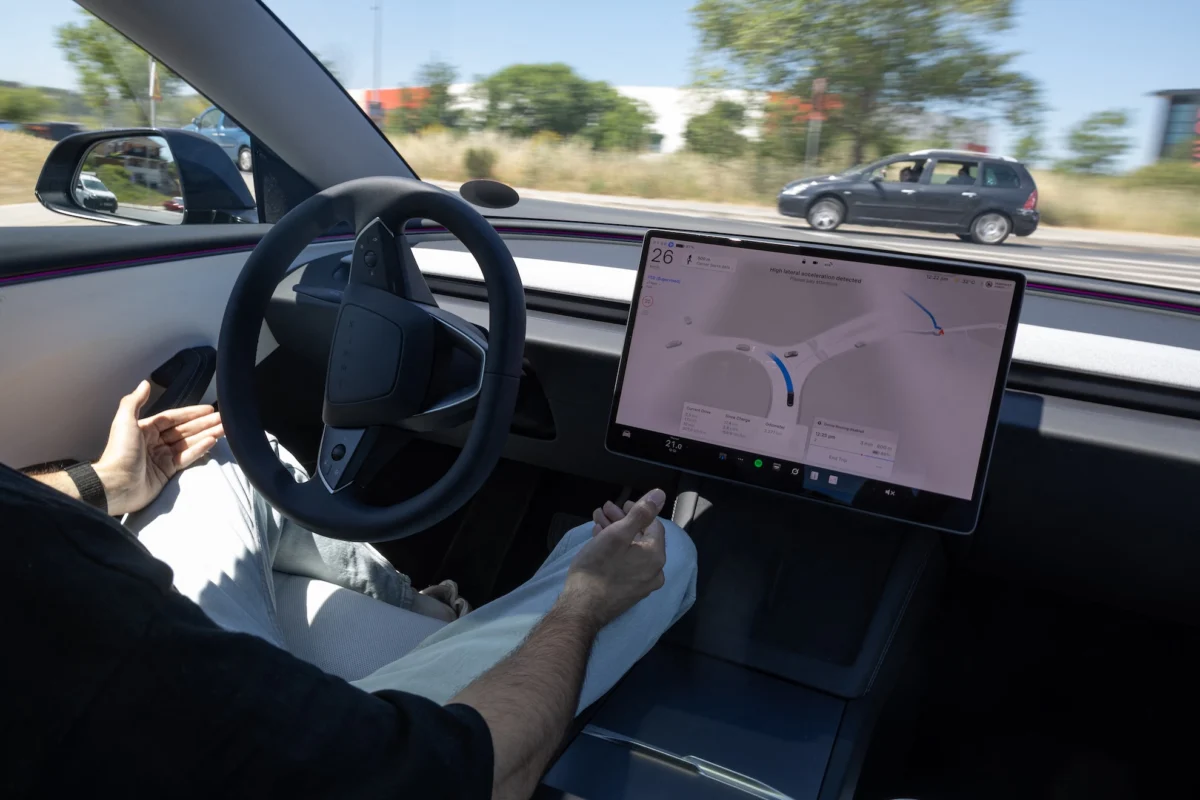
The landscape of autonomous vehicle (AV) development is currently defined by a tension between rapid technological deployment and the sobering reality of public safety. This week, that tension reached a fever pitch as Tesla’s "Full Self-Driving (Supervised)" system faced renewed national attention following a fatal collision in Texas.
The incident involved a Tesla vehicle striking a residence, resulting in the tragic death of a 76-year-old woman. Initial reports from the driver suggested that "Autopilot"—the company’s legacy driver-assistance system—was engaged at the time of the crash. However, the narrative has become increasingly complex as Tesla’s leadership has moved to clarify the technical state of the vehicle at the moment of impact.
The Conflict of Accounts
Ashok Elluswamy, Tesla’s vice president of AI software, took to X (formerly Twitter) to challenge the prevailing narrative. Elluswamy asserted that the vehicle’s data logs indicate the driver manually overrode the automated system by depressing the accelerator pedal to 100% capacity in a residential zone. His comments imply that the vehicle was operating under the FSD (Supervised) framework rather than the discontinued Autopilot system. While these claims offer a glimpse into the company’s internal telemetry, the lack of an independent, third-party audit of the vehicle’s logs leaves the ultimate determination of fault in the hands of federal regulators.

Chronology: A Week of Regulatory and Legal Milestones
The path to widespread AV adoption is rarely linear. This week was marked by significant regulatory actions and legal resolutions that will likely set precedents for the industry for years to come.
- Mid-June 2026: A fatal crash involving a Tesla in Texas draws national scrutiny, sparking immediate interest from federal safety agencies.
- June 22, 2026: Tesla settles a lawsuit related to a separate 2023 fatality involving FSD (Supervised), highlighting the ongoing legal risks associated with real-world AV testing.
- June 24, 2026: The National Transportation Safety Board (NTSB) officially launches a probe into the Texas crash, signaling a rigorous investigation into the intersection of driver behavior and software performance.
- June 25, 2026: The U.S. Department of Transportation proposes sweeping changes to federal vehicle regulations, including the potential removal of the physical brake pedal requirement for vehicles designed exclusively for autonomous operation.
- June 26, 2026: A wave of industry announcements, including Aseon Labs’ $10 million seed round and a major partnership between CaoCao and May Mobility, underscores the continued capital influx into the sector despite the regulatory headwinds.
Supporting Data: Waymo’s Expansion and Market Shifts
While Tesla faces a defensive position regarding its FSD system, Alphabet’s Waymo continues to scale its operations through a sophisticated supply chain strategy. Research firm MoffettNathanson recently provided a granular look at the deployment of the "Ojai" robotaxi—a vehicle born from a partnership between Waymo and Zeekr (a brand under China’s Geely Holding Group).
The Ojai Supply Chain
The Ojai robotaxi is a feat of international engineering: designed in Sweden, manufactured in China, and outfitted with Waymo’s sixth-generation autonomous hardware in the United States. To circumvent potential regulatory friction regarding Chinese-connected vehicle technology, these units are imported without communication modules.
MoffettNathanson’s analysis of Bills of Lading—official shipping receipts filed with the U.S. government—reveals that Waymo is aggressively ramping up its fleet. Data indicates the company is on pace to import over 3,156 vehicles this year, equating to approximately 300 units per month. This systematic expansion into markets like Nashville, where Waymo has recently dropped its waitlist, highlights the company’s transition from pilot programs to full-scale commercial utility.
Official Responses and Strategic Pivots
The industry is currently in a state of rapid recalibration. Companies are balancing the need for innovation with the demands of compliance and financial sustainability.

The Sensor Standards War
Lyft CEO David Risher recently clarified the company’s stance on autonomous safety, establishing a "multi-sensor safety standard." By mandating that vehicles on its network must utilize more than one type of sensor (e.g., combining cameras with lidar or radar), Lyft has effectively created a barrier to entry for camera-only systems. This move is a direct critique of the approach favored by Tesla’s robotaxi strategy, which relies exclusively on vision.
Corporate Restructuring
The need to "sharpen execution" is driving significant internal changes. Lucid Motors, for instance, has announced an 18% reduction in its workforce—the second major layoff in four months. CEO Silvio Napoli’s mandate to simplify the company’s operations reflects a broader trend among EV startups to prioritize cash conservation and operational efficiency over rapid, capital-intensive expansion.
Implications: The Future of Autonomous Mobility
The coming months will be defined by three critical themes: regulatory enforcement, technical transparency, and market consolidation.
1. The Death of the Brake Pedal?
The U.S. Department of Transportation’s proposal to remove the requirement for physical brake pedals in dedicated AVs is a landmark moment. If finalized, it will allow manufacturers like Zoox and Tesla to optimize vehicle interiors for the passenger experience rather than the driver experience. This shift validates the industry’s long-term goal of removing human input from the driving task entirely.
2. The China Connection
The intersection of geopolitics and automotive manufacturing is becoming increasingly fraught. With Polestar now barred from selling new vehicles in the U.S. due to regulations against Chinese-connected technology, manufacturers are being forced to localize their supply chains. The Ojai program’s reliance on importing stripped-down chassis highlights the lengths to which companies must go to maintain their U.S. market presence.

3. Safety as a Competitive Advantage
As demonstrated by Lyft’s new sensor standards, safety is no longer just a regulatory hurdle—it is a competitive differentiator. The ability to demonstrate a redundant, multi-sensor approach is likely to become the standard for consumer trust. Meanwhile, the legal and federal investigations into Tesla’s FSD will likely force the company to move beyond its "supervised" branding and provide more robust, verifiable data to the public and regulators.
4. Infrastructure and Ecosystems
The ecosystem supporting autonomous fleets is maturing. With companies like Aseon Labs securing $10 million for autonomous cleaning and charging "pitstops," and Terawatt Infrastructure securing $300 million for charging depots, the focus is shifting from "how to build the car" to "how to keep the fleet running."
Final Thoughts
As we close out the first half of 2026, the message to the industry is clear: the honeymoon phase of autonomous testing is over. We have entered the era of institutional oversight and commercial accountability. Whether it is the $50 million infusion into AI-driven supply chain repair tools like Partly, or the billion-dollar merger of Elroy Air, the capital is moving toward companies that can provide real-world, scalable, and safe infrastructure.
Do you have a lead on the next big shift in mobility? Reach out to Kirsten Korosec at [email protected] or via Signal at kkorosec.07. For our European and infrastructure updates, contact Sean O’Kane at [email protected].
Disclaimer: Some of the links in this article may generate an affiliate commission, which supports our independent reporting.