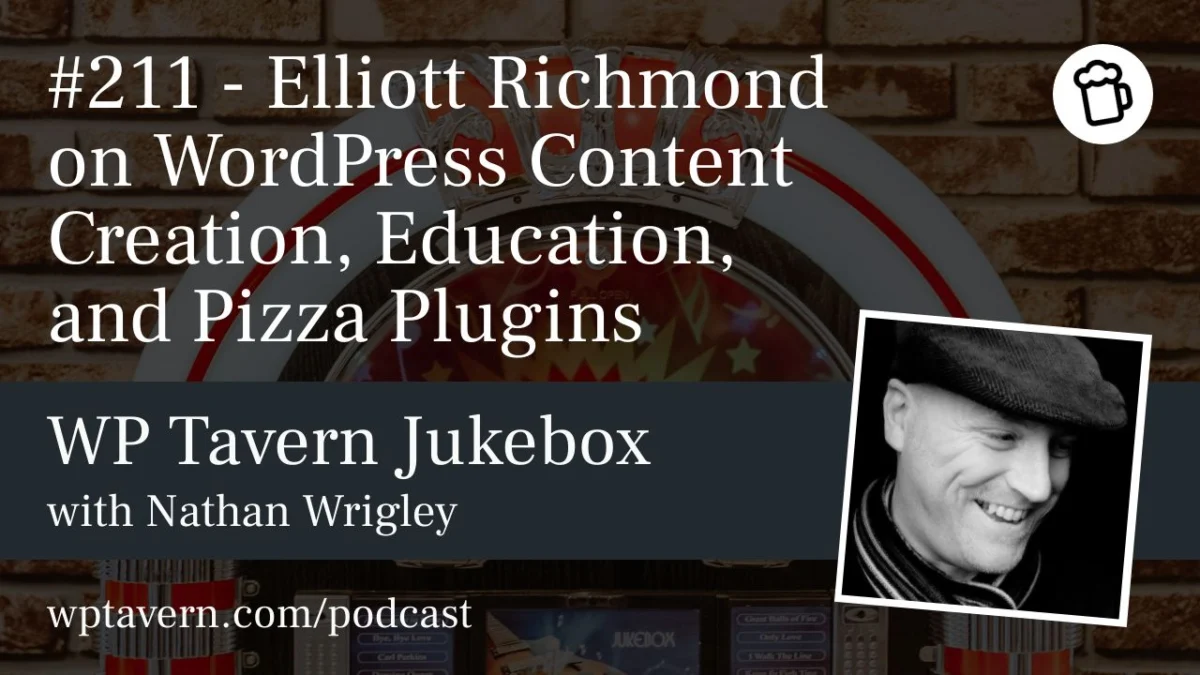
In the sprawling, interconnected ecosystem of WordPress, few individuals embody the spirit of the platform’s evolution as effectively as Elliott Richmond. A developer whose roots stretch back to the pre-WordPress era of the early 2000s, Richmond has transitioned from a behind-the-scenes engineer to a prominent voice in educational content creation. His journey—which unexpectedly includes scaling a thriving, high-tech pizza business—serves as a compelling case study for the versatility of the WordPress platform and the growing importance of community-driven influence.
The Evolution of a WordPress Veteran
Elliott Richmond’s career is a mirror of the WordPress project itself. Before the platform was forked from the b2 blogging tool, Richmond was already immersed in the early web, building sites for bands and creative projects. His transition into freelance development saw him navigating the landscape of various Content Management Systems (CMS), including Joomla and Drupal, before finding a permanent home in the WordPress ecosystem.
His contribution to the community was cemented early on, notably with the release of a WordPress advent calendar in 2013. This project, which compiled code snippets from over 30 developers, highlighted the early, collaborative nature of the community—a time when developers were pushing the boundaries of WordPress, using it as a database, a portfolio, and a product catalog long before the advent of modern block-based architectures. Today, Richmond remains an active developer, but his focus has shifted toward translating complex technical concepts into accessible video content for a global audience.
The Unexpected Pivot: WordPress as a Business Engine
Perhaps the most intriguing facet of Richmond’s recent work is the "Pizza Pilot" project. Born out of necessity during the COVID-19 pandemic, what began as a local delivery service for his village has blossomed into a full-fledged, multi-faceted business.
Richmond’s pizza operation is powered entirely by the WordPress stack. Leveraging WooCommerce, Jetpack, and a custom-built plugin, he has created a sophisticated ordering system that handles time-based delivery slots and complex geolocation radius restrictions. This infrastructure allowed a temporary lockdown project to scale into a sustainable enterprise that now supports five employees and offers licensing opportunities to other entrepreneurs.
The success of this venture is a testament to the "glue" that WordPress provides for non-traditional business models. By dogfooding his own software—building the tools he needed to solve his own operational challenges—Richmond has created a product that is now being adopted by other business owners, ranging from local bakeries to niche service providers. This transition from developer to "Pizzaiolo" to SaaS creator illustrates the infinite scalability of WordPress as a business backbone.
Professionalizing the Creator Economy
In early 2026, Richmond’s visibility in the community led to a significant professional milestone: a collaboration with Automattic, the company behind WordPress.com. Facilitated by community leaders like Michelle Frechette and Stacey Carlson, this partnership represents a growing trend in the WordPress ecosystem—the formalization and support of independent content creators.
The Role of Influencer Marketing
The collaboration is not a traditional corporate contract but rather a strategic alignment. Automattic is actively supporting creators who demonstrate a deep, authentic understanding of the WordPress platform. Richmond joins a growing cohort of influencers, including Jamie Marsland, who have been empowered to share their workflows and insights with a broader audience.
For Richmond, the partnership offers "early access" to upcoming features on WordPress.com, allowing him to create content that is both educational and timely. Crucially, the arrangement preserves his creative autonomy. He remains free to choose his topics and format, ensuring that his content remains authentic to his voice while helping users navigate the complexities of the platform.
Chronology of a Content Creator
- Early 2000s: Richmond begins web development, eventually transitioning to WordPress during its infancy.
- 2013: Releases the WordPress advent calendar, establishing a reputation for community collaboration.
- 2020-2021: Launches a local pizza delivery business during COVID-19 lockdowns, using WordPress as the core infrastructure.
- 2023-2025: Expands his YouTube presence, focusing on technical tutorials and the "Pizza Pilot" plugin development.
- 2026: Enters a partnership with Automattic to create educational content for the WordPress.com ecosystem.
Technical Methodology: The "Low-Tech" Philosophy
Despite his technical background, Richmond’s content production workflow is remarkably grounded. He advocates for a "low-tech" approach, often using a basic iPhone camera and DIY lighting setups—including, famously, a cat-food box used as a light diffuser.
His process for creating educational video content is highly structured:
- Brain Dump: Using voice-to-text accessibility tools, Richmond records his initial concepts and technical ideas.
- Scripting and Iteration: Rather than improvising, he breaks these concepts into structured "flashcard-style" prompts, refining the flow of information through multiple drafts.
- Educational Simplification: He focuses heavily on analogies and motion graphics to explain difficult concepts, such as templating, block patterns, and AI integration.
- Feedback Loops: Richmond treats YouTube comments as a critical data source. Negative feedback is viewed as a constructive tool to refine future content and guide the development of new features.
Implications for the Future of WordPress
The shift toward supporting independent creators like Richmond has profound implications for the WordPress ecosystem. As the platform enters a period of rapid innovation—marked by the upcoming WordPress 7 and the increasing influence of Large Language Models (LLMs)—the need for accessible, high-quality documentation is higher than ever.
Bridging the Gap
Traditional documentation often struggles to keep pace with the velocity of WordPress development. Independent creators fill this gap by providing:
- Real-world Context: Tutorials that show how to use features in practice, rather than just explaining the theory.
- Technical Simplification: Translating complex engineering updates (like Xdebug integration or backend architecture changes) for a less technical user base.
- Community Trust: Because these creators are independent, their content carries a level of authenticity that corporate documentation often lacks.
Richmond’s role as an educator is not merely to "sell" WordPress but to enable its users. By teaching developers how to debug, how to leverage the block editor, and how to build complex business logic, he is helping to ensure that the WordPress community remains technically literate and capable of innovation.
Conclusion: The Power of Community
Elliott Richmond’s journey is a microcosm of what makes WordPress unique. It is a platform that allows a developer to run a pizza business, then document that process, and ultimately become an official voice for the platform itself.
His philosophy is simple: learn something new every day and share it with others. Whether through the lens of a pizza oven or a code editor, Richmond’s work reinforces the idea that WordPress is more than just software—it is an ecosystem that thrives on the curiosity and the creative output of its users. As he continues his work through 2026, Richmond stands as a clear example of how the next generation of WordPress influence will be built: through transparent, educational, and community-centric content.
For those looking to follow his progress or learn from his tutorials, Richmond can be found on YouTube at @elliottrichmondwp and his personal blog at elliottrichmond.co.uk. In an era where the digital landscape is constantly shifting, his commitment to the "glue" of the WordPress community ensures that he will remain a vital contributor for years to come.