
In the fast-paced world of search engine optimization (SEO) and digital marketing, data latency can be the difference between a successful campaign and a costly technical oversight. For nearly three weeks, SEO specialists, webmasters, and site owners were forced to operate in a data vacuum regarding one of the most critical reports in their technical toolkit.
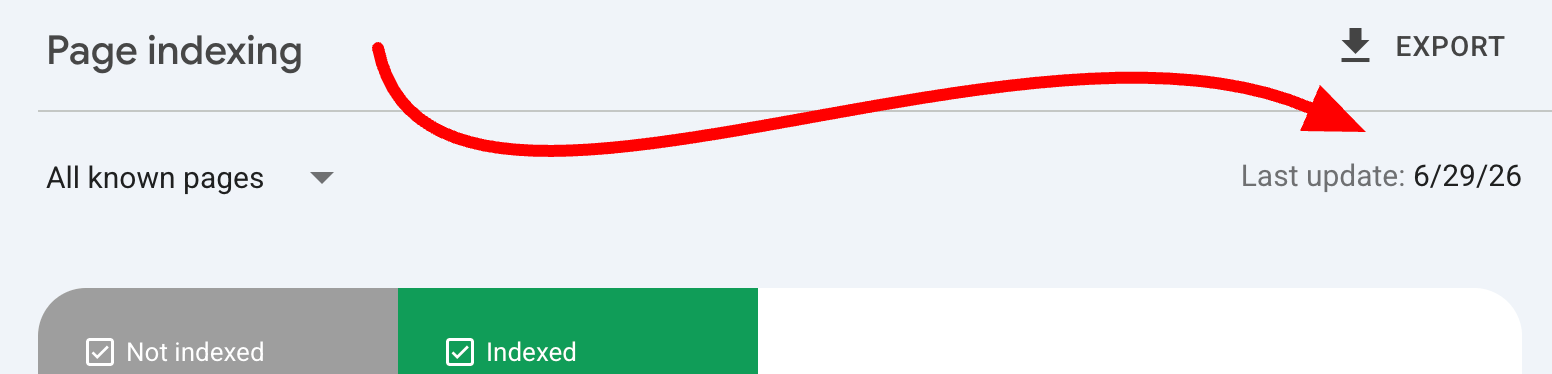
On Friday, July 3, 2026, Google resolved a prolonged data processing delay within the Google Search Console (GSC) Page Indexing report. The update, which rolled out during the morning hours, advanced the report’s data from its frozen state on June 11, 2026, to show fresh indexing data through June 29, 2026. This resolution ends a painful period of diagnostic blindness for technical SEO professionals worldwide.
Main Facts of the GSC Update
The primary highlights of this resolution include:
- The Core Issue: The Page Indexing report within Google Search Console was suffering from an extended data processing freeze, meaning no new indexation reports had been generated or updated for over twenty days.
- The Freeze Point: Prior to the resolution, the last available data point for webmasters was June 11, 2026. (An initial typographical anomaly in some system reports briefly listed a bizarre date of June 11, 2206, before correcting back to the standard 2026 timeline).
- The Resolution Date: The system began successfully processing and rendering backlogged data on the morning of Friday, July 3, 2026.
- The New Baseline: The updated report now displays indexing data up to June 29, 2026, significantly narrowing the reporting gap to a standard, expected lag of roughly four days.
- Functionality Restored: Users can once again track whether newly published or updated pages have been successfully crawled and indexed, and they can resume validating fixes for indexing errors.
Detailed Chronology of the Indexing Lag
Understanding the timeline of this outage highlights the mounting frustration within the digital marketing community as the weeks progressed.
+------------------------------------------------------------+
|                       TIMELINE OF THE GSC LAG              |
+------------------------------------------------------------+
|  June 11, 2026: Last day of normal data processing.        |
|                                                            |
|  Mid-June 2026: Webmasters notice GSC data is not updating. |
|                 Complaints begin surfacing on social media. |
|                                                            |
|  Late June 2026: Lag reaches a critical 2+ week threshold.  |
|                  SEO publications document the system delay.|
|                                                            |
|  July 3, 2026: Google deploys a fix. Data pipeline catches |
|                up to June 29, 2026. Normal operations resume.|
+------------------------------------------------------------+
The Initial Freeze (June 11, 2026)
Up until mid-June, the Page Indexing report was functioning normally, providing its usual rolling view of site health with a standard latency of 24 to 48 hours. However, after June 11, the pipeline processing these specific reports ground to a halt.
The Growing Concern (Mid-to-Late June 2026)
By June 18, webmasters began to notice that their indexing reports had not updated in a week. Initially, this was treated as a minor, routine delay. However, as the calendar turned to late June, the lag stretched past the two-week mark.

SEO communities on platforms like X (formerly Twitter), Reddit, and the Google Search Central Help Forums were flooded with inquiries from concerned webmasters. Many feared that the lack of new data meant Googlebot had stopped crawling their sites altogether, or that their websites had been hit by silent technical penalties.
The Resolution (July 3, 2026)
On the morning of Friday, July 3, 2026, Google’s technical teams successfully cleared the processing backlog. Within a matter of hours, Search Console accounts globally were updated to show data reflecting site indexation status up to June 29, 2026. While a minor four-day lag remains, this is considered standard operational latency for the massive scale of Google’s data reporting infrastructure.
Supporting Data: The Anatomy of the Page Indexing Report
To understand why this delay caused such a disruption, it is essential to analyze what the Page Indexing report does and why technical SEOs rely on it so heavily.
The Page Indexing report is the definitive diagnostic dashboard showing which pages of a website Google has discovered, crawled, and successfully added to its search index.
Key Visual and Analytical Components
The report is structured to give both high-level executive overviews and granular, developer-level error reports:
- The Status Chart: A dual-color time-series chart.
- Indexed Pages (Green): Represents pages that are eligible to appear in Google Search results.
- Not Indexed Pages (Gray): Represents URLs that Google has discovered but has chosen, or been unable, to index.
- Impression Overlay: Users can overlay organic search impression data directly onto the indexation chart. This allows SEOs to see if drops in search visibility correlate directly with pages falling out of the index.
- The Reasons Table: Located below the chart, this table lists the precise technical reasons why pages are not indexed, categorized by severity.
Common Indexing Issues Tracked by the Report
Without this report, webmasters cannot easily identify which of the following issues are preventing their content from ranking:

- Server Error (5xx): Googlebot encountered server-side errors when trying to access the URL.
- Redirect Error: The URL was part of a redirect chain that was too long, circular, or otherwise broken.
- Excluded by ‘noindex’ tag: The page contains a meta tag instructing Google not to index it. This is a common culprit when development environments are accidentally pushed to live servers.
- Not Found (404) or Soft 404: The page no longer exists, or it returns a 200 OK status code despite containing no actual content.
- Crawl Budget Issues: Marked as "Crawled – currently not indexed" or "Discovered – currently not indexed," indicating Google knows about the pages but has decided not to prioritize them for indexation due to quality or crawl resource constraints.
Official Responses and Technical Underpinnings
Google has historically maintained that data processing delays in Search Console do not affect a website’s actual crawling, indexing, or ranking in live search results. The issue is purely reporting-based—a bottleneck in the pipeline that moves data from Google’s internal indexing systems to the user-facing Search Console database.
While Google’s search relations team, including figures like John Mueller and the Google Search Liaison, frequently acknowledge these delays on social channels to reassure the public, the sheer scale of the GSC backend means that resolving pipeline blockages can take time.
The Page Indexing report relies on massive map-reduce operations and distributed database syncs. When a bug or hardware bottleneck occurs in this pipeline, the data accumulates in a queue. Clearing this queue for billions of verified web properties requires significant computational power, explaining why the catch-up process took several weeks to deploy.
Implications for the SEO and Digital Marketing Ecosystem
The three-week data freeze had real-world financial and operational consequences for businesses, agencies, and independent webmasters.
1. Stalled Site Migrations and Redesigns
Site migrations—whether moving to a new domain, changing CMS platforms, or restructuring URLs—are highly sensitive procedures. SEOs rely on daily updates from the Page Indexing report to monitor how quickly Google is discovering new URLs and deprecating old ones. During this three-week freeze, brands that migrated in mid-June were left completely in the dark, unable to verify if their 301 redirect strategies were working correctly or if critical pages were falling out of the index.
2. Impeded Troubleshooting and Validation Loops
When an SEO identifies an indexing issue (such as an accidental sitewide noindex deployment), they apply a fix and click the "Validate Fix" button in GSC. This triggers a monitoring cycle where Google tracks the corrected URLs. Because the reporting pipeline was frozen, the validation status was stuck in limbo. Webmasters could not confirm if their technical fixes had been accepted, forcing them to rely on manual, single-URL inspection tools—a highly inefficient process for large websites.
3. Client Reporting and Agency Friction
For SEO agencies, the end of the month is typically dedicated to client reporting. The lack of fresh indexation data made it difficult to justify performance metrics, explain sudden drops in organic traffic, or prove that technical optimization tasks completed in mid-June had been successful.
4. Delayed Detection of Hacking and Security Issues
Hackers who compromise websites often inject thousands of spam URLs. Under normal circumstances, an SEO would immediately spot a sudden spike in "Not Indexed" or "Indexed" pages in their weekly GSC checks. The three-week reporting delay meant that malicious URL injections could have gone unnoticed on many sites, allowing spam to linger and damage domain authority.
Moving Forward: Restoring Workflow Efficiency
With the data pipeline now catching up to June 29, 2026, webmasters are encouraged to log into their Google Search Console accounts and perform the following actions:
- Check the "Validate Fix" Queue: Review any pending validations submitted in mid-June to see if Google has updated their status to "Passed."
- Analyze Indexation Spikes: Look for any unexpected spikes in non-indexed pages that may have occurred during the blackout period.
- Audit New Content: Ensure that critical landing pages or blog posts published after June 11 have been successfully indexed.
While the data delay was a frustrating reminder of the industry’s reliance on Google’s proprietary tools, the resolution brings welcome relief and a return to data-driven decision-making for search professionals worldwide.