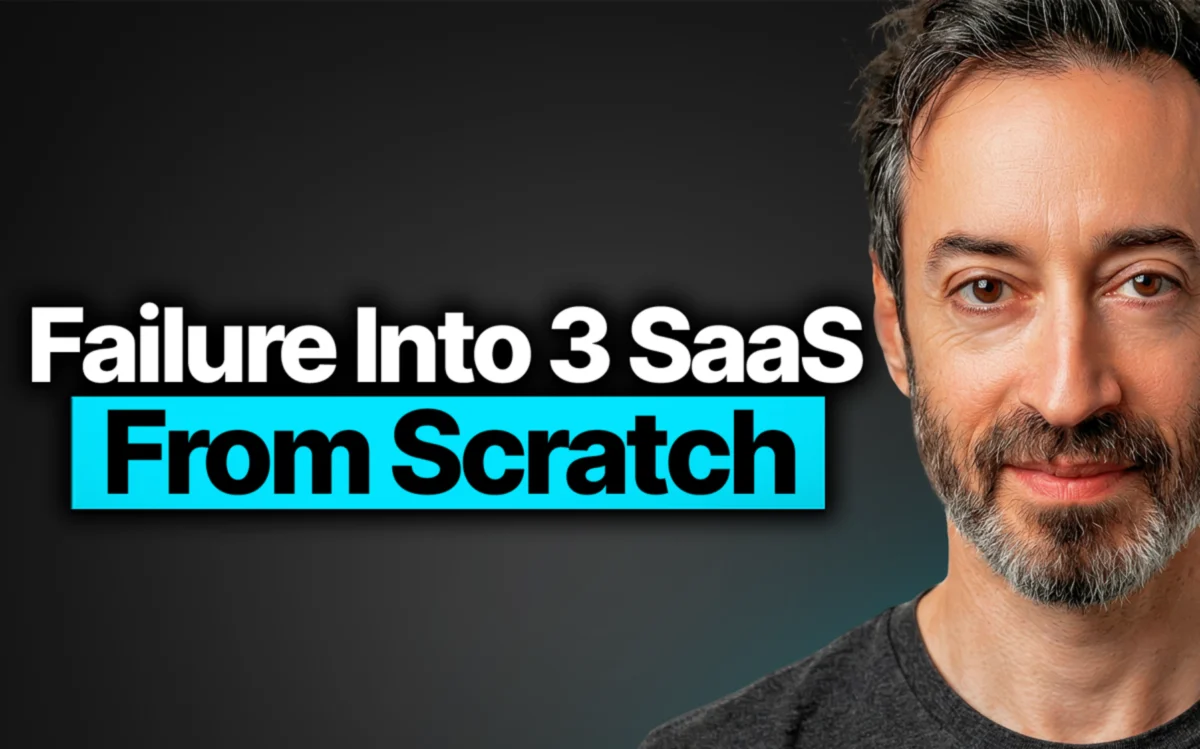
In the volatile world of digital publishing, few scenarios are as harrowing as the one faced by entrepreneur Jamie I.F. On the latest episode of the Niche Pursuits podcast, Jamie sat down to dissect a professional turning point that would break most business owners: the sudden collapse of a $1.55 million exit due to a catastrophic shift in Google’s search algorithms.
What follows is not just a post-mortem of a failed deal, but a comprehensive case study on how to pivot from a fragile, SEO-dependent business model to a robust, diversified SaaS operation.
The Anatomy of an SEO Collapse
The "Evergreen" Illusion
Jamie’s story begins in the "golden era" of affiliate marketing. Having built a portfolio of content sites that were generating nearly $100,000 in monthly revenue, he reached a point of stability that many digital entrepreneurs dream of. The business was a well-oiled machine, and with strong metrics, he decided it was time to cash out.
He listed his two most profitable sites for sale and received a concrete offer of $1.55 million. The deal was in the final stages of due diligence when the industry-wide "Helpful Content Update" (HCU) struck. In a matter of days, the search engine landscape shifted, and his sites saw a 40% decline in organic traffic and revenue.
The Deal Disintegration
For any buyer, a 40% drop in revenue during the due diligence period is a deal-breaker. The stability of the asset was compromised, and the $1.55 million windfall vanished overnight. Jamie found himself in a state of professional "emotional whiplash"—stuck with a business that was no longer yielding the returns he expected, and a bank account that remained empty of the anticipated exit capital.
Chronology of a Rebuild: From Anger to SaaS
Phase 1: The Denial and the "Vigilante" Phase
Following the failed sale, Jamie spent several months attempting to "fix" the sites. He describes this period as a mix of anger, denial, and frustration. He poured significant energy into attempting to recover lost rankings, trying to outsmart an algorithm that had fundamentally changed its criteria.
Looking back, Jamie offers a blunt assessment: those months were largely wasted. He realized that the business model—relying entirely on Google’s organic traffic—was inherently flawed because it left him at the mercy of a platform he couldn’t control. He eventually accepted that he couldn’t force a recovery and had to shift his focus to what was truly within his power: building a product-led business.
Phase 2: The Cost of Fragmented Focus
During the transition, Jamie experimented with various projects, including the successful tool Answer Socrates. While the project showed promise, he was burning roughly $40,000 per month on overhead and a large team. He eventually realized that he had spread himself too thin.
The turning point came when he consolidated 90% of his efforts into a single, high-potential project. He invested approximately $550,000 into the development of a new SaaS venture, forcing himself to adopt a leaner, more disciplined operating stance. This was not merely a motivational strategy; it was a survival necessity to survive the "AI-driven" era of digital content.
Supporting Data: The Birth of AffiliateFinder.ai
The transition from affiliate site owner to SaaS founder followed a classic, data-driven trajectory. While developing an affiliate tracking platform called Endorsely, Jamie included a small feature meant to help users discover new affiliates and influencers.
The High-Value Signal
The shift occurred when a VP at a publicly traded e-commerce brand specifically sought out that singular feature. Jamie tested the waters by presenting two pricing options: one at $99/month and an open-ended inquiry regarding the feature’s value. The VP’s response—a willingness to pay $2,500 per month—confirmed that the feature was, in fact, a standalone product.

This realization led to the creation of AffiliateFinder.ai. The platform evolved from simple scraping into a comprehensive CRM, recruitment, and outreach suite. Today, the business manages a steady influx of 150 brand signups per week, with a clear trajectory toward 300.
Strategic Implications: Moving Beyond SEO
The Shift to Cold Outreach
For those accustomed to "ranking for keywords," Jamie’s rejection of SEO as his primary acquisition channel is a stark lesson in market reality. In his space, high-authority competitors already dominate the search results.
Instead, he turned to cold outreach. By identifying specific "high-intent" signals—rather than scraping generic, exhausted databases—he was able to craft personalized messages that actually converted. His philosophy is clear: find a data source that indicates a user is currently struggling with a specific pain point and offer the solution directly.
The Role of Paid Ads
Jamie also integrated paid ads as a secondary growth engine. He warns that learning to run ads requires a shift in mindset:
- Creative is King: Modern ad platforms rely more on the hook and the funnel than on manual audience micromanagement.
- Funnel Diagnostics: He emphasizes tracking four specific points—landing page views to signups, trial starts, trial-to-paid conversion, and churn. By focusing on the "weakest link" in that chain, he ensures capital is spent efficiently.
The B2B Advantage
Jamie argues that B2B selling is fundamentally more sustainable than B2C. By targeting professional buyers, he found that price sensitivity decreases. Once a subscription moves past the $100/month threshold, customers evaluate the tool based on the ROI it provides (time saved or revenue generated) rather than its cost.
Interestingly, he challenges the conventional wisdom that "B2B equals LinkedIn." While LinkedIn is effective, it is often prohibitively expensive. He has found success reaching professional audiences on platforms like Instagram, provided the creative and targeting inputs are precise.
Official Lessons and Future Outlook
The "Cheap and Cheerful" Trap
One of the most important takeaways from the interview is the danger of underpricing. Jamie admits that his $99/month entry price is likely too low. He argues that some customers will never find value in a low-cost tool, while the right customers would gladly pay for a premium solution that delivers significant revenue. He is now moving toward a strategy of increasing prices and leveraging annual plans to stabilize cash flow.
The Verdict: Build for Resilience
Jamie’s journey highlights a critical reality for modern digital entrepreneurs: the era of "passive" income is evolving into an era of active operations.
- Focus: You cannot build a world-class product while splitting your attention across five different projects.
- Diversification: If your business is solely dependent on a search algorithm, it is not a business—it is a lease.
- Speed of Feedback: Whether through paid ads or direct outreach, choose channels that give you rapid data. You need to know within days, not months, if your strategy is working.
Jamie’s transition from a victim of the Helpful Content Update to a successful SaaS founder is a testament to the fact that when an old door closes, the best path forward is to build a new one. By moving from the unpredictable world of search traffic to the deliberate world of B2B SaaS, he has not only secured his revenue but has created a business model that is built to withstand the next inevitable rule change in the digital landscape.
For those currently reeling from algorithm shifts, the message from the Niche Pursuits podcast is clear: stop trying to win yesterday’s game. The winners of the future are those who prioritize deep product-market fit, sustainable acquisition channels, and the grit to pivot when the market demands it.