In the modern digital product landscape, the gap between design and engineering often feels like an unbridgeable chasm. While design systems have become the industry standard for maintaining visual consistency and operational efficiency, many teams find that these systems—often bloated with atomic elements—fail to deliver the promised synergy. Instead of accelerating workflows, they frequently lead to synchronization bottlenecks, "handoff" friction, and a lack of shared ownership.

For many cross-functional teams, the solution is not more documentation or more meetings; it is a fundamental shift in philosophy. By adopting a "patterns-first" approach—where reusable, product-specific modules take precedence over isolated elements like buttons or chips—teams can unlock parallel development, foster deep collaboration, and build products that are as scalable as they are cohesive.

The Problem: The "Element-First" Trap
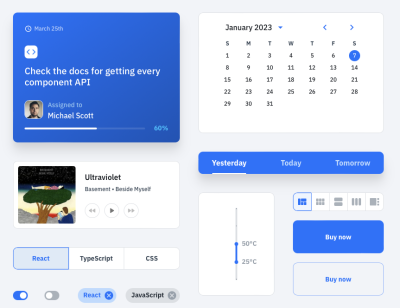
Most organizations conceptualize a design system as a library of atomic parts. They prioritize building a comprehensive set of UI primitives: buttons, input fields, toggles, and dropdowns. While these elements are foundational, they are rarely the source of friction. In practice, a design system is a product in its own right, and its primary users are the designers and developers building the software.
The pain points are well-documented: designers finish a screen, only for developers to realize the implementation requires a different logic; developers build a component that fails to account for a critical edge case; and, ultimately, both teams end up "out of sync." A collection of buttons does not solve the complexity of a user flow, nor does it ensure that the product team shares a common mental model of how the application should function.
A New Framework: Patterns as Functional Blueprints
The concept of "design patterns" is borrowed from architecture and software engineering—a toolkit of solutions to recurring problems. As Christopher Alexander famously noted in The Timeless Way of Building, "Even the most complicated, sophisticated things are defined by a small number of composable patterns."

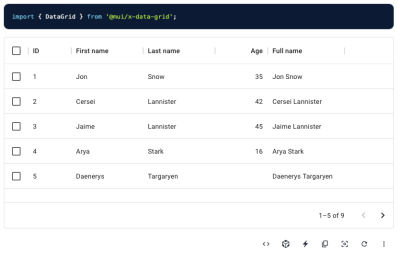
In a product design context, a design pattern is a reusable combination of elements designed for a specific purpose. It is a functional module—a "Data Grid," a "User Profile," or a "Scheduling Card"—that solves a specific experience problem. By focusing on these patterns rather than individual elements, teams can define the "what" and the "how" of their product simultaneously.
The Chronology of Collaborative Alignment
To implement a pattern-first methodology, teams must integrate pattern-making into the earliest phases of product planning. The process generally follows this trajectory:

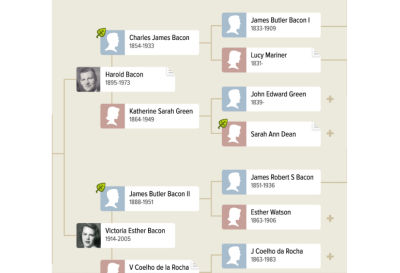
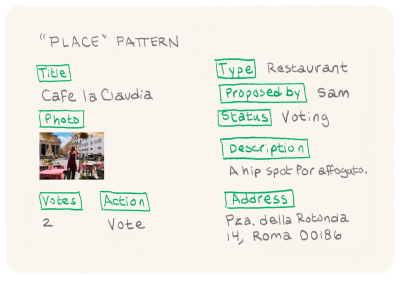
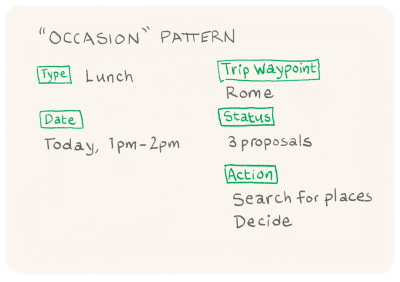
- Shared Discovery: Instead of the designer working in a vacuum, the designer, product owner, and developer convene to define the "objects" of the product. Using a whiteboard, they identify the core entities (e.g., a "Person," a "Place," or an "Occasion") and their associated properties.
- The Living Document: The team creates a shared, editable document—often in Notion or a similar collaborative tool—where these patterns are recorded. This document serves as the "source of truth," tracking attributes, data requirements, and intended behaviors.
- Parallel Execution: With the pattern defined, the developer can stub out the code (e.g., in TypeScript) based on the agreed-upon properties, while the designer works on the visual implementation in Figma. Neither is waiting for the other, as the contract of the pattern has already been established.
- Continuous Refinement: As the work progresses, the team updates the shared document. If an engineer discovers a need for a "presence" indicator, it is added to the pattern definition, and both the design and the code are updated in real-time.
Supporting Data and Real-World Application
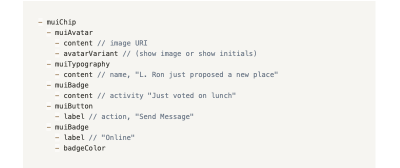
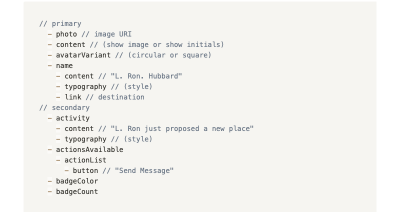
Consider a fictional startup, "WeTrip," which aims to simplify group travel logistics. By using a pattern-first approach, the team avoided the traditional "waterfall" bottleneck. They defined the "Person" pattern as a core entity with specific properties—name, availability status, and actions.
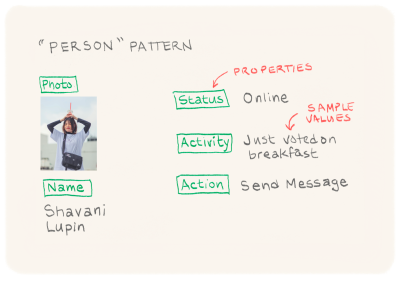
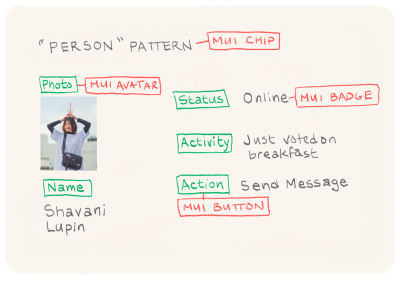
By mapping these properties to both MUI (Material UI) elements in code and the design system in Figma, the team created a shared language. When they eventually needed to build a new "Proposals List" view, they didn’t have to redesign the user card from scratch. They simply instantiated the "Person" pattern within the new view.
This approach shifts the focus from "pixel pushing" to "system building." When reuse becomes a key metric, teams can track their efficiency in ways analogous to test coverage in software engineering. If a pattern is used in ten different views, it represents ten distinct opportunities where the team saved time, reduced technical debt, and maintained consistency.
The Strategic Implication for Organizations
For leadership, the shift to a pattern-first model is more than a technical upgrade; it is a cultural transformation.
- Elimination of Handoffs: Because designers and developers collaborate on the definition of the pattern, there is no "handoff" phase. The design is the result of a shared process, not a document passed over a wall.
- Reduced Friction in Scaling: As teams grow, patterns can be extracted into separate repositories or libraries. This allows for clear ownership; a specific team or individual can be responsible for the "Person" pattern, ensuring it remains robust and performant.
- Faster Iteration: By decoupling the visual polish from the underlying structure, teams can ship "minimum viable" versions of features, knowing that they can iterate on the aesthetic layer without breaking the functional logic of the pattern.
Navigating Organizational Realities
It is important to acknowledge that in large, legacy-driven enterprises, this bottom-up approach may face resistance. Large organizations often have rigid mandates or departmental silos that prioritize top-down control. However, even in these environments, the pattern-first approach can be used as a "guerrilla" strategy to demonstrate efficiency.
When a team can show that their pattern-based approach allows them to ship twice as fast as their peers, the methodology naturally gains buy-in. It provides a clear, quantitative argument for why design system work is not "extra" work, but rather the foundational infrastructure that allows for rapid, sustainable growth.
Final Reflections: The Path to Harmony
The ultimate goal of any design system is to allow a team to work in harmony. When the focus remains solely on atomic elements, the system often becomes an end in itself, rather than a means to a better user experience.

By elevating design patterns to the center of the collaboration process, teams move from "managing assets" to "building a product language." This creates a shared mental model that empowers engineers to code with confidence and designers to iterate with agility. As we look toward the future of product development, the most successful teams will not be those with the largest libraries of icons or buttons, but those with the most effective, reusable, and collaborative patterns.

The journey to this level of alignment is not instantaneous, but it is one that begins with a simple conversation: "What are the patterns that keep repeating in our work, and how can we build them together?" For those willing to make the shift, the rewards—faster velocity, higher quality, and, perhaps most importantly, a more enjoyable working environment—are well worth the effort.