The history of innovation is often defined by the specific challenges it was designed to overcome. For the past two decades, Artificial Intelligence (AI) has been primarily tethered to the engines of commerce—optimizing supply chains, refining targeted advertising, and automating corporate workflows. But what if we shifted our perspective? What if, like the artist Marcel Duchamp, who took an ordinary urinal and redefined it as a masterpiece of modern art, we challenged the functional boundaries of our most powerful technology?
Duchamp’s Fountain was a radical act of re-contextualization. Today, the climate crisis demands a similar intellectual pivot. We possess an "all-powerful" tool capable of processing data at scales unreachable by human cognition. Yet, we largely relegate this capability to solving business-related inefficiencies. It is time to apply the ingenuity of code to the most existential threat humanity has ever faced: the rapid destabilization of our global climate.
The Global Threat: A Timeline of Atmospheric Decline
To understand why AI is a necessary, perhaps even mandatory, component of our climate strategy, one must first look at the gravity of our current trajectory. Climate change is not a distant, theoretical annoyance; it is a systemic failure of our planetary equilibrium.
A Chronology of Crisis
- 1830s: The dawn of the industrial era marks the official beginning of the significant human-driven rise in atmospheric greenhouse gases.
- 2012: The World Water Assessment Programme warns that by 2025, 1.8 billion people will reside in regions plagued by absolute water scarcity.
- 2019: A series of devastating wildfires, heatwaves, and extreme weather events confirm that the "future" impacts of climate change are already manifesting in the present.
- 2050 (The Projection): Various policy papers, including sobering assessments from Australian research institutes, model scenarios where current warming trends lead to widespread societal collapse and uninhabitable zones if drastic interventions are not achieved by mid-century.
The data provided by NASA remains the bedrock of this discourse: the accumulation of greenhouse gases—driven by fossil fuel combustion, mass-scale deforestation, and industrial agriculture (particularly the production of livestock)—is suffocating the planet. We are currently racing against a clock that is ticking faster than our political or individual efforts to slow it down.

The Technological Architecture: Rules vs. Learning
Solving the climate crisis is a problem of complexity and scale. Humans have been studying the mechanics of the climate for roughly 40 years, yielding an impressive library of research. Yet, the bottleneck remains: we are still predominantly in the "study" phase while the "implementation" phase is urgently overdue.
Rules-Based AI: The Efficient Calculator
Rules-based systems are the digital equivalents of a strict script. They follow "if-then" logic to perform repetitive tasks. In environmental science, these algorithms are invaluable for the "grunt work"—crunching massive datasets from meteorological satellites, parsing historical weather patterns, and managing energy grids to maximize efficiency. However, they lack memory and adaptability. They can answer a specific question, but they cannot "learn" from the evolving environment.
Learning-Based AI: The Dynamic Problem-Solver
This is where the paradigm shifts. Learning-based AI (Machine Learning) diagnoses problems by interacting with them. Unlike rules-based systems, these models possess memory and the capacity to iterate. If you ask a rules-based system to solve a resource allocation problem, it will provide a static answer based on predefined parameters. A learning-based AI, however, will analyze past failures, current constraints, and future probabilities to suggest an evolving strategy. This capability to synthesize, record, and adapt makes it a vital partner in the race against environmental degradation.
Real-World Applications: Where AI is Already Moving the Needle
The narrative that AI is merely a corporate "buzzword" is being dismantled by organizations and researchers who see it as a strategic weapon for sustainability.

The Preservation of Forests (SilviaTerra)
Forests act as the lungs of the planet, sequestering carbon at a scale no human machine can replicate. SilviaTerra, supported by Microsoft, is leveraging AI to transform forestry management. By utilizing satellite imagery and AI analysis, they can monitor tree species, health, and density with pinpoint accuracy. This removes the need for exhaustive manual fieldwork and allows conservationists to manage forests with surgical precision, ensuring these vital carbon sinks are optimized for growth and longevity.
Decarbonizing Data Centers (DeepMind)
Google’s partnership with DeepMind serves as a blueprint for industrial efficiency. By applying AI to the cooling systems of their massive data centers, the company achieved a 35% reduction in energy consumption. The beauty of this solution lies in its scalability; the underlying algorithms can be exported to manage everything from smart building climate control to municipal energy distribution, proving that industrial optimization can be a direct contributor to carbon neutrality.
The War on Smog (Green Horizon Project)
IBM’s Green Horizon Project demonstrated the power of predictive modeling in Beijing. By utilizing self-configuring weather and pollution forecasts, the project helped the city reduce average smog levels by 35% between 2012 and 2017. It proved that when AI is allowed to "see" the patterns of pollution, cities can make preemptive policy decisions that translate into immediate public health gains.
Predictive Visualization (CycleGANs)
Researchers at Cornell University have utilized Generative Adversarial Networks (GANs)—systems that can generate new data based on training sets—to simulate the before-and-after effects of extreme weather. These visualizations are not merely for aesthetics; they allow policymakers to see the potential reality of climate disasters, helping humans prioritize where to invest in infrastructure and defensive measures.
Repurposing the Arsenal: Untapped Potential
The most exciting prospect for the future of environmental AI lies in the "Duchampian" act of repurposing existing software for the common good.
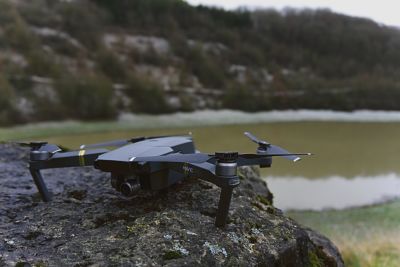
- Autonomous Reforestation: The software powering drones in greenhouse management, such as Airlitix, could be redirected toward the global mission of planting 1.2 trillion trees. Beyond planting, these drones could be programmed to monitor soil nutrients, distribute water, and even act as aerial sentinels to detect and deter forest fires.
- Ethical Advertising Algorithms: Companies like Google and Facebook own the most sophisticated consumer-targeting AI on the planet. Currently, these algorithms prioritize consumer purchases based on revenue. A fundamental shift in these algorithms—prioritizing the promotion of sustainable products, circular-economy services, and ethical companies—could shift global consumer behavior in a matter of months rather than decades.
- Strategic Game Theory (AlphaGo): The same logic that allowed AlphaGo to master complex board games can be applied to the "game" of climate policy. If an AI can outmaneuver the world’s best chess players, it may possess the analytical capacity to model complex international policy negotiations, identifying "win-win" scenarios for nations that are currently stuck in a stalemate regarding carbon emissions.
The Moral Imperative: Implications for the Future
The challenge with climate change has never been a lack of scientific understanding; it has been a lack of social and political momentum. AI could serve as the ultimate communicator, generating "doomsday" scenarios that force global unity or, conversely, painting vivid, tangible pictures of the restorative future we could enjoy if we act today.
The lack of widespread knowledge regarding these environmental use cases is a tragedy. We have the code; we have the data. What we lack is the collective will to prioritize the health of our biosphere over the short-term metrics of business growth.
A Call to Action
To the developers, the engineers, and the data scientists: your work has a carbon footprint, but it also has a massive potential for carbon handprint. When you sit down to write your next algorithm, ask yourself: Is this solving a business problem, or can this be repurposed to solve a human one?
We are standing at a precipice. The tools we have built for profit must now be redirected toward the preservation of our home. As we have seen, the technology is ready. The only remaining variable is our willingness to see the urinal not as a fixture, but as a fountain of potential.