SAN FRANCISCO – The digital marketing landscape is undergoing its most significant transformation since the advent of social media advertising. As of mid-2026, OpenAI has officially transitioned from a research-driven AI powerhouse into a global advertising juggernaut. With the full rollout of its self-service Ads Manager, OpenAI is now offering brands a direct line to millions of users at the exact moment of cognitive engagement: immediately following a ChatGPT response.
While many traditional brands are still navigating the complexities of Large Language Models (LLMs), early adopters are capitalizing on a platform that combines the intent of search engines with the conversational depth of a personal assistant. This report provides an exhaustive analysis of the platform’s rollout, technical infrastructure, and the strategic implications for the global marketing industry.
Main Facts: The New Architecture of Digital Intent
OpenAI’s advertising platform represents a departure from the "interruption" model of social media. Instead of appearing in a feed, ads are placed programmatically below the generated text of a ChatGPT interaction. This placement ensures that the advertisement is seen when the user is most attentive, having just received an answer to a specific query.

The platform is anchored by a sophisticated self-service "Ads Manager" that mirrors the logic of established giants like Meta Ads Manager and Google Ads, yet introduces nuances specific to generative AI. Key features include:
- Contextual Matching: Moving beyond simple keywords to "context hints" that align with conversational topics.
- Global Reach: Operational in major Western and Asian markets as of June 2026.
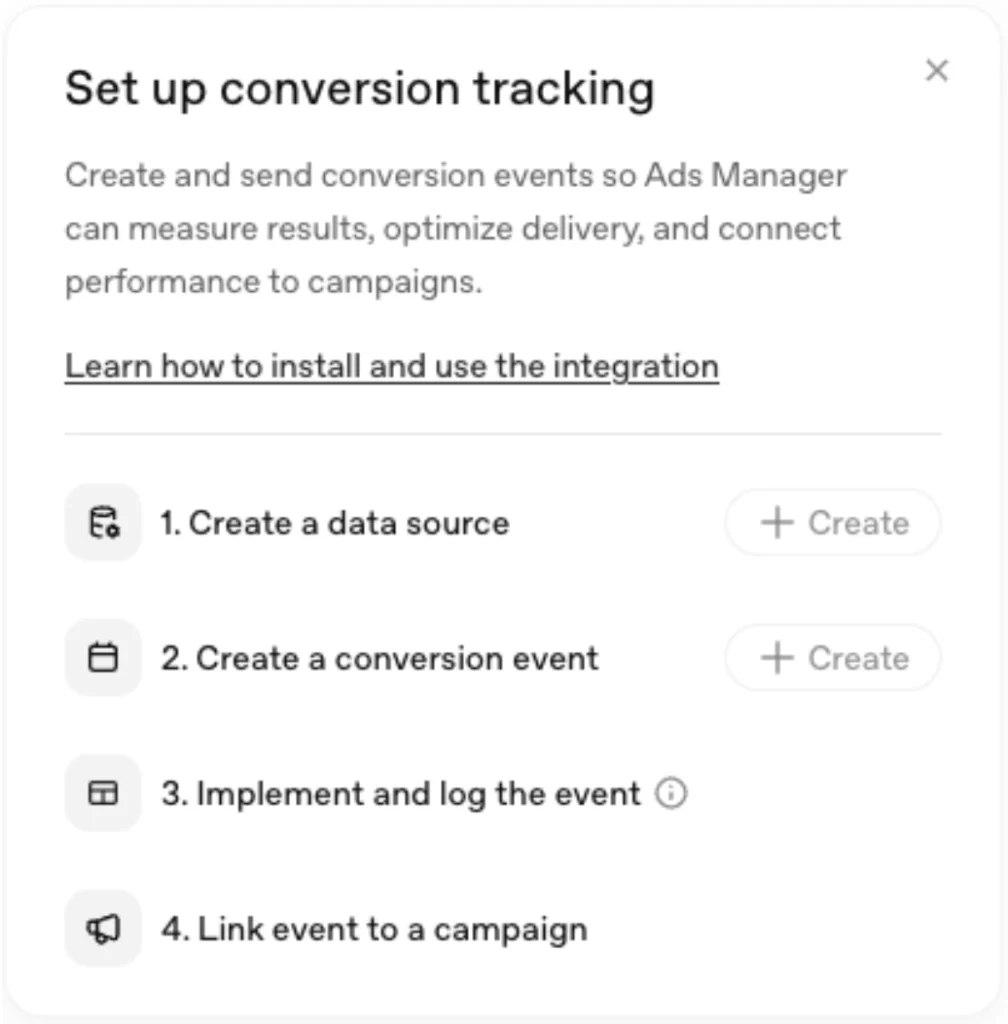
- Full-Funnel Objectives: Support for Reach, Clicks, and Conversion-based campaigns.
- Performance Analytics: Real-time tracking of Spend, Impressions, Clicks, and Cost-Per-Click (CPC) through a centralized dashboard.
Chronology: The Global Expansion of ChatGPT Ads
The rollout of OpenAI’s advertising capabilities was a calculated, multi-phase operation designed to test market receptivity and algorithmic stability across different linguistic and regulatory environments.
March 2026: The Oceania Pilot
The journey began in March 2026, when OpenAI selected Australia and New Zealand as its primary testing grounds. These markets, often used by tech giants for their representative consumer behavior and manageable scale, allowed OpenAI to refine its "Context Hint" logic and ensure that ads did not degrade the user experience or the perceived neutrality of the AI’s responses.

May 5, 2026: The North American Launch
On May 5, 2026, OpenAI opened its fully self-service platform to all advertisers in the United States. This was the "watershed moment" for the platform, as the influx of capital from major U.S. brands provided the data necessary to train the advertising algorithm for high-velocity bidding environments.
June 2026: Eurasian Integration
A few months later, in June 2026, the platform reached critical mass by expanding into Japan and South Korea—two of the world’s most AI-integrated economies. Simultaneously, the United Kingdom became the first European market to launch ChatGPT ads, serving as a gateway for OpenAI’s expansion into the broader European territory while navigating the complexities of regional digital advertising standards.
Supporting Data: Navigating the Ads Manager
For media buyers, the transition to OpenAI’s Ads Manager has been facilitated by a familiar hierarchical structure: Campaign > Ad Group > Ad. However, the technical execution requires a deeper understanding of how LLMs interpret relevance.

The Performance Trend Dashboard
Upon logging into the Ads Manager, users are greeted by the Performance Trend dashboard. This interface provides a macro-view of campaign health, allowing for data segmentation by:
- Timeframes: Default ranges of 7, 14, or 30 days, alongside custom date selectors.
- Granular Filters: The ability to segment data by device type (mobile vs. desktop) and country, which is vital for optimizing global spend.
- Core Metrics: Real-time reporting on spend, impressions, clicks, and CPC.
Strategic Campaign Setup
The campaign level is where the fundamental "intelligence" of the ad is defined. Advertisers must select one of three primary objectives:
- Reach: Optimized for maximum visibility and brand awareness (CPM bidding).
- Clicks: Optimized to drive traffic to external landing pages (CPC bidding).
- Conversions: Optimized for specific user actions, such as sign-ups or purchases (CPA bidding).
A unique quirk of the OpenAI platform is that Location Targeting is set at the campaign level rather than the ad group level. Currently, ads can be targeted to seven primary regions, including the US, UK, Australia, New Zealand, Japan, and South Korea.

Ad Group Logic and "Context Hints"
The Ad Group level introduces "Context Hints," perhaps the most innovative feature of the platform. Unlike traditional "Exact Match" keywords, Context Hints guide the AI to identify conversations, topics, or themes where a product might be relevant. This allows for a semantic connection; for example, a brand selling hiking boots might appear after a user asks ChatGPT for "best trails in the Pacific Northwest," even if the word "boots" was never used in the prompt.
To assist with bidding, OpenAI has integrated a "Delivery Strength" indicator. If a bid is too low, the system warns that the ad "May not deliver." Conversely, a competitive bid triggers a "Strong Delivery" status, suggesting a high likelihood of winning the auction for the specified context.
Creative Execution and Attribution
The final stage is Ad Creation. Each ad consists of:

- A Brand Logo: For immediate visual recognition.
- A Headline: (Maximum character limits apply).
- Body Text: A concise call to action.
- Destination URL: Because OpenAI’s Ads Manager does not currently support automatic UTM tagging, advertisers must manually append static UTM parameters to their links to track performance in third-party tools like Google Analytics.
Official Responses and Market Sentiment
While OpenAI has remained characteristically tight-lipped about the specific inner workings of its auction algorithm, industry experts have begun to weigh in on the platform’s meteoric rise.
"The logic of the platform is intentionally familiar," says Marcus Thorne, a senior media buyer specializing in emerging tech. "Once you understand the mechanics of one major platform, the others become easy to unlock. OpenAI isn’t trying to reinvent the wheel of media buying; they are reinventing the placement of the ad."
Data from Trendos.com, a leading AI-advertising intelligence tool, supports this sentiment. Their "Ad Radar" research indicates a staggering 315% increase in brands running ads on ChatGPT between May and June 2026. This surge suggests that the "mystery" surrounding LLM advertising is quickly evaporating as brands realize the high conversion potential of contextual AI placement.

However, some critics point to the lack of an official "Ad Library" (similar to Meta’s) as a hurdle for transparency. Third-party tools like Trendos have stepped in to fill this gap, offering "Impression Share" data and competitor creative analysis, allowing brands to see which prompts their rivals are successfully bidding on.
Implications: The Future of the "Search" Paradigm
The implications of OpenAI’s advertising success are profound. For two decades, Google has dominated the "intent" market through search queries. However, as users migrate from search engines to AI assistants for complex problem-solving, the "intent" is moving with them.
1. The Death of the Keyword?
The shift toward "Context Hints" suggests that the era of hyper-specific keyword bidding may be waning. In the AI era, understanding the intent and flow of a conversation is more valuable than matching a single word. This requires a more sophisticated approach to copywriting and brand positioning.

2. Privacy and Contextual Relevance
Unlike social media ads that rely heavily on invasive user tracking and demographic profiling, ChatGPT ads are inherently contextual. They are based on what the user is currently doing rather than who the user is. This could represent a more privacy-compliant path forward for the digital advertising industry as global regulations tighten.
3. The Competitive Moat
The 315% growth in advertiser participation within a single month suggests that the "early mover" advantage is closing. As the auction environment becomes more crowded, CPCs are expected to rise. Brands that established their "Context Hint" strategies early in 2026 are now seeing the highest ROI, while latecomers face a steeper learning curve and higher entry costs.
4. Integration and Automation
The availability of API keys within the Ads Manager allows for the automation of ad copy generation and campaign analysis. This creates a recursive loop where AI is used to create, buy, and optimize ads that are then served within an AI environment.

Final Thoughts
As ChatGPT solidifies its status as a trusted utility for millions of global users, it has simultaneously become a premier destination for brand storytelling. The transition from a "mysterious" LLM to a transparent, high-performing advertising platform is nearly complete. For modern marketers, the mandate is clear: those who can adapt their existing media-buying expertise to the nuanced, conversational world of OpenAI will be the ones to define the next decade of digital growth.
The era of AI-driven commerce has not just arrived; it is currently being auctioned off to the highest, most contextually relevant bidder.