The digital landscape is currently witnessing a pivotal shift in the evolution of artificial intelligence. For years, users have enjoyed the "free" utility of large language models (LLMs), specifically OpenAI’s ChatGPT, which became the fastest-growing consumer application in history. However, as any seasoned observer of the tech industry knows, the word "free" is rarely an absolute. Just as Instagram transitioned from a chronological photo-sharing app to a marketplace, and YouTube evolved from a video repository into a commercial-heavy powerhouse, ChatGPT is now entering its monetization phase.
The introduction of ChatGPT Ads marks the conclusion of the platform’s "pure utility" era. It signals the beginning of a sophisticated advertising ecosystem where user attention, once again, becomes the primary currency. For advertisers, this represents a frontier of high-intent "micro-moments"; for users, it is a reminder that even the most revolutionary tools eventually require a sustainable revenue model.
Main Facts: The Architecture of OpenAI’s Ad Platform
OpenAI has quietly rolled out an advertising framework that mirrors the structural hierarchy familiar to digital marketing veterans. The system is organized into three primary tiers: Campaigns, Ad Groups, and Ads. This design choice is intentional, lowering the barrier to entry for Pay-Per-Click (PPC) specialists who are already proficient in Google Ads or Meta’s Business Suite.
Currently, the ad formats are strikingly minimalist. Unlike the complex, multi-asset responsive ads found on other platforms, ChatGPT Ads currently prioritize simplicity. Advertisers are restricted to:

- One high-quality image.
- A concise, impactful title.
- A short, text-based description.
This "less is more" approach ensures that ads do not disrupt the conversational flow of the AI interface. The ads appear during what industry experts call "micro-moments"—those specific seconds when a user is deep in research, asking a specific question, and is most susceptible to a relevant recommendation. For example, a user asking about e-commerce logistics may see a subtle integration for Shopify, while a designer asking about layout templates might encounter an ad for Canva.
Reporting metrics remain in their infancy but cover the essential KPIs: Impressions, Clicks, Spend, Click-Through Rate (CTR), Average Cost-Per-Click (CPC), and Average Cost-Per-Mille (CPM). To track deeper actions, OpenAI has introduced a Conversions API and a tracking pixel, allowing brands to measure the direct ROI of their AI-based placements.
Chronology: From Pure Utility to Monetized Ecosystem
To understand the gravity of ChatGPT Ads, one must look at the historical trajectory of social and search platforms.
2022–2023: The Disruption Phase
OpenAI released ChatGPT, offering unprecedented access to generative AI for free. During this period, the focus was entirely on user acquisition and model refinement. The platform reached 100 million users in record time, operating primarily on venture capital and Microsoft’s multi-billion-dollar investments.

2024: The Infrastructure Build-Out
As the cost of running massive GPU clusters became a public talking point, OpenAI began diversifying its revenue. This started with ChatGPT Plus (the subscription model) and the Enterprise tier. However, subscriptions alone rarely scale to the heights required for a global tech titan. Behind the scenes, the framework for an advertising API was being developed.
2025: The Revelation and Rollout
Users began noticing the first "sponsored" responses. These weren’t the intrusive pop-ups of the early 2000s web; they were contextual suggestions. Brands like Shopify and Canva were among the first to be spotted. The rollout has been methodical, targeting users based on the relevance of their queries rather than just broad demographic data.
Supporting Data: Technical Setup and User Experience
The technical onboarding process for ChatGPT Ads reveals much about OpenAI’s long-term strategy. During the account creation phase, the platform distinguishes strictly between "Individual" and "Business" accounts.
Agency vs. Business Dynamics
One of the most significant features for the professional marketing community is the agency-specific workflow. If a user identifies as an agency ("I act on behalf of other organizational clients"), the platform mandates a specific hierarchy. The client must create their own primary account first and then grant the agency access. This ensures that the data and billing remains with the brand—a move that promotes transparency and follows modern privacy standards.

The Management Interface
While the structure is familiar, the management tools are currently rudimentary. Unlike the robust Google Ads Editor, which allows for massive, offline bulk changes, ChatGPT Ads currently requires manual, row-by-row editing within the UI. There is an option to export and re-upload CSV/XLSX files, but the lack of an in-app multi-select bulk editor suggests the platform is still in a "beta" mindset, focusing on quality and controlled testing over high-volume ad spam.
Relevance and Targeting
Initial data suggests a dual-targeting approach. Ads are triggered by:
- Contextual Relevance: The specific keywords and intent behind a user’s prompt.
- Brand Bidding: Companies paying to be top-of-mind when their category is mentioned.
Interestingly, early reports indicate that ads are being shown even to existing customers of a brand. This suggests that the current algorithm focuses more on "Category Dominance" and "Early Adopter Visibility" rather than granular exclusion lists or sophisticated CRM retargeting.
Strategic Positioning: OpenAI’s "Official" Stance
While OpenAI has not launched a massive traditional media blitz to announce its ad platform, its actions speak to a calculated, cautious strategy. The company is walking a fine line: it needs the revenue from ads to offset the astronomical costs of training models like GPT-5, but it cannot afford to degrade the user experience to the point where users flee to competitors like Claude or Perplexity.

An "About this ad" panel has been integrated into the interface, providing users with a degree of transparency. It informs users that advertisers receive data on total views and clicks, but it emphasizes that private conversational data is protected.
Furthermore, a telling piece of data is that OpenAI continues to be one of the largest spenders on Google Ads. This indicates that OpenAI views itself as both a competitor to and a participant in the traditional search ecosystem. They are using Google to acquire users, then using their own internal ad platform to monetize those users once they arrive.
Implications: The Future of Search and PPC
The introduction of ads into ChatGPT is not just a new feature; it is a fundamental shift in how the internet will function.
The Death of the "Ten Blue Links"
For two decades, the "Ten Blue Links" of Google Search have been the gold standard for finding information. ChatGPT Ads bypass this. If a user asks, "What is the best way to start an online store?" and receives a conversational response with a Shopify link embedded, the user never needs to visit a search engine results page (SERP). This "Zero-Click" environment makes the ChatGPT ad placement incredibly valuable—and potentially dangerous for traditional SEO.

The "Micro-Moment" Advantage
Traditional search ads rely on a user clicking a link and then navigating a website. ChatGPT ads exist within the research phase. The conversion friction is significantly lower because the recommendation comes from an AI the user already trusts for information.
Advice for PPC Specialists
For digital marketers, the message is clear: Adapt or be left behind.
- Early Adoption: Being an early mover in this space allows brands to secure lower CPMs before the market becomes saturated.
- Minimalist Creative: Marketers must learn to convey value with a single image and a few dozen characters. The era of "over-designed" landing pages may give way to "high-context" AI responses.
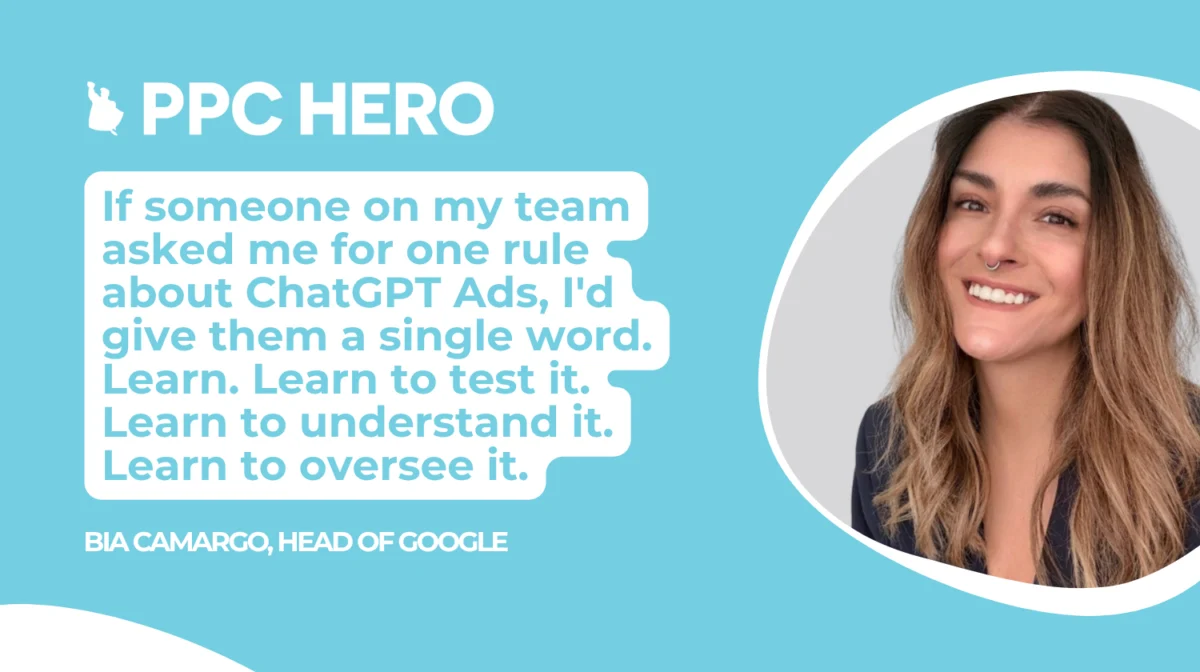
- The "Learn" Rule: OpenAI’s platform is evolving weekly. Specialists are encouraged to run isolated, low-budget tests to understand how the AI triggers their ads before committing major capital.
Conclusion
The transition of ChatGPT into an ad-supported platform was inevitable. As the cost of intelligence drops, the value of attention rises. OpenAI is betting that its users will tolerate subtle, contextual ads in exchange for continued access to world-class AI. For the advertising industry, it is the birth of a new "walled garden"—one that might eventually rival the scale of Google and Meta. The "free" era is over, but for those willing to pay attention to the bill, a new era of high-precision marketing has just begun.