In the traditional landscape of digital agency sales, the "pitch meeting" is often a high-stakes, nerve-wracking performance. Agency owners spend hours crafting slide decks, hoping to convince a prospect that they are the right fit for the job. But what if you could bypass the uncertainty of the pitch entirely?
Etan Polinger, an AI consultant and creator of the AI Integrator Certification, argues that the future of sales isn’t about persuasion—it’s about proof. By leveraging advanced AI workflows to conduct deep research and generate functional prototypes before the first meeting, consultants can now demonstrate value so clearly that the question shifts from "Should I hire you?" to "Do you have the capacity to take me on?" This paradigm shift recently allowed Polinger to close a $12,000 contract with minimal friction, proving that in the age of AI, preparation is the ultimate competitive advantage.
The Evolution of the Sales Pitch: From "I Hope" to "I Know"
Most sales professionals operate on a "hope-based" model. They hope their portfolio is impressive enough, hope their pricing is competitive, and hope the client resonates with their vision. Polinger contends that AI effectively removes this "hope" from the room.
By utilizing AI to conduct comprehensive due diligence and build tangible assets, a consultant can enter a discovery call not as a vendor seeking approval, but as a partner who has already begun the work. This flip in the power dynamic is profound. When a prospect sees their own branding, their specific business problems, and a functional solution waiting for them on the screen, the psychological weight of the decision shifts. The prospect is no longer evaluating a pitch; they are evaluating a finished reality.
This approach would have been prohibitively expensive in terms of time and labor just a few years ago. Today, one person—or a small team—can replicate the output of a multi-person agency in under four hours.
Chronology of the $12K Workflow
The success of Polinger’s method relies on a disciplined, four-stage process that leverages generative AI to turn vague requirements into a closed deal.
Stage 1: Decoding the Prospect’s Intent
The process begins the moment a prospect expresses a need, whether through a social media comment or a direct email. The goal here is to strip away technical jargon and identify the "one-sentence outcome."
Polinger uses AI as a filter for clarity. By pasting the prospect’s initial inquiry into a tool like Claude or ChatGPT, he uses a simple prompt: "I just saw this message. What do they want? Answer in one sentence that anyone can understand." This ensures the consultant remains focused on business value—such as "a chat widget to automate support"—rather than getting lost in the "how" of the technical implementation.

Stage 2: The Deep Research Phase
Once the objective is clear, Polinger performs three distinct "research passes." By separating these into individual AI sessions, he ensures the model allocates maximum compute power to each domain:
- The Person: He scrapes public profiles, podcast interviews, and social media posts to understand the prospect’s communication style, values, and primary pain points.
- The Company: He analyzes the business model to understand their revenue streams and long-term goals.
- The Market: He researches competitors and industry trends, which serves as a safety net. If the prospect is hesitant about a custom solution, Polinger is already prepared to offer a pre-built alternative, ensuring he remains the "consultant of choice" regardless of the final decision.
Stage 3: Establishing the Visual Identity
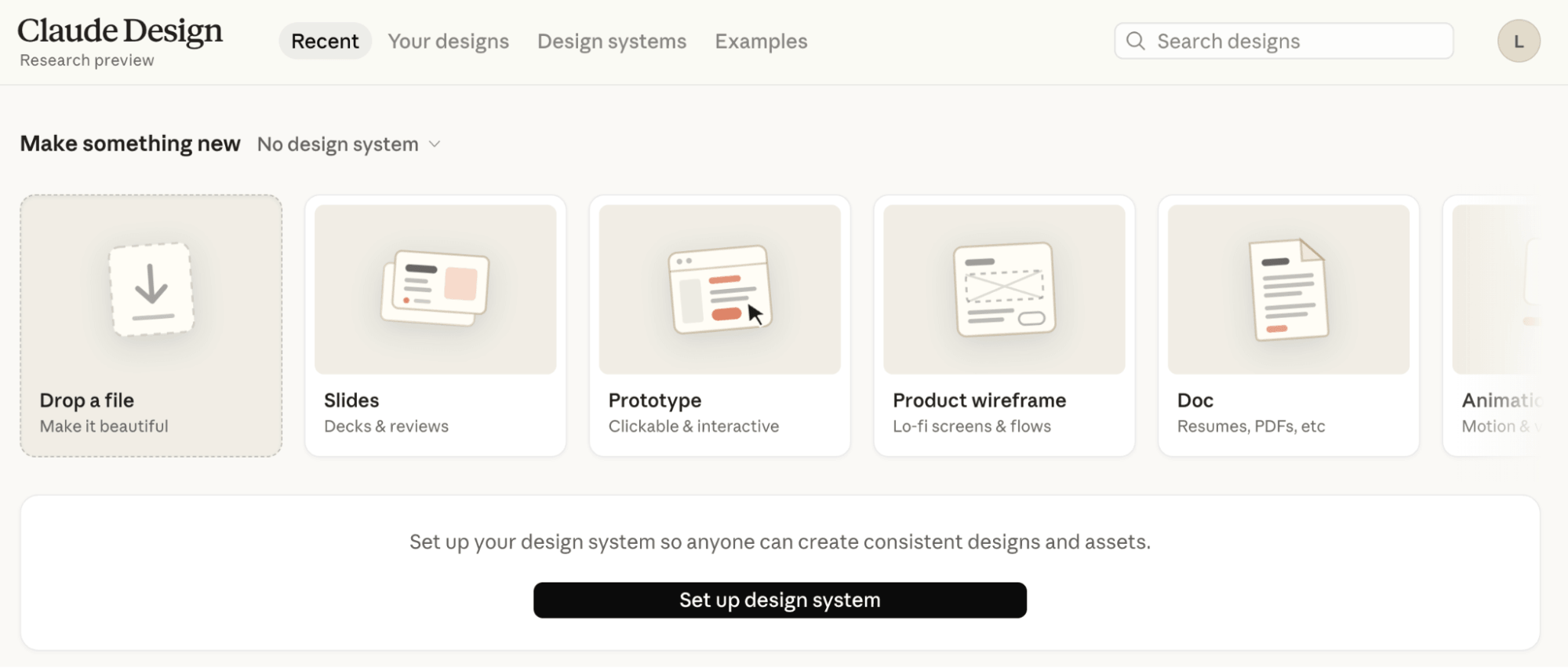
A prototype is only as good as its perceived professionalism. Polinger utilizes browser extensions like WhatFont and ColorZilla to extract the prospect’s brand assets, or simply lets AI tools like Claude Design infer the branding directly from screenshots of the client’s website.
By creating a "working style guide," the AI generates code snippets for UI/UX elements that match the client’s existing aesthetic. This allows the consultant to present assets that look like they were developed by the client’s internal team, fostering immediate trust.
Stage 4: The Build and The Close
The final stage involves "vibe coding"—a process where the consultant uses natural language to instruct AI (within environments like Claude Code or Replit) to assemble the functional prototype. With the code complete, the final step is embedding these assets into a polished pitch deck. When the meeting begins, the consultant isn’t just talking; they are demonstrating a live, branded solution.

Supporting Data: Why This Works
The effectiveness of this workflow is rooted in the psychological principle of "loss aversion." When a consultant presents a nearly finished product, the prospect begins to view that product as their own. The thought of "starting over" with another vendor becomes a perceived loss.
Data from Polinger’s own experiences—and those of his students—shows that when the "preparedness gap" is closed, the deal conversion rate climbs dramatically. While he avoids hyperbolic claims, the pattern remains consistent: when you show up with a solution rather than a request for business, the prospect is significantly more likely to prioritize your offer.
Official Perspectives on AI-Driven Consulting
Industry experts emphasize that this shift represents the democratization of agency-level work. Previously, only large firms with deep pockets could afford to spend days in "pre-sales" research. Now, independent consultants can leverage the same research depth and technical capability.
"The goal is not to trick the client," notes Polinger. "The goal is to demonstrate that you are the most prepared person in the room." By utilizing AI as an analytical engine, consultants can focus their human energy on high-level strategy and relationship building, leaving the heavy lifting of research and prototyping to the machines.
Implications for the Future of Digital Services
The implications of this workflow are twofold:
- A Raise in the "Baseline" of Professionalism: As more consultants adopt AI-first sales workflows, the standard expectation for what a prospect receives in a first meeting will rise. Simple "discovery calls" where the consultant asks, "So, what are your pain points?" will eventually feel obsolete.
- The Rise of the "AI Integrator": The role of the digital marketer is evolving into that of an "AI Integrator." Success is no longer defined by how well you can code or design from scratch, but by how well you can direct AI tools to produce professional-grade outcomes.
For agency owners and freelancers, this is a call to action. The tools are available, the workflows are documented, and the cost of entry has never been lower. Those who lean into this proactive, AI-augmented sales style are not just closing more deals—they are effectively redesigning the nature of the client-consultant relationship.
In a world where speed and precision are the currencies of business, the ability to walk into a meeting with a "finished reality" is the most powerful tool in any salesperson’s arsenal. The future of selling isn’t about the pitch; it’s about the proof. And thanks to AI, you can now provide that proof before the first handshake.