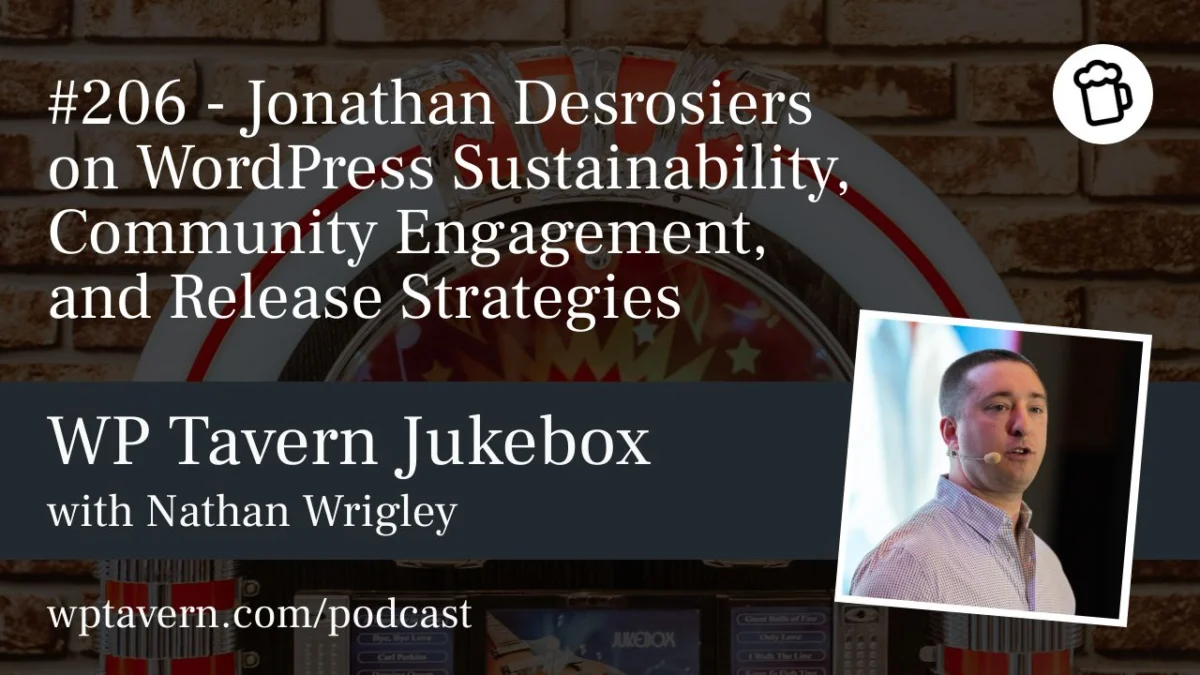
In the rapidly evolving landscape of open-source software, WordPress remains a titan. However, as the platform approaches its third decade, the mechanisms that govern its growth—both in code and community—are undergoing a strategic transformation. At the center of this shift is a new philosophy championed by contributors like Jonathan Desrosiers, a principal software engineer at Bluehost and a long-standing WordPress Core committer.
The strategy is simple yet ambitious: moving away from isolated, purely technical deployment cycles toward a synchronized, "event-driven" release model. By anchoring major software updates to flagship gatherings like WordCamp Asia, WordCamp Europe, and WordCamp US, the WordPress project is attempting to foster a deeper, more visceral connection between the developers who build the platform and the global community that sustains it.
The Genesis of the "Big Red Button"
The catalyst for this shift was a serendipitous moment in late 2025. During the annual State of the Word event in San Francisco, the WordPress team experimented with a live-streamed, high-stakes release launch. The atmosphere was reminiscent of a major product unveiling or a high-budget television series premiere.
"It was almost like television," says Nathan Wrigley, host of the Jukebox Podcast. "There was a lot of theater put into it. There was this idea that, okay, we’ve got this live event which lots of people will be watching. Why don’t we sort of combine the two things?"
The visual of a "big red button" being pressed by a group of contributors live on stage became an instant symbol of the project’s desire to inject excitement into what is often perceived as a mundane administrative task. While the "button" itself served as a theatrical focal point, the underlying logistics were a massive technical achievement, turning a software release into a communal celebration.
Chronology: A Calendar of Synchronicity
The proposed roadmap for 2026 aims to institutionalize this excitement. The goal is to align the three major WordPress releases of the year with the three flagship WordCamps.
However, as Desrosiers points out, this is an intricate puzzle. The WordPress release team does not exist in a vacuum; it must navigate a global calendar that includes religious holidays, regional vacation periods, and the complex logistics of international event planning.
- Early 2026: Initial planning phases for 7.0 are complicated by the "washed month" of December, where the global contributor base largely takes time off for holidays, limiting the available window for feature completion.
- April 2026: WordCamp Asia serves as the anchor for the first major synchronized release.
- Mid-2026: The team monitors the release cadence to avoid conflicts with major religious and regional holidays that could render the contributor pool unavailable.
- Late 2026: The cycle concludes with a release tied to the year-end State of the Word.
"It’s not reasonable for the Core team to say to event organizers, ‘You have to have an event in a certain month,’" Desrosiers explains. "We’re trying it out this year to see how it goes and what we can learn from it. We felt that the State of the Word was successful and it was exciting."
Data-Driven Adoption: The Success of Stability
Despite concerns that aligning releases with live events might introduce technical instability, recent data suggests the opposite. Desrosiers has been tracking the adoption rates of recent major versions, and the findings are encouraging.
For the last several releases, WordPress has seen an acceleration in adoption. The 6.9 release, for instance, reached the 50% threshold of all WordPress sites in just 10 days—four days faster than its predecessor, 6.8.
"Every major version of the last six to eight releases has passed 35% of all WordPress sites in two days or less," Desrosiers notes. "It’s a sign that we’re shipping stable software. People are more confident. People are opting into auto-updates for major versions. In general, it’s a quality sign that we’re doing something right."
This data provides the confidence needed to experiment with the release cycle. When the software is stable and the adoption rate is high, the project gains the "political capital" to turn those releases into public-facing events rather than silent background updates.
Rebuilding the Community Pipeline
The shift toward synchronized releases is not merely a marketing tactic; it is a defensive measure against a post-pandemic malaise. The WordPress community, like many global social structures, has struggled to regain its pre-COVID momentum.
"Attendance is down at WordCamps. Meetups are struggling to get the numbers they had several years ago," Wrigley observes.
The recovery strategy is multifaceted. It involves:
- Educational Initiatives: Programs like the WP Credits program and contributor mentorships are designed to create a throughput of younger talent.
- Mentorship Programs: By formalizing the path from a new contributor to a team lead or a release squad member, the project is working to replace the "lost generation" of organizers who burnt out or moved on during the pandemic.
- Global Equity: Recognizing that APAC (Asia-Pacific) communities are currently experiencing a period of rapid growth and institutionalization, whereas the US and UK communities are in a phase of revitalization.
"The APAC WordCamp community is very strong," says Desrosiers. "They’re growing their communities for the first time in many ways. In the US, it’s the second or third or fourth time we’re revitalizing. The form that needs to take is different."
The Role of AI in Empowerment
Looking forward, the integration of Artificial Intelligence represents the next great shift in how people interact with WordPress. Desrosiers sees AI as a double-edged sword: it provides a tool for rapid prototyping, yet it risks diluting the human-centric nature of open source.
"I’m noticing that people feel more empowered to try things themselves because they have more of an ability to distill a lot of information down," Desrosiers says. "AI is changing what we need, or what we want, and what ways we want it. Now there’s a newfound need to build again."
The "walled garden" era of social media appears to be losing its luster for younger generations. A resurgence in RSS, independent blogging, and the Fediverse suggests that the pendulum is swinging back toward self-hosted sovereignty. WordPress, by leveraging AI to lower the barrier to entry, is uniquely positioned to capture this renewed interest in owning one’s digital presence.
Implications for the Future
The implications of this new "synchronized" strategy are profound. By tying releases to events, the project is essentially gamifying the contribution process. It creates an environment where a new contributor can walk into a Contributor Day, see the excitement of a live release, and immediately understand the tangible impact of their code.
However, the challenge remains: can this excitement be sustained?
"We need to be prepared to activate these contributors," Desrosiers warns. "It’s one thing to make them aware, but it’s another thing to make sure they’re properly supported and we give them pathways to grow."
As the project moves into the remainder of 2026, the success of this model will likely be measured by more than just lines of code committed. It will be measured by the vibrancy of local Meetups, the engagement levels at WordCamps, and the ability of the project to attract a generation that has grown up in a world of closed platforms, but is now rediscovering the power of the open web.
Ultimately, the goal is to ensure that when a developer looks at their screen a decade from now, WordPress is still the tool they reach for—not just because it’s the default choice, but because it is the most exciting place to build. As Desrosiers concludes, "We can’t just keep getting older. We need to have a balance of new, younger people that get involved as well." Through these synchronized, high-visibility releases, the project is betting that the best way to ensure its future is to make the present impossible to ignore.