The traditional marketing playbook—heavy on awareness campaigns, broad-reach media buys, and aggressive acquisition metrics—is facing a reckoning. As the digital landscape becomes increasingly saturated with ephemeral content, the brands that endure are those that have stopped "selling" and started "living."
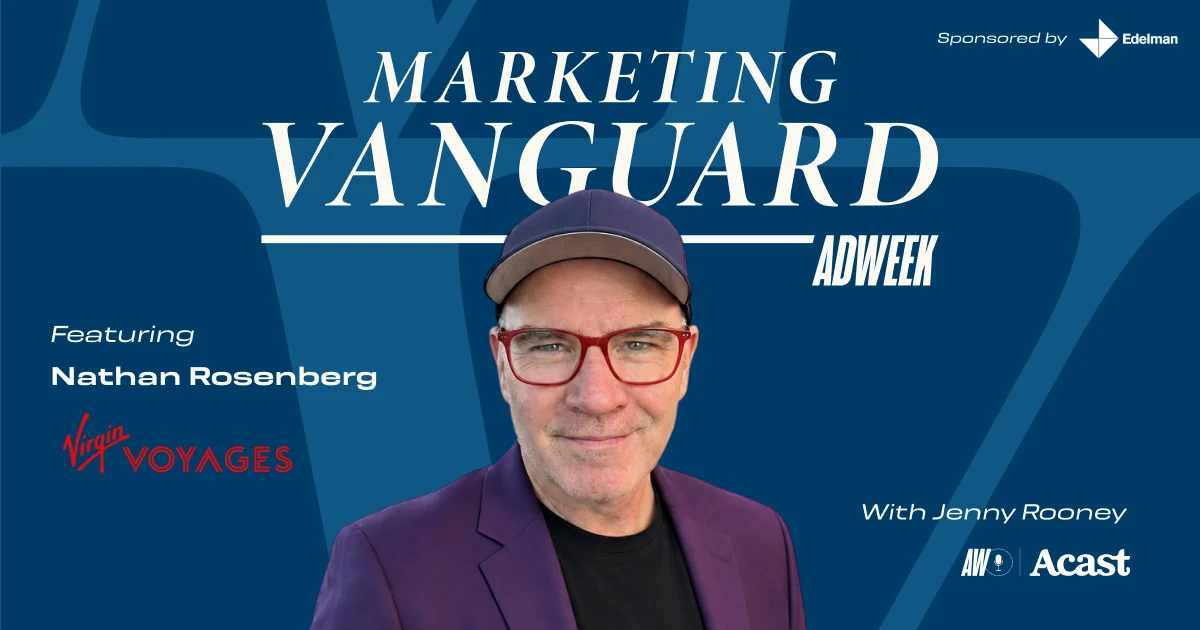
This evolution was the central theme of a recent installment of Marketing Vanguard, recorded live at the 2026 Cannes Lions International Festival of Creativity. Host Jenny Rooney sat down with Nathan Rosenberg, the Chief Marketing and Brand Experiences Officer at Virgin Voyages, to dissect how a travel brand known for its iconoclastic approach is rewriting the rules of customer loyalty in an era where the experience is the marketing.
The Paradigm Shift: Marketing as a Memory, Not a Message
For decades, the standard for marketing excellence has been the "Big Campaign"—the Super Bowl spot, the viral stunt, or the perfectly executed social media blitz. Nathan Rosenberg, a veteran of the Virgin organization for 26 years, argues that these tactics are fundamentally misaligned with how humans actually make decisions.
"The real marketing moment doesn’t happen when someone sees an ad," Rosenberg noted during the Cannes session. "It happens weeks or months later, sitting around a dinner table with friends. It’s when a customer starts telling the story of what happened on board. That story—the memory, the specific, granular detail they cannot stop repeating—that is what moves people from mere awareness to genuine advocacy."
This philosophy shifts the CMO’s objective from "impressing" to "impacting." In Rosenberg’s view, if a brand’s primary asset is its messaging, it is inherently fragile. If the brand’s primary asset is a collection of repeatable, shareable stories generated by its customers, it becomes an unstoppable flywheel of organic acquisition. This is the cornerstone of Virgin Voyages’ strategy: designing experiences so distinct that they force their way into the consumer’s social narrative.
Chronology of a Disrupter: The Virgin Voyages DNA
To understand the current success of Virgin Voyages, one must look at its origins within the broader Virgin ecosystem. Founded on the principle of challenging the status quo, the brand did not enter the cruise market to be "just another option."
- 2012-2014: Early conceptualization phase. The Virgin leadership team, including Rosenberg, identified a massive gap in the market: the cruise industry had become homogenized, dominated by mass-market, family-centric ships that often sacrificed quality for volume.
- 2015-2019: The "Experience-First" design phase. The team spent years focusing not on ad copy, but on the architecture of the ship and the psychology of the crew. They treated the cruise experience as a theater production rather than a logistical service.
- 2020-2022: The launch amidst global uncertainty. Despite the challenges of a global pandemic, the brand maintained its commitment to its "Adult-by-Design" positioning, refusing to pivot toward the family market to capture "easy" revenue.
- 2023-2026: Scaling loyalty. The current phase, as highlighted at Cannes, involves shifting the focus from guest acquisition to lifetime value (LTV), utilizing the "crew-first" culture to ensure that every voyage creates a repeat customer.
The Internal Engine: Why Culture Precedes Customer Experience
A recurring theme in Rosenberg’s leadership philosophy is the inextricable link between employee satisfaction and brand perception. "If you take care of your people, they take care of your customers, and customers take care of the outcomes," Rosenberg asserts.
This isn’t just HR rhetoric; it is a fundamental business strategy. In the travel and hospitality sector, the "brand" is not the logo on the brochure; it is the interaction between a staff member and a guest. By investing in crew culture, Virgin Voyages creates a team that is genuinely invested in the brand’s success. When a crew member feels empowered, respected, and aligned with the company’s "Why," that energy translates directly into the guest experience.
This creates a high-trust environment where staff are not just following scripts but are encouraged to create spontaneous, memorable moments for guests. These "micro-moments" are the raw material for the dinner-table stories Rosenberg identifies as the true source of marketing power.
The CFO-CMO Dynamic: Moving Beyond the Cost Center
One of the most provocative segments of the conversation centered on the adversarial relationship often found between the C-suite and the marketing department. Rosenberg offered a blunt assessment: if a CMO allows their team to be viewed as a "cost center," they have already failed.
In many organizations, marketing is treated as an expense to be trimmed when the quarterly numbers look lean. Rosenberg argues that this is a dangerous misconception. Marketing teams are, or should be, the closest to the "pulse" of the company. They possess the data on customer sentiment, the insights into changing consumer behaviors, and the signals that indicate future demand.
"Marketing should be a source of solutions, not just a line item of spend," says Rosenberg. When a CMO acts as a strategic partner to the CFO, they shift the conversation from "How much did we spend on this campaign?" to "How did this investment in customer experience drive our repeat-booking rate?" By framing marketing as a growth engine that secures future revenue, the CMO secures their seat at the table of strategic decision-making.
Data-Driven Strategy: The $3,000 Rebooking vs. The $14 Cocktail
Value-chain thinking is often lost in the quest for short-term margins. Rosenberg shared a compelling example of how Virgin Voyages navigates this: the temptation to "nickel and dime" guests through ancillary fees.
"We could raise the price of a cocktail by a few dollars to squeeze out immediate margin," Rosenberg explained. "But if that makes the guest feel like they are being taxed at every turn, the experience feels transactional rather than premium. If that friction causes them to decide not to book their next trip, we’ve lost a $3,000 rebooking to gain a few dollars in the short term."
This approach requires discipline. It requires the marketing team to have the courage to say "no" to immediate revenue opportunities that might erode the long-term value of the brand. It is the difference between extracting value and creating value. By prioritizing the long-term relationship, Virgin Voyages turns its guests into advocates, effectively lowering their Customer Acquisition Cost (CAC) over time as word-of-mouth becomes the primary driver of growth.
The Power of the "No": Clarity as a Differentiator
Perhaps the most significant takeaway from Rosenberg’s tenure is the strategic importance of exclusion. When Virgin Voyages launched, its decision to restrict the experience to adults (18+) was met with skepticism. Critics argued they were alienating a massive segment of the market—families.
Rosenberg sees it differently: "Clarity is more powerful than reach. When you know exactly who you are for, your positioning becomes sharper."
By saying "no" to families, Virgin Voyages was able to say "yes" to a specific, high-intent demographic. This clarity allowed them to tailor every aspect of their ships—from the dining menus to the entertainment and the layout—to a specific audience. This is a vital lesson for any brand. In a world where digital tools make it possible to target everyone, the most successful brands are those that have the courage to be "not for everyone."
Implications for the Future of Marketing
As we look toward the remainder of the decade, the insights from Rosenberg’s Cannes appearance offer a roadmap for the future of the industry:
- De-emphasize the "Ad": Shift focus from impressions to expressions. How are you enabling your customers to express your brand story to their networks?
- Humanize the Metrics: Move beyond vanity metrics like "likes" or "reach." Focus on metrics that measure loyalty, such as repeat-booking rates, Net Promoter Scores, and organic referral velocity.
- Culture is the Product: For service-based brands, the employee experience is the brand experience. Invest in internal culture with the same rigor you invest in external campaigns.
- Strategic Exclusion: Be willing to define who you are not for. Clarity in positioning creates a stronger connection with your core audience, leading to higher conversion and lower churn.
Nathan Rosenberg’s 14-year journey at Virgin Voyages serves as a masterclass in modern brand stewardship. By prioritizing the human element, fostering a deep connection with the crew, and maintaining a laser-like focus on the customer’s long-term experience, the brand has demonstrated that the most effective marketing is not what you shout from the rooftops—it is what your customers say when you aren’t in the room.
As the industry continues to evolve, those who follow the "Virgin" model—prioritizing the story over the spend—will find themselves not just surviving the shifts in the marketing landscape, but defining them.