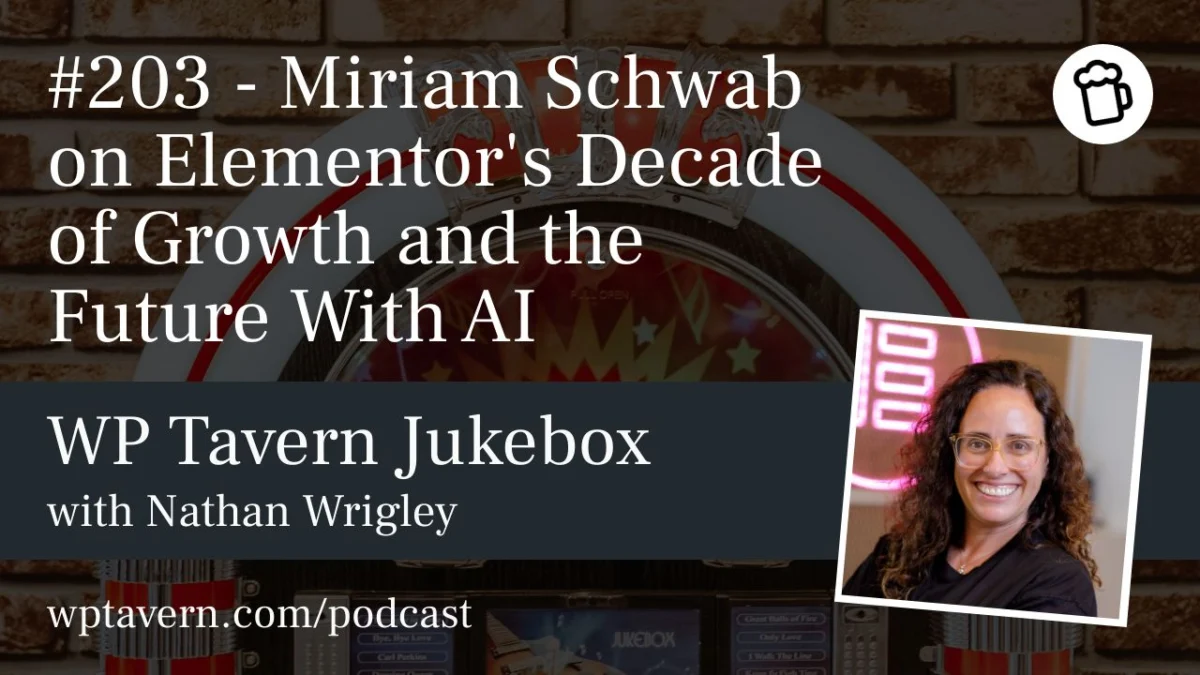
As the WordPress ecosystem stands at the precipice of a new era, few organizations have influenced its trajectory as profoundly as Elementor. Approaching its tenth anniversary this June, the platform has evolved from a popular page-building plugin into a dominant force, now powering over 13% of the entire web.
In a recent episode of the Jukebox Podcast, Miriam Schwab, Elementor’s Head of WordPress, discussed the company’s meteoric rise, its strategic pivot toward artificial intelligence, and the challenges of maintaining a legacy codebase in a rapidly shifting technological landscape.
The Evolution of a WordPress Giant: From Agency Roots to Global Scale
Miriam Schwab’s journey to the helm of Elementor’s WordPress relations is a story of long-term commitment to the platform. With two decades of experience in the ecosystem, Schwab began by offering WordPress as a service before scaling into a custom agency. Her tenure included the founding of Strattic, a startup that pioneered static WordPress architecture, which was subsequently acquired by Elementor in 2022.
This acquisition was a pivotal moment for Elementor, bringing a veteran entrepreneur into the fold to act as a bridge between the company’s corporate strategy and the wider WordPress community. "It is literally anything," Schwab says of her role as Head of WordPress. "It suits me because I’ve always been involved in all aspects of the businesses I’ve run—from marketing and sales to the financial and strategic sides."
Elementor’s growth has been nothing short of prolific. Since its inception in 2016, the platform has become the standard for millions of web creators. According to W3Techs data cited by Schwab, Elementor has been ranked the "Top Content Management System" for three consecutive years, a title that reflects its consistent expansion even in a market crowded with competitors like Wix and Shopify.
Chronology: A Decade of Rapid Development
The timeline of Elementor’s growth is characterized by a "right place, right time" strategy. Launching with a robust free version allowed the plugin to gain immediate traction, solving a critical pain point for users who wanted design flexibility without needing to code.
- 2016: Elementor launches, quickly hitting one million active installs as the "page builder wars" begin.
- 2022: Elementor acquires Strattic, signaling a move into advanced, high-performance architecture.
- 2025: The platform marks a significant milestone, growing its footprint to over 13% of the internet.
- 2026 and beyond: The company shifts its focus toward integrating agentic AI and overhauled architecture.
The current focus is the development of "Version 4," an overhaul of the platform’s core. Managing such a massive user base requires an intense commitment to backward compatibility. "Every site is a snowflake," Schwab notes, referring to the unique combinations of themes, plugins, and server configurations that Elementor must support. Version 4 aims to push the platform into the future while allowing existing sites to transition at their own pace, a delicate balancing act for a staff of over 350 employees.
Supporting Data: The Scale of Adoption
The numbers behind Elementor’s success are staggering. By Schwab’s estimation, the platform added roughly 3.5 million sites over the course of 2025 alone. When looking at the broader internet, Elementor’s growth trajectory remains steep.
The transition from 11.7% to 13.1% of the web in a single year demonstrates that Elementor is not merely maintaining its user base; it is capturing a significant share of new website creation. This growth is driven by both new users entering the ecosystem and existing users expanding their site portfolios. For a company that started as a small plugin, this scale necessitates a rigorous approach to Quality Assurance (QA) and security, as any bug in a core release now impacts millions of live businesses.
Official Perspectives: The Strategic Pivot to AI
The most significant shift in Elementor’s strategy is its aggressive adoption of artificial intelligence. Schwab outlines a "multi-pronged" approach that categorizes AI implementation into three distinct pillars:
1. Built-in Generative Tools
These are the expected, foundational AI features—generating copy, images, and HTML/CSS snippets directly within the Elementor editor. While these are now "de rigueur," they represent the baseline for modern web design.
2. The "Angie" Plugin
Perhaps the most ambitious project is "Angie," a standalone plugin that introduces agentic AI to the entire WordPress environment. Unlike simple content generators, Angie acts as an agent that can interact with the WordPress admin interface to manage users, update categories, and handle WooCommerce tasks.
3. The Site Planner
Site Planner represents a new paradigm in web construction. Rather than relying on a static template, the tool engages the user in a conversational dialogue. It asks targeted questions to build a comprehensive site brief, creates a site map, and generates a functional wireframe. This process, Schwab explains, moves a user from "zero to 80%" completion, leaving only the final, manual polish to the creator.
Implications: The Future of the Web Creator
The introduction of the Abilities API in WordPress has been a game-changer for these AI initiatives. Schwab notes that Elementor’s team had already begun building their own tools for Angie before the core API was fully defined. Now, the goal is to align with the WordPress community standards to ensure that AI can interface with the ecosystem in a consistent, reliable way.
The Changing Role of the Developer
The question remains: what happens to the human designer when an AI can generate a fully functional website in minutes? Schwab argues that the value of the human creator is not being erased; it is shifting. "Instead of being the tinkerer—the person clicking and dragging in Photoshop—our value will be in being the director and producer."
The "human-in-the-loop" concept is central to Elementor’s strategy. By providing guardrails—such as ensuring that an AI agent doesn’t accidentally delete a user’s administrative access—the company is attempting to mitigate the risks associated with non-deterministic AI behavior.
Accessibility and Standards
A critical implication of AI-driven web design is the risk of neglecting accessibility. Schwab points to Elementor’s "Ally" plugin, which uses AI to scan for WCAG violations and suggest fixes. This serves as a vital reminder that while AI can speed up production, it must be guided by human intent to ensure that the web remains inclusive.
Conclusion: 2026 and the Road Ahead
As the industry looks toward 2026, the sentiment at Elementor is one of cautious optimism. The rapid evolution of AI has, according to Schwab, "reignited a spark for innovation" within the WordPress space. By standardizing how AI interacts with WordPress, the community is not just keeping up with proprietary platforms; it is potentially leapfrogging them.
The transition from a static, manual web-building process to an AI-assisted, agentic workflow will likely be one of the most significant shifts in the history of WordPress. For Elementor, the next decade is not about resting on the laurels of its 13% market share, but about redefining what it means to build, manage, and scale websites in an era where the boundary between human intent and machine execution is increasingly blurred.
"It won’t be boring," Schwab concludes. As Elementor prepares to turn ten, the message is clear: the future of the web is being written in code, but it is being directed by the conversational, AI-driven tools that will define the next generation of online presence.