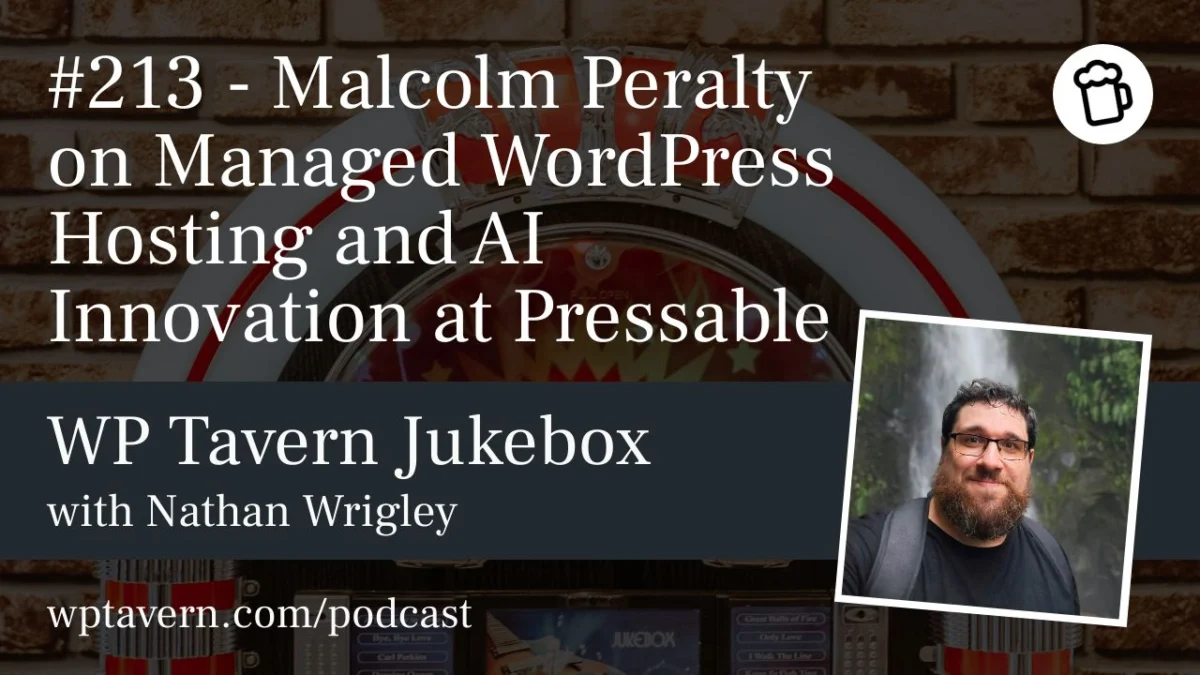
The landscape of web hosting is currently undergoing its most significant transformation since the inception of the Content Management System (CMS). As the internet shifts toward AI-driven automation, the role of managed WordPress hosting has moved beyond simple server maintenance and uptime guarantees. In a recent episode of the WP Tavern Jukebox podcast, host Nathan Wrigley sat down with Malcolm Peralty, a technical account manager at Pressable, to discuss the intersection of infrastructure, human expertise, and the future of AI-powered site management.
For over two decades, Peralty has been an integral part of the WordPress ecosystem, evolving from a full-time blogger in the early days of version 0.72 to a strategist managing complex, large-scale hosting environments. His career, which included a tenure at Acquia within the Drupal space, offers a unique perspective on why organizations choose—and sometimes leave—specific CMS platforms, and how modern hosting providers are striving to remain relevant in an AI-first world.
The Role of Technical Account Management (TAM)
The modern hosting experience for enterprise-level clients is no longer just about support tickets; it is about strategic partnership. Peralty defines his role as a Technical Account Manager (TAM) as being a "WordPress hosting strategist."
Unlike traditional sales or tier-one support, the TAM function is forward-looking. "We’re thinking about what the website looks like a year or two from now," Peralty explains. "What technologies do you need to be aware of? What end-of-life cycles are approaching, and which plugins might be hindering your performance?"
At Pressable, this role often involves proactive optimization. In a surprising departure from the profit-first model often associated with hosting, Peralty notes that his team will occasionally advise clients to downsize their hosting plans. By identifying performance bottlenecks—such as bloated plugin stacks or inefficient WooCommerce configurations—Pressable can optimize resource usage, benefiting both the customer’s budget and the host’s overall infrastructure efficiency.
The Infrastructure Beneath: WP Cloud
One of the central themes of the discussion was the reality of physical hardware in a virtualized world. Pressable distinguishes itself by utilizing "WP Cloud," a proprietary infrastructure layer. This is not a rebranded AWS or Google Cloud instance, but a specialized stack built specifically for WordPress.
The technical nuance here lies in resource allocation. Peralty contrasts Pressable’s "one worker per VCPU" model against industry standards that might cluster dozens of workers onto a single VCPU. By providing dedicated lanes for server requests, the infrastructure ensures that high-traffic events—such as a viral marketing campaign or a product launch—do not cause the site to buckle under load. This level of granular control is what separates "commodity hosting" from the managed, resilient environments that large businesses require.
The AI Frontier: The MCP Control Panel
Perhaps the most ambitious development mentioned in the interview is the upcoming "MCP," or Managed Control Panel, an AI-powered interface for Pressable. The goal is to allow users to deploy, manage, and optimize WordPress sites using natural language commands.
How It Works
The MCP is designed to act as an API-level integration for AI models. It allows a developer to issue a command like, "Spin up a new sandbox site, push this code, update the database, and pull assets from production." The AI then handles the orchestration, providing the user with a ready-to-test environment in minutes rather than hours.
The Guardrails Challenge
The primary concern with AI-driven infrastructure is, naturally, the potential for catastrophic error. Peralty acknowledges that hallucinations or misinterpreted commands could lead to site downtime. To mitigate this, Pressable relies on:
- Immutable Core Files: WordPress core files are symlinked, meaning the AI cannot accidentally delete the foundational architecture of the site.
- Human-in-the-Loop: The system is designed to ask for confirmation before executing destructive tasks.
- Restoration Protocols: Because Pressable maintains consistent hourly database backups and daily file system snapshots, any AI-induced error can be quickly rolled back.
Supporting Data: Performance and Plugin Bloat
A major point of contention in the hosting world is the trade-off between features and performance. Peralty notes that "plugin bloat"—the practice of installing dozens of plugins, including multiple heavy-duty page builders—is the primary driver of poor site performance.
Many hosts attempt to mask these inefficiencies through heavy Redis caching or aggressive server-side optimizations. However, Peralty warns that these are often temporary fixes that fail under true, high-concurrency stress tests. "You go on that hardware and you put 1,000 users through a checkout process, and all of a sudden, your website is slow as molasses," he says. The challenge for Pressable, and indeed the broader industry, is educating clients that a "fast" site in a lab test is fundamentally different from a "resilient" site in production.
Implications for the Future of Web Development
The conversation concluded with a sobering look at how AI is changing the cost and nature of the web.
The Rise of "AI Traffic"
Peralty highlighted a growing issue: AI bots are now constantly crawling websites, often in ways that create massive, uncachable loads on server infrastructure. He shared an anecdote of a bot adding and removing items from a cart millions of times a day, creating an immense, unnecessary burden on the host. The industry is currently struggling with how to manage the costs of this traffic and whether those costs should be passed on to the end user.
The Changing Modus Operandi
The traditional way of building websites—manually logging into the WordPress dashboard, clicking through menus, and configuring settings—may eventually become a niche activity. In the future envisioned by Peralty, the WordPress UI might fade into the background. Developers and site owners may interact primarily with AI interfaces that bridge the gap between their IDEs (like Visual Studio Code) and the server, making the "five-minute website" a reality that is ready to go by the end of a single lunch meeting.
A Human-First Philosophy
Despite the rapid march of automation, both Wrigley and Peralty agreed that the human relationship remains the core of the business. While AI can handle the "how," humans must still define the "why." Pressable’s strategy is to utilize AI to automate the repetitive tasks, thereby freeing up human support staff to provide high-touch service for the clients who need it most.
Conclusion
The evolution of managed WordPress hosting is no longer just about providing storage and bandwidth; it is about providing intelligence. As Pressable moves forward with its MCP and AI-driven optimizations, the focus remains on balancing the convenience of automation with the necessity of stability. For the WordPress community, this signifies a shift where the barrier to entry is lowered significantly, but the need for deeper technical understanding—or a very reliable hosting partner—is greater than ever.
As Peralty noted, the future of the web will be fast, automated, and AI-assisted, but it will only succeed if the underlying infrastructure is robust enough to handle the complexity that such power brings.