The WordPress plugin directory, long considered the backbone of the world’s most popular Content Management System (CMS), is currently standing at a critical crossroads. As the digital landscape shifts under the weight of generative AI, the repository is grappling with an unprecedented surge in submissions, complex questions regarding quality control, and a fundamental debate over the future of commercialization within an open-source framework.
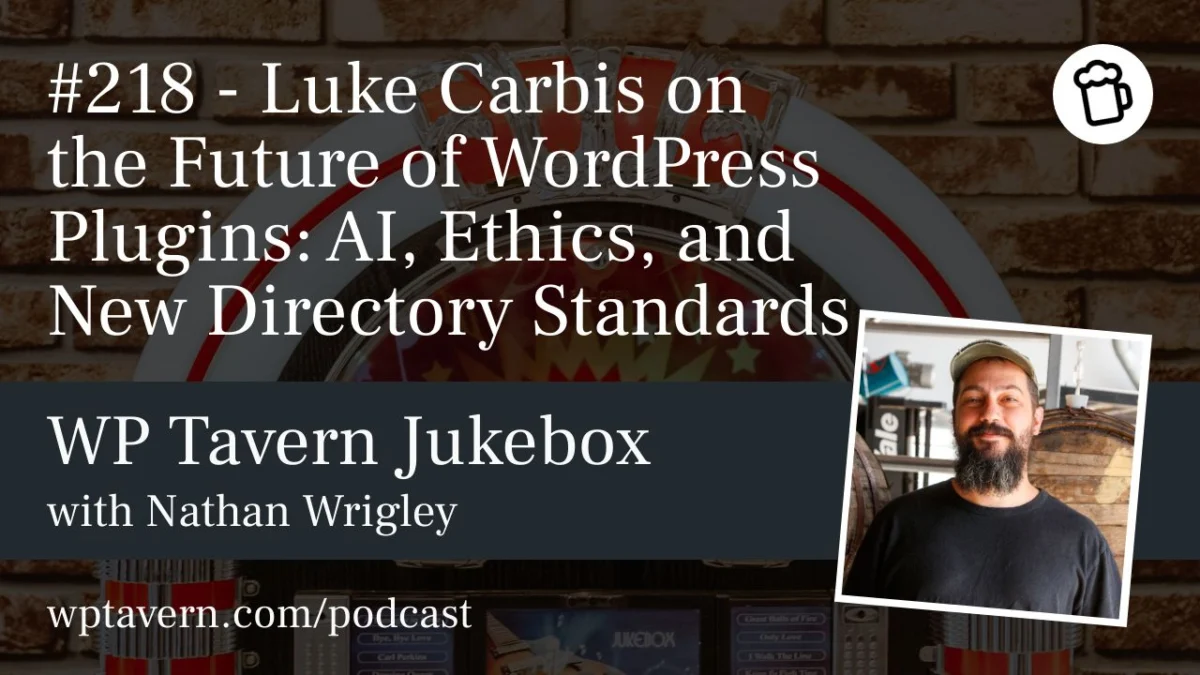
In a wide-ranging conversation on the WP Tavern Jukebox podcast, longtime WordPress contributor, developer, and Plugin Review Team member Luke Carbis explored these challenges. Having spent two decades in the ecosystem, Carbis recently presented a provocative talk at WordCamp Asia titled, “Beyond the guidelines: It’s time to evolve our standards for a safer plugin ecosystem.” His insights offer a rare look behind the curtain of the WordPress.org review process and propose a path forward that balances community values with the realities of a changing technical landscape.
The AI Deluge: A New Frontier for Plugin Review
The primary challenge facing the WordPress.org Plugin Review Team is one of sheer volume. In the last 12 months, the number of plugin submissions has quadrupled compared to the previous year. This spike is largely attributed to the low barrier to entry created by generative AI tools, which allow users to "vibe code" functional plugins in minutes.
While this democratization of development might seem like a win for innovation, it has created a bottleneck. The review team has been forced to adapt, integrating AI tools of their own and streamlining workflows to keep the wait time for a review to roughly one week—a figure that is historically impressive but increasingly difficult to maintain.
However, Carbis argues that the issue is not merely the speed of review; it is the sustainability of the directory itself. "The primary issue is if you create a product, if you create a plugin, then how do you stand out on the plugin directory amongst a thousand other plugins that do exactly the same thing?" Carbis asks. For the end user, the result is a discovery crisis: the repository is becoming so saturated that finding a high-quality, reliable solution is becoming an exercise in frustration.
Chronology of a Changing Ecosystem
The WordPress plugin directory has long relied on a set of community-driven guidelines and human oversight to maintain security and quality. For years, this system worked effectively, keeping the backlog of submissions manageable. However, the rise of LLMs (Large Language Models) has fundamentally disrupted this balance.
- Pre-2023: The plugin directory maintained a relatively steady flow of submissions. The review process was rigorous, and the community had a shared understanding of what constituted a "quality" plugin.
- The AI Inflection Point (2023–2024): The ubiquity of AI code generators led to a massive influx of submissions. These plugins range from highly innovative to redundant and, in some cases, poorly optimized code that requires manual inspection to ensure security compliance.
- The Current State: The Plugin Review Team is successfully preventing a total backlog meltdown through increased staffing and automated tooling, but the "noise-to-signal" ratio has reached an all-time high.
- The Debate: This has triggered a renewed internal debate about whether WordPress.org should evolve from a strictly volunteer-driven, free-only repository to a more sophisticated marketplace that acknowledges commercial realities.
Supporting Data and User Experience
The current discovery mechanism on WordPress.org relies on a mix of active installs, support forum engagement, and keyword relevance. While transparent—the algorithm itself is open source and available for inspection on GitHub—it is increasingly being "gamed" by developers using SEO techniques to surface their products.
Carbis highlights that while active installs remain one of the most reliable metrics for quality, the sheer volume of "me-too" plugins makes it difficult for new, legitimate products to break through the noise. This has led to a sense of stagnation in the product space. "There feels like there’s a lack of momentum, a lack of movement in the WordPress product space," Carbis notes. "People aren’t really interested in new products in this space, especially if it has nothing to do with AI."
Proposed Remediation: Connecting the Dots
To address these issues, Carbis proposes a two-pronged approach that moves away from the current "one-size-fits-all" directory model:
- Connecting Accounts and Installations: Carbis suggests enabling a more seamless link between WordPress.org profiles and individual WordPress installations. By allowing users to authenticate their site with their WordPress.org account, the directory could offer a "Favorites" list directly in the dashboard, improving the user experience and reducing the friction of finding trusted plugins.
- The "Untrusted Sources" Experiment: Taking a page from mobile app ecosystems, Carbis envisions a feature where users could register external repositories—such as private GitHub repos or specific commercial vendors—directly within their WordPress installation. This would allow developers to distribute premium or custom plugins without needing to bypass the repository’s core mission, while still providing a secure, centralized way to manage updates.
The Commercialization Dilemma
Perhaps the most controversial aspect of the discussion is the potential for a commercialized plugin marketplace. Critics argue that introducing money into the core of WordPress.org violates the spirit of open source and introduces a "pay-to-play" dynamic that would corrupt the community.
Carbis acknowledges these concerns but argues that the "necessary evil" of a commercial marketplace—if managed correctly—could solve the project’s funding woes. He proposes a model where a portion of proceeds (he suggests 8%) would be split between payment processing and the "Five for the Future" initiative. This revenue could then be used to fund WordCamps, pay contributors, and support the Plugin Review Team, creating a self-sustaining cycle of growth.
"If the Foundation had proper governance and proper oversight, I think that could be a really useful and helpful thing," says Carbis. While acknowledging that leadership at the highest levels of the project remains skeptical, he emphasizes that the status quo may not be enough to ensure WordPress’s relevance in a future where users expect app-store-like convenience.
Leadership and the "Seismic" Impact of AI
The conversation inevitably turned to the role of leadership in navigating this crisis. Following recent internal shifts at Automattic and within the WordPress project, there has been a push for more centralized, decisive leadership. Carbis admits that his initial reaction was one of frustration, but he has since re-evaluated the necessity of such a shift.
"We’ve been coasting along, but there’s no guarantee that we are going to remain relevant," Carbis observes. "Something needs to change. And the only thing that can cause us to get unstuck from where we are right now is a strong leader, who has a strong direction."
This leadership is being tested by the "AI question." Carbis points to a significant generational divide: while older developers may see AI as a productivity tool, Gen Z contributors often express a deep, principled resistance to the technology, citing environmental concerns and the potential for deskilling.
Ethical Implications: The Transparency Proposal
To bridge the gap between AI-driven efficiency and the community’s desire for human-centered design, Carbis proposes a voluntary AI disclosure system for the plugin directory. By adding a simple metadata header to plugins, developers could specify their level of AI usage—ranging from "no AI" to "AI-assisted" to "fully AI-generated."
"It would let us gather some data about how many plugins use AI and how well they do," Carbis explains. "We have no way of telling whether a plugin is using AI or not." While acknowledging that such a system relies on the honesty of developers, he believes it is a necessary first step toward transparency.
Conclusion: A Future in Flux
The WordPress ecosystem is clearly in a period of intense soul-searching. As Luke Carbis notes, the project is facing a "seismic" shift that requires a delicate balance between preserving the values of the past and adapting to the technological demands of the future.
Whether through improved discoverability, the integration of premium offerings, or clear ethical standards for AI, the goal remains the same: ensuring that WordPress remains a vibrant, welcoming, and powerful platform for the next generation of web creators. As the community continues to debate these issues, the focus must remain on the users—the millions of people who rely on WordPress to build their digital presence, and whose trust is the ultimate metric of the ecosystem’s success.