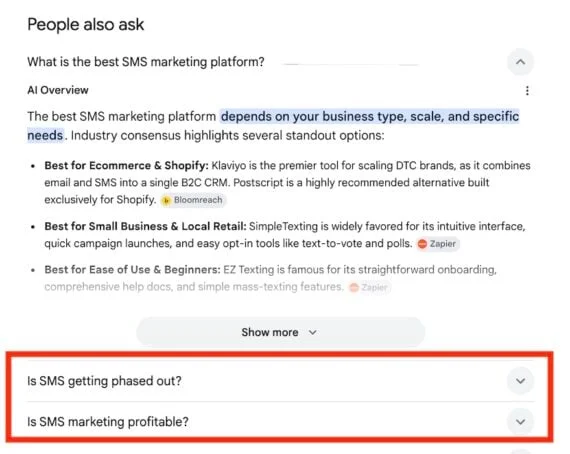
The landscape of online shopping is undergoing a fundamental shift. For decades, the digital storefront was governed by the mechanics of the keyword: a user typed a brief string into a search bar, and the merchant responded with a list of blue links. Today, that paradigm is being eclipsed by the conversational, context-rich capabilities of generative AI. For ecommerce marketers, this transition represents more than a change in search behavior—it is an unprecedented opportunity to influence the "shopping journey" at the point of discovery.
The concept of "intent"—the psychological and functional impetus behind a consumer’s query—has long been the bedrock of digital marketing. Whether it is "purchase intent" or "informational intent," marketers have historically built their strategies around targeting these needs. However, the rise of AI-driven search and conversational agents like Claude, Gemini, and ChatGPT has added a new layer of precision to these behaviors. To thrive in this new era, marketers must evolve from simple keyword targeting to the development of "Product Intent Clusters."
The Evolution of the Consumer Query
To understand the scale of this change, one must compare the traditional search engine query with the modern AI prompt. Historically, search behavior was constrained by the interface. A user looking for a coffee grinder might type, "small simple coffee grinder." The engine would parse these four words and return results based on keyword density and domain authority.
In contrast, the AI-assisted shopper is far more descriptive. According to research from Semrush, the average ChatGPT query is approximately 23 words—nearly six times the length of a traditional search. This evolution in length is not merely semantic; it is an explosion of context. A consumer interacting with an AI might now ask: "I need a quiet coffee grinder for a small apartment that works for pour-over and does not make a mess."
This increased complexity creates a chasm between brands that rely on legacy SEO and those that adapt to the era of "conversational commerce." The former provides a generic product page; the latter provides a solution that AI can synthesize, justify, and recommend.
Chronology of the Shift: From Keywords to Context
The transition from keyword-centric SEO to intent-centric AI discovery has followed a distinct path over the last several years:
- 2015–2020: The Era of Semantic Search. Search engines like Google began moving away from exact-match keywords toward semantic understanding, using tools like BERT to interpret the meaning behind queries.
- 2022–2024: The Generative Explosion. The public release of LLMs (Large Language Models) introduced consumers to the concept of "dialogue" with a search tool. Shopping became a conversation rather than a lookup.
- 2025–Present: The Era of AI-Influenced Discovery. The current phase is defined by "Answer Engines." Consumers now expect the AI to do the "shopping" for them, surfacing products that fit highly specific, nuanced scenarios.
This progression has forced marketers to move beyond the product detail page (PDP) as the sole destination for traffic. The new objective is to influence the AI’s "thought process" before it even directs the user to a checkout page.
Supporting Data: Why Length and Context Matter
The disparity between traditional search and AI queries is backed by significant data. The jump from 4-word queries to 20+ word queries signals that consumers are treating AI as a consultative agent. When a user provides more context—such as the "small apartment" or "no mess" requirements for a coffee grinder—they are essentially asking the AI to act as a personal shopper.
In this scenario, the "correct" answer for the AI is no longer just the most popular product, but the product that most closely aligns with the specific constraints provided by the user. If a brand has not optimized its content to explain how its product solves those specific constraints, the AI will bypass them in favor of a competitor who has clearly articulated their value proposition in a relevant "intent cluster."
The Architecture of Product Intent Clusters
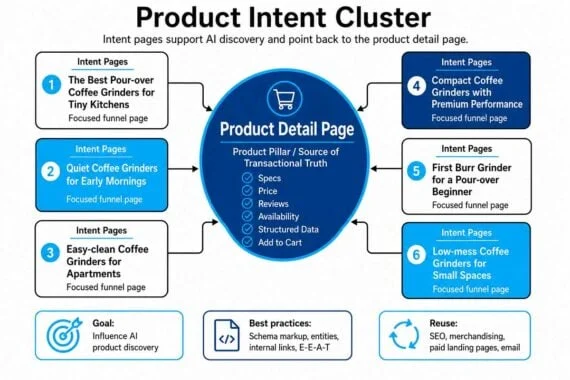
At the heart of this new strategy is the "Product Intent Cluster." This is a hub-and-spoke content architecture designed specifically to feed the requirements of LLMs.
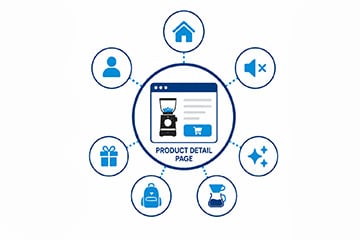
The Hub: The Product Detail Page (PDP)
The PDP remains the "source of truth." It must contain the non-negotiable data: pricing, technical specifications, real-time availability, and high-quality structured data. While marketers are often tempted to bloat these pages with long-form guides, the PDP should remain focused on the transaction. It is the destination, not the education center.
The Spokes: Intent-Focused Supporting Pages
Surrounding the PDP are the "spokes"—individual pages that address specific customer scenarios. Instead of a generic "Coffee Grinder Buying Guide," a brand might create:
- "Best Quiet Coffee Grinders for Tiny Apartments"
- "Pour-Over Coffee Grinders That Minimize Mess"
- "Early Morning Coffee Grinders: A Noise-Reduction Guide"
These pages serve a dual purpose. For humans, they provide highly relevant, scannable information. For AI, they provide the granular, entity-rich data necessary to answer a complex, multi-variable query.
Implications for Modern Marketing Teams
The implications of this strategy are profound, particularly regarding the allocation of resources. Previously, creating dozens of highly specific landing pages was cost-prohibitive. Researching, writing, and optimizing content for "the best pour-over grinder for tiny kitchens" was a niche effort with an uncertain ROI.
The AI Unlock
Generative AI has effectively lowered the barrier to entry for high-quality content production. Marketers can now use LLMs to:
- Identify Niche Topics: By feeding customer support tickets, product reviews, and forum discussions into an AI tool, teams can identify the specific pain points and "use cases" that customers are already talking about.
- Automate Content Drafting: Once the topics are identified, generative AI can produce the first draft of an intent-based landing page, ensuring the tone and entity-rich language align with the brand’s identity.
- Maintain at Scale: Updating dozens of pages as product specs change is no longer a manual, labor-intensive chore. With proper prompt engineering, content can be refreshed instantly.
Best Practices for Implementation
To build an effective Product Intent Cluster, marketers must adhere to a new set of standards:
- Schema Markup and Entities: AI engines rely heavily on structured data. Ensure your intent pages use proper Schema.org markup so that machines can easily identify the product, its attributes, and its relationship to the "intent" described on the page.
- E-E-A-T (Experience, Expertise, Authoritativeness, and Trustworthiness): Just because the content is AI-assisted does not mean it can be low-quality. The content must demonstrate genuine expertise to satisfy both human users and the quality algorithms governing search engines.
- Strategic Internal Linking: The "spoke" pages must clearly and logically link back to the "hub" (the PDP). This establishes a clear hierarchy that helps the AI understand that the product is the solution to the scenario described on the spoke page.
- Human-in-the-Loop: While AI can assist in the creation process, human oversight is critical. The goal is to provide value to the consumer, not to create "SEO spam" that clutters the internet with low-utility pages.
Conclusion: Preparing for the Conversational Future
The rise of generative AI has fundamentally changed the "rules of engagement" for ecommerce. We are moving from an era of "searching for products" to an era of "discovering solutions."
Shoppers who do not know exactly what they want—or who have complex, multi-layered requirements—are the primary users of these new AI tools. By building Product Intent Clusters, marketers can ensure that their products are the ones being recommended when the AI is asked to solve those complex problems.
This is not a temporary trend; it is a permanent adjustment to the way information is indexed and consumed. The brands that win in this new environment will be those that view their content not as a static repository of information, but as a dynamic, interconnected system designed to guide the consumer from their first, vague question to a confident, final purchase.