You’ve done the heavy lifting. You’ve spent hours agonizing over a subject line that sparks curiosity, crafted body copy that resonates with human emotion, and perfectly calibrated your automation sequences. You hit "send" with the quiet, justified confidence of a founder who knows their strategy is sound.
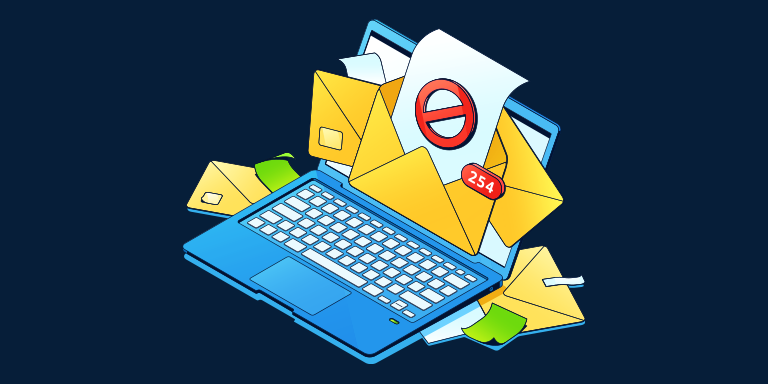
And then, it vanishes. Not into the hands of your customers, but into the digital abyss of the spam folder.
This is the brutal, often-ignored reality of email marketing. You can have the most compelling offer, the most sophisticated psychology, and the most robust funnel in the world, but if your emails are not reaching the inbox, none of it matters. For e-commerce founders and digital marketers, email deliverability isn’t just a technical concern—it is a critical pillar of business health that, if neglected, quietly erodes revenue from the inside out.
What Is Email Deliverability? (And Why It’s Not "Delivery")
In the world of email marketing, there is a fundamental distinction between "delivery" and "deliverability."
Delivery simply means that your email was accepted by the recipient’s mail server. It didn’t bounce, and it wasn’t rejected by a firewall. However, "delivered" does not mean "seen."
Deliverability is the measure of whether your email successfully lands in the primary inbox rather than the promotions tab, the "updates" folder, or—worst of all—the spam folder. It is a dynamic score, tracked in real-time by major email service providers (ESPs) like Gmail, Outlook, and Yahoo. These providers act as the gatekeepers of the internet, using complex algorithms to judge whether your content is valuable correspondence or unwanted noise.
For a modern business, a 20% drop in deliverability isn’t just a technical glitch; it is an immediate 20% contraction of your total reach. Because this damage is invisible, many founders don’t realize they have a problem until their open rates hit a plateau and their monthly recurring revenue (MRR) begins an unexplained decline.
The Anatomy of a Sender Reputation: Your Digital Credit Score
If your domain and IP address were a person, your sender reputation would be their credit score. Just as banks look at your payment history to determine your reliability, ESPs look at your historical sending behavior to determine your trustworthiness.
The Metrics That Matter
When you hit send, the algorithms are watching:
- Engagement Rates: Are people opening, clicking, and replying?
- Negative Signals: Are users marking your mail as spam? Are they deleting it without opening?
- Bounce Rates: Are you sending to defunct or non-existent email addresses?
A strong reputation grants you "the benefit of the doubt," allowing your emails to bypass aggressive filters. A weak reputation, however, results in "throttling"—where your emails are delayed or blocked entirely—often without a single notification sent to you.
Chronology of an Email: The Technical Handshake
To understand why emails go to spam, one must look at the lifecycle of an email send. It is a high-speed, technical "handshake" that happens in milliseconds.
- The Initiation: Your marketing platform sends a signal to the recipient’s server.
- The Authentication Check: The server immediately asks, "Who are you, and does your ID match your records?" (This is where SPF, DKIM, and DMARC come in).
- The Reputation Check: The server queries a global database: "Does this sender have a history of spam?"
- The Content Scan: The server analyzes the email’s structure, links, and text for patterns associated with known phishing or spam campaigns.
- The Verdict: Based on these factors, the email is routed to the Inbox, the Promotions folder, or the Spam trap.
If you fail at step two or three, the quality of your copy becomes entirely irrelevant.
Authentication: The Non-Negotiable Standard
Authentication is your digital ID card. Without it, you are effectively a stranger knocking on the door of an inbox, and the gatekeeper has every reason to be suspicious.
- SPF (Sender Policy Framework): A list of IP addresses authorized to send emails on your domain’s behalf.
- DKIM (DomainKeys Identified Mail): A digital signature that verifies the email hasn’t been altered in transit.
- DMARC (Domain-based Message Authentication, Reporting, and Conformance): A policy layer that tells the receiving server what to do if an email fails SPF or DKIM checks.
For many founders, these are set up during the onboarding process of platforms like Omnisend. However, "set and forget" is a dangerous strategy. Domain changes, DNS updates, or switching email providers can break these links. A misconfigured DKIM record is one of the most common reasons legitimate, high-value newsletters end up in the junk folder. A 15-minute audit of these records can be the difference between a successful product launch and a complete flop.
List Hygiene: The Unsexy Work of Retention
In the race for growth, many founders obsess over list size. They want 100,000 subscribers. But in the world of deliverability, 10,000 highly engaged, active subscribers are worth infinitely more than 100,000 "zombie" contacts.
The Strategy for a Healthy List
- The 90-Day Purge: Run a re-engagement campaign for anyone who hasn’t opened an email in 90 to 180 days. If they don’t click, delete them. It feels painful to shrink your list, but you are actually pruning away the "dead weight" that drags your sender reputation down.
- Hard Bounce Suppression: Hard bounces (permanent failures) should be removed immediately. Reputable platforms handle this, but you must audit your lists to ensure no stale data is causing recurring issues.
- Double Opt-In: While it adds a small friction point at the sign-up stage, it ensures that every person on your list has explicitly confirmed their desire to hear from you. This simple step creates a foundation of high-intent subscribers who are significantly less likely to mark your emails as spam.
Engagement as a Deliverability Signal
Modern spam filters have evolved beyond simple keyword scanning. They are now "engagement-aware." They track how users interact with your brand across the board.
When a user moves your email from the "Promotions" tab to the "Primary" tab, or adds you to their address book, that is a massive positive signal to the algorithm. Conversely, if your emails are consistently deleted without being opened, the algorithm marks your content as "irrelevant" or "nuisance," and your future emails will be deprioritized accordingly.
This is why the Welcome Series is the most important sequence in your business. It is the period where your engagement is at its peak. If you start with a weak welcome flow, you are training your subscribers—and the email providers—to ignore you.
Content Habits That Trigger Spam Filters
While spam filters no longer just flag the word "FREE," they still look for patterns. To stay in the good graces of the algorithms, avoid these common traps:
- URL Shorteners: Using services like Bitly in emails can trigger filters, as spammers often use these to hide malicious destination links.
- Excessive HTML/Images: Emails that are entirely images with no text are often flagged because filters cannot read the content. Always balance your imagery with meaningful text.
- Inconsistent Sending Cadence: If you send 50,000 emails one day and then go silent for three months, you look like a spammer. Consistency is a signal of legitimacy.
- Spammy Formatting: Avoid excessive capitalization, excessive use of exclamation points, and "salesy" jargon that historically correlates with low-quality bulk mail.
Implications: The Path Forward
Deliverability is not a one-time project; it is an ongoing practice. The most successful e-commerce founders are those who treat their email program with the same rigor as their supply chain or their advertising budget.
By prioritizing technical authentication, practicing aggressive list hygiene, and focusing on content that actually adds value to the subscriber’s life, you move from being a "sender" to being a "trusted source."
Building this infrastructure doesn’t have to be a manual nightmare. Platforms like Omnisend are built specifically to bridge this gap. By providing automated deliverability monitoring, simplified authentication support, and smart segmentation tools, they allow founders to focus on the creative side of the business while the infrastructure handles the heavy lifting of inbox placement.
The invisible nature of this work is exactly why it provides such a competitive advantage. While your competitors are wondering why their sales have dipped, you will be the one landing in the primary inbox, building real relationships, and converting your audience with the consistency that only a healthy email reputation can provide.
Ready to take control of your deliverability? Ensure your infrastructure is built for success. Use code FOUNDR50 when you sign up for Omnisend to receive 50% off your first three months and start building an email program that truly reaches its audience.