In the evolving landscape of web development, WordPress stands as a titan, powering over 40% of the internet. Yet, as the platform shifts from its "classic" roots toward the modern, block-based architecture of Gutenberg, a significant chasm has emerged. For agencies and professional developers, the transition has been fraught with a singular dilemma: how to maintain the precision, performance, and customizability required for enterprise-grade client work while embracing the modular future of the Block Editor.
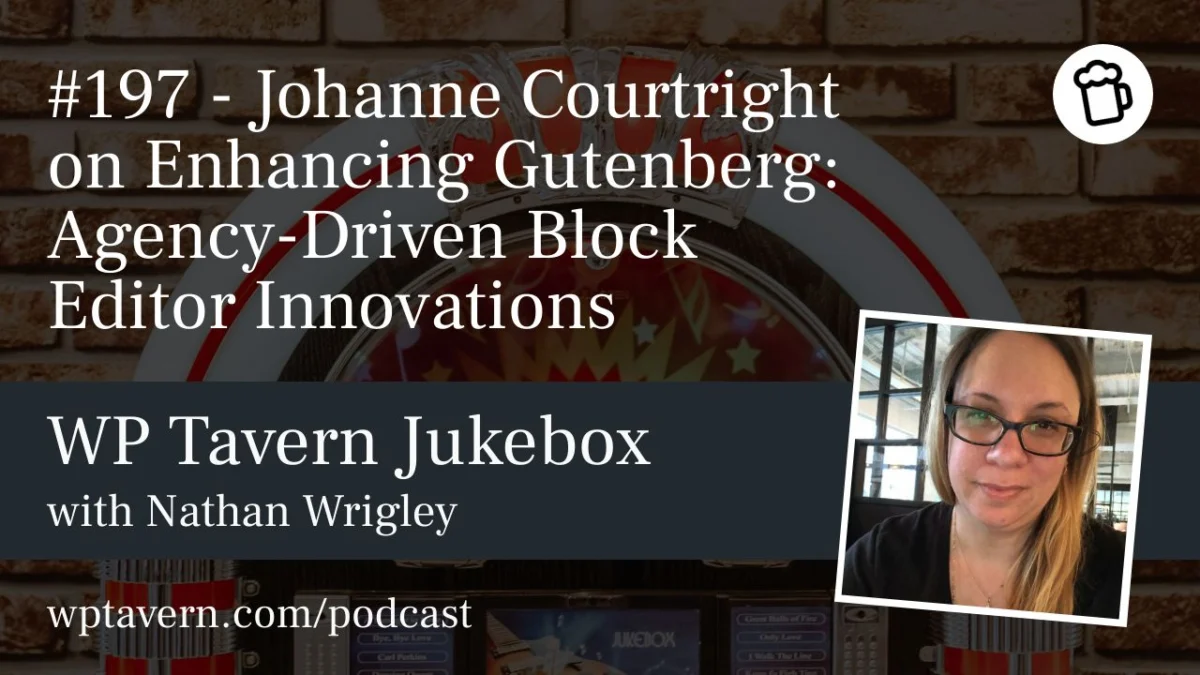
Enter Johanne Courtright, a seasoned developer and the creator of Groundworx, an open-source project designed to fill the functional gaps left by WordPress Core. In a recent interview on the WP Tavern Jukebox podcast, Courtright explored the challenges of modernizing agency workflows, the philosophy of building for the block-based web, and the persistent hurdles that continue to face the WordPress plugin ecosystem in 2025.
The Evolution of an Agency Developer
Johanne Courtright’s journey into the heart of WordPress development began in 2011, a time when the web was dominated by static HTML and Dreamweaver. Moving into the WordPress space provided a necessary evolution, allowing her to leverage custom post types and Advanced Custom Fields (ACF) to build robust, dynamic sites for complex clients like home builders.
However, the rise of the Block Editor (Gutenberg) forced a shift in methodology. Courtright recalls the initial friction of learning React, a prerequisite for advanced Gutenberg development. "I didn’t want to be left behind," she explains. Through a combination of dedicated study and real-world application at various marketing agencies, she began building a core foundation of blocks.
Her transition was not merely a change in tools, but a change in philosophy. While many developers still rely on legacy systems or heavy page builders like Elementor, Courtright committed to a "100% Gutenberg" approach. By abandoning jQuery and embracing the Interactivity API, she has positioned her work at the cutting edge of what WordPress is capable of, focusing on performant, modular solutions that respect the underlying integrity of the WordPress ecosystem.
Bridging the Gap: What Groundworx Offers
The core premise of Groundworx is simple: WordPress is an excellent foundation for beginners, but it often lacks the "pixel-perfect" control and responsive complexity required for high-end agency projects.
The "Must-Haves" for Agencies
Courtright identifies several critical areas where Core falls short for professional agencies:
- Breakpoint Control: Modern design requires precise control over layouts across desktop, tablet, and mobile. Core often lacks the granularity needed for complex responsive shifts.
- Design Efficiencies: Agencies need predetermined color palettes and branding presets that allow for client flexibility without breaking the design system.
- Component Logic: Features like tabs that collapse into accordions on mobile are common design patterns that aren’t natively supported, forcing developers to rely on bloated third-party plugins.
Groundworx addresses these through a dual approach: enhancing existing Core blocks and introducing custom blocks that solve specific, recurring problems. By using theme.json to manage global styles and responsive settings, Courtright ensures that her solutions remain lightweight and performant.
The Philosophy of Modularity
Unlike proprietary page builders that inject thousands of lines of unnecessary CSS and div-bloat into a page, Courtright’s approach is surgical. "I believe that somebody who has a website and tomorrow they want a different theme… should be able to do it easily," she notes. Her goal is to build "theme-agnostic" blocks that survive theme switches, preventing the vendor lock-in that has historically plagued WordPress agency clients.
The 80/20 Rule and the Future of Core
One of the most profound tensions in the WordPress community is the "80/20" rule—the idea that WordPress Core should only include features that serve 80% of the user base.
Courtright acknowledges this reality. "Most people will probably be satisfied with just the basic theme that comes with WordPress," she admits. She views the lack of advanced features in Core not as a failure, but as a deliberate design choice that keeps the barrier to entry low for casual users.
However, this creates a vacuum for developers. When a feature (like complex breakpoint management) is deemed "too niche" for Core, it falls to the community to provide the solution. This is where the open-source spirit thrives, allowing developers like Courtright to build modular, professional-grade tools that exist alongside the official roadmap without interfering with it.
Implications for the Ecosystem
Despite the maturity of the Gutenberg project, the transition for the average agency remains slow. Courtright identifies three major hurdles:
1. The Steep Learning Curve
The migration from the "Classic" WordPress mindset to the block-based, React-driven environment is seismic. For many, it is not just about learning a new interface; it is about unlearning years of procedural habits. This "cognitive load" is, in her view, the primary reason many agencies remain hesitant to fully commit to block-based themes.
2. Discovery and the Plugin Directory
A significant portion of the conversation focused on the current state of the WordPress Plugin Directory. Courtright argues that the current discovery system is fundamentally broken. "Search is awful," she states. "It’s all stuffed keywords."
She envisions a system that feels more like an App Store—curated, community-driven, and categorized by modern technical criteria (e.g., "Gutenberg-ready," "No jQuery," "Interactivity API enabled"). Currently, new, high-quality development is often buried under years of legacy plugins, making it nearly impossible for innovative projects to gain traction organically.
3. Building a Sustainable Business
There is a lingering question in the developer community: Can you build a successful business on top of blocks? While critics argue that the "block economy" hasn’t yet produced a blockbuster success story comparable to legacy giants like Gravity Forms, Courtright remains optimistic. She suggests that we are at a tipping point. As Core continues to integrate features like the Interactivity API and advanced layout tools, the ecosystem will reach a "flywheel" speed where high-quality block products become the standard rather than the exception.
Final Thoughts: The Path Forward
For those looking to modernize their workflow, Courtright’s advice is clear: embrace the friction. The process of reverse-engineering Core blocks, learning the nuances of theme.json, and moving away from CSS frameworks like Tailwind is difficult, but it yields a level of control and performance that legacy builders simply cannot match.
Her project, Groundworx.dev, serves as both a utility for developers and a proof-of-concept for what is possible when you stop fighting the block editor and start extending it. Whether or not her specific features eventually make it into WordPress Core, the path she is carving—one of modularity, performance, and agency-focused utility—is likely the direction the rest of the ecosystem will follow.
As we move into 2026, the question is no longer if agencies will adopt block-based development, but how they will choose to build their own foundations. With developers like Courtright leading the charge, the future of the WordPress interface looks increasingly bright, modular, and—above all—customizable.