Executive Summary: A Paradigm Shift in Media Buying
For the better part of two decades, the life of a digital marketer has been tethered to a specific destination: the Ads Manager. Whether it was Google’s Power Editor or Meta’s Ads Manager, the workflow was rigid—log in, analyze performance, export data to a spreadsheet, make a strategic decision, and log back in to manually execute changes. This "walled garden" approach to execution created a persistent friction point between insight and action.
Meta has officially disrupted this cycle with the launch of Meta Ads AI Connectors. By leveraging the Model Context Protocol (MCP), Meta is allowing its live campaign data to flow directly into the third-party AI tools where marketers are already conducting their analysis. This move signifies more than just a technical update; it represents a fundamental shift in where the "center of gravity" for digital advertising resides. Execution is leaving the platform, decisions are moving to where cross-channel data lives, and the very definition of a "media buyer" is being rewritten.
Main Facts: Breaking the Walled Garden
The launch of Meta Ads AI Connectors marks the first time a major social media platform has voluntarily lowered the technical barriers to external, AI-driven campaign management.
1. The Technology: MCP Servers
At the heart of this announcement is Meta’s implementation of the Model Context Protocol (MCP). Traditionally, connecting an AI tool (like a custom GPT, Claude, or a proprietary LLM) to live ad data required a massive engineering lift. Marketing teams had to secure API credentials, navigate complex developer documentation, and build custom middleware.
The new AI Connectors bypass this. Through an MCP server, these AI tools can connect securely to live campaign data with minimal setup. This allows the AI to "read" the account and, more importantly, "write" to it—creating, adjusting, and pausing campaigns based on natural language instructions.
2. Natural Language Execution
The primary interface for managing millions of dollars in ad spend is shifting from buttons and toggles to conversational text. Advertisers can now ask their AI, "Which of my creative assets are underperforming on Meta compared to my Google Search results, and can you pause the bottom 10%?" The AI can execute that command instantly without the user ever opening the Meta platform.
3. Real-Time Optimization
By removing the lag between data interpretation and execution, Meta is enabling a "closed-loop" system. Previously, AI tools were "cut off" from the campaigns; they could offer advice, but they couldn’t pull the trigger. Connectors remove that wall, allowing for near-instantaneous adjustments to fluctuating market conditions.
Chronology: The Evolution of Paid Social Management
To understand the significance of this shift, one must look at the three distinct eras of digital advertising management.
The Era of Manual Precision (2004–2018)
In the early days of Facebook Ads, success was determined by "platform fluency." Marketers spent hours tweaking manual bids, micro-targeting specific interests, and manually refreshing dashboards. The Ads Manager was a cockpit that required a highly trained pilot to flip every switch.
The Era of Black-Box Automation (2019–2023)
Meta introduced Advantage+ and other automated tools, moving the "intelligence" of the platform into the background. The platform began making its own decisions about who to show ads to and how to spend the budget. However, the marketer was still required to log into the platform to set the initial parameters and "feed the machine." The workflow remained siloed within Meta’s ecosystem.
The Era of Unified Intelligence (2024–Present)
With the release of AI Connectors, we enter an era where Meta is no longer a destination, but a service layer. The intelligence now lives in the marketer’s chosen AI environment, which can orchestrate Meta alongside other business inputs. This marks the transition from "platform-centric" marketing to "intelligence-centric" marketing.

Supporting Data: The Business Case for Decentralization
The industry demand for this level of integration is backed by significant shifts in how marketing departments are spending their time and resources.
- The "Tool Fatigue" Crisis: According to recent industry surveys, the average marketing team uses between 20 and 30 different SaaS tools. The "context switching" cost—the time lost moving between platforms—is estimated to reduce productivity by up to 40%.
- The Rise of Generative AI in Marketing: A 2023 Salesforce report found that 51% of marketers are already using generative AI, with another 22% planning to do so soon. However, a primary complaint has been that these tools lack "grounded" data—they can write copy but don’t know if the copy actually sold anything.
- Cross-Channel Complexity: Meta’s internal data suggests that advertisers who use multi-touch attribution and manage cross-channel journeys see a 15-20% higher ROI. By allowing Meta data to live alongside search and retail data in an AI tool, Meta is facilitating this higher-ROI behavior.
Official Context: Meta’s Strategic Pivot
While Meta has not framed this as an "exit" from its own platform, the strategic intent is clear. By making it easier for AI tools to spend money on Meta, the company ensures it remains a primary line item in a world where "AI Agents" may soon be making the majority of buying decisions.
In their official documentation regarding the AI Connectors, Meta emphasizes security and control. The MCP framework ensures that while the AI has access to data, the human advertiser remains the ultimate authority. Meta’s stance is that this is a "productivity play," designed to reduce the "engineering dependency" that often prevents smaller or less technical brands from using their advanced API features.
Industry analysts suggest this is also a defensive move against "All-in-One" marketing clouds. By being "open" and "connector-friendly," Meta makes itself the easiest platform for an AI-driven startup or a sophisticated enterprise to integrate into their custom-built stacks.
Implications: How the Industry Will Change
1. The Death of "Button-Clicking" Skills
For years, a "Meta Ads Specialist" was someone who knew exactly where every setting was hidden in the Ads Manager. That skill is being commoditized. As the barrier to execution drops, platform fluency stops being a competitive advantage. What matters instead is Strategic Prompting and Signal Integrity. The value moves from knowing how to click to knowing what to ask for.
2. The Rise of the Cross-Channel View
Perhaps the most significant implication is the end of the "Meta Vacuum." Performance on Meta only makes sense in the context of the wider business. If a brand’s retail media spend on Amazon is driving a surge in organic demand, an AI tool with Meta Connectors can see that surge and automatically scale Meta’s "Top of Funnel" awareness ads to capitalize on the momentum. This level of synchronization was previously impossible without a massive data science team.
3. Reduced Friction and Faster Pivot Speeds
In the traditional model, if a CMO saw a dip in performance on Tuesday, they might not see a strategy change until Thursday, after reports were pulled and meetings were held. With AI Connectors, the "Question-to-Action" loop is shortened to minutes. The AI identifies the dip, suggests a cause, and—upon human approval—executes the fix immediately.
4. The "Human-in-the-Loop" Necessity
The system will act quickly, which means it can also make mistakes quickly. The role of the human shifts from "operator" to "governor." Humans must now focus on:
- Defining Guardrails: Setting strict "do not exceed" limits on bids and budgets.
- Input Quality: Ensuring the AI is looking at the right signals (e.g., focusing on profit margins rather than just raw revenue).
- Creative Vision: AI can optimize a campaign, but it cannot yet invent a brand’s unique voice or cultural "vibe."
Conclusion: A New Center of Gravity
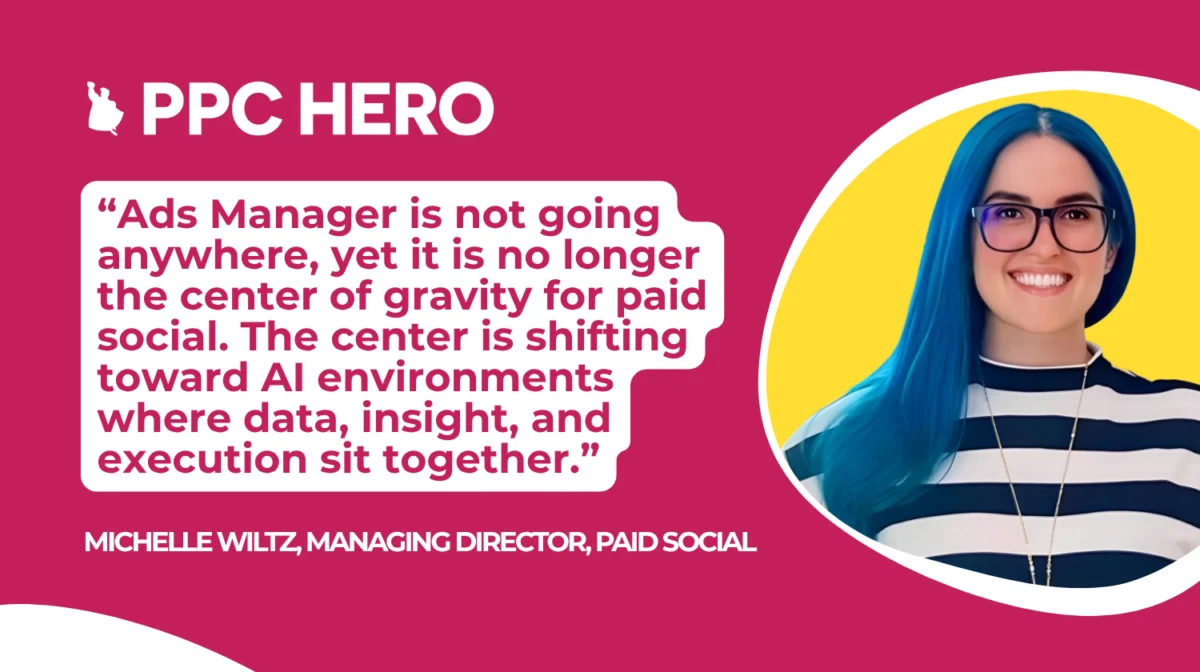
Meta Ads AI Connectors are easy to file under the category of "another AI feature," but that undersells the seismic shift occurring in the industry. Ads Manager is not going anywhere—it will remain the "source of truth" for the platform’s settings—but it is no longer the center of gravity.
The center is shifting toward independent AI environments where data, insight, and execution sit together in a single, natural-language interface. The teams that thrive in this new landscape will be those who redesign their workflows to treat Meta as a programmable resource rather than a destination.
As execution moves off the platform, the winners will be the marketers who stop "managing ads" and start "orchestrating intelligence." Those who continue to rely on manual logins and CSV exports will likely find themselves a step behind a system that is moving faster than any human can click.