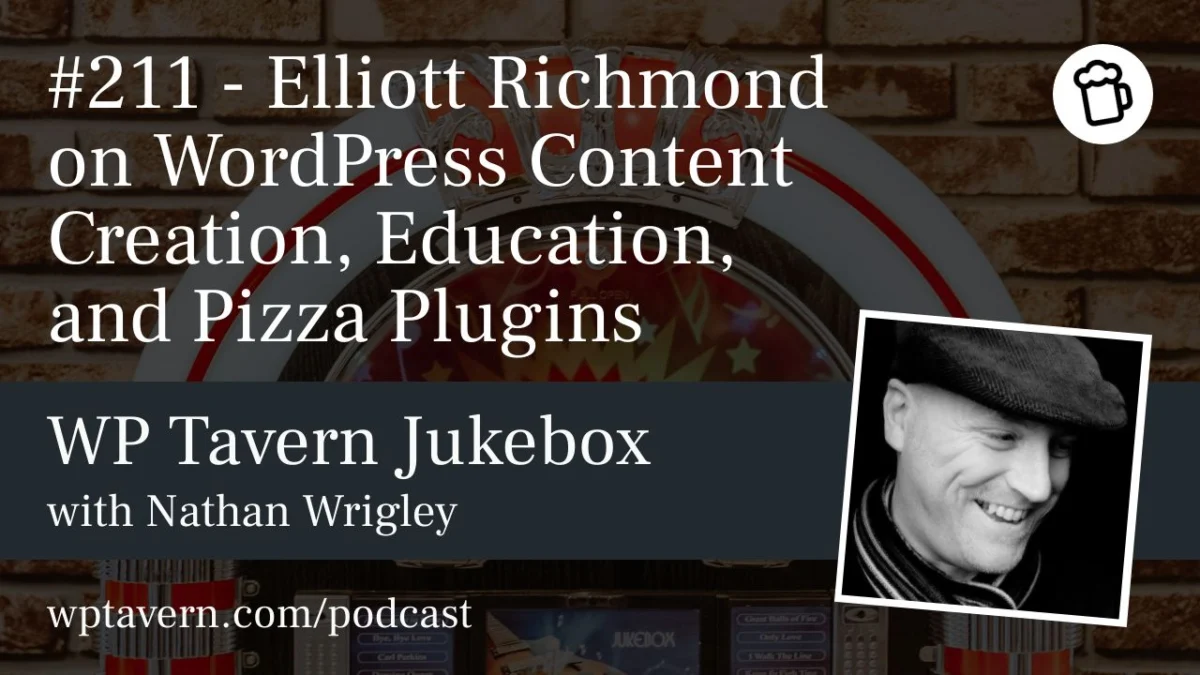
In the vast, evolving landscape of the internet, few platforms have maintained the cultural and technical staying power of WordPress. For over two decades, it has served as the backbone of the web, evolving from a simple blogging tool into a complex ecosystem powering everything from personal portfolios to enterprise-grade business infrastructure. Recently, the WP Tavern Jukebox podcast sat down with long-time developer, educator, and entrepreneur Elliott Richmond to explore a fascinating intersection of these worlds: how technical expertise, creative content, and a dash of entrepreneurial serendipity are shaping the next generation of the WordPress community.
A Legacy of Development: From b2 to Modern CMS
Elliott Richmond is not a newcomer to the WordPress space. His journey began in the early 1990s, tinkering with web development for local bands long before the term "Content Management System" was part of the common vernacular. Richmond was present for the pivotal transition when the b2 codebase was forked to become what we now know as WordPress.
"I’ve been developing with WordPress for over 20 years," Richmond notes. "I was building with other CMS platforms like Joomla and Drupal, but I found b2, and that eventually led me here. I’ve seen the community grow from small, niche meetups to the global force it is today."
His contributions have been consistent and varied. In 2013, he garnered attention for his "WordPress Advent Calendar," a collaborative project that brought together 30 developers to share code snippets. At a time when WordPress was primarily viewed as a blog, Richmond was already pushing the boundaries, using categories and tagging systems to create product databases and complex portfolios—a precursor to the modern, headless, and block-based implementations of today.
The Unexpected Pivot: WordPress as a Business Engine
Perhaps the most compelling narrative in Richmond’s career is the birth of his "Pizza Pilot" venture. During the COVID-19 lockdowns, Richmond and his wife, Rachel, identified a gap in their local community’s food supply. What began as a small-scale, community-focused pizza delivery service in their village quickly transformed into a thriving, multi-staff business.
The "secret sauce" behind this venture wasn’t just culinary—it was technical. Richmond utilized the WordPress stack, specifically WooCommerce and Jetpack, to create a bespoke ordering system. The system manages complex variables: specific delivery slots, time-based ordering, and geo-fencing that restricts delivery based on precise postcodes.
"I wouldn’t have known in a million years that I’d be running a pizza business five years later," Richmond explains. "But it’s all because of WordPress. It allowed me to glue everything together. We even have people driving 120 miles just to collect a pizza because they found the system so easy to use. I’m currently finalizing a plugin based on this model so other entrepreneurs can replicate this success in their own locales."
This project serves as a perfect microcosm for the flexibility of the WordPress ecosystem. It demonstrates that the platform is not merely for "websites" but acts as a robust, scalable backend for diverse, real-world business operations.
The New Frontier: Automattic and the Shift Toward Influencer Marketing
Recognizing the power of Richmond’s ability to demystify complex technical concepts, Automattic has recently tapped him to produce educational content centered on WordPress.com. This partnership, facilitated by industry veterans like Michelle Frechette and Stacey Carlson, marks a significant shift in how WordPress approaches community engagement.
Instead of traditional, corporate-sanctioned marketing, Automattic is leaning into "creator-led" education. Richmond’s task is to leverage his personal YouTube channel to share workflows, insights, and tutorials.
"There are no guardrails in the sense of corporate micromanagement," Richmond says. "It’s a partnership based on trust. They want me to show how I use their products, how I solve problems, and how I approach the challenges of the modern WordPress landscape. It’s an educational initiative, not a marketing campaign."
This approach acknowledges a fundamental truth of the modern internet: users no longer look to manuals for help; they look to peers, influencers, and video creators. By empowering independent voices like Richmond, Automattic is effectively modernizing its support and onboarding strategy.
The Art of the Educational Video: Process and Philosophy
Richmond’s approach to content creation is as deliberate as his coding style. He treats his YouTube production not as a throwaway activity, but as a discipline that requires structure and rigor.
The "Low-Tech" Philosophy
Despite the high quality of his output, Richmond’s setup is refreshingly accessible. He eschews expensive studio gear in favor of clever, DIY solutions. His lighting rig, for instance, consists of a recycled cat food box modified with a hole and diffused with tissue paper. He records primarily using his iPhone, proving that the barrier to entry for high-quality educational content is lower than many aspiring creators might fear.
The Scripting Discipline
While Richmond is technically proficient, he attributes his success to the labor-intensive process of scripting. He utilizes a "brain dump" method:
- Voice-to-Text: He records his initial thoughts on a topic using accessibility tools.
- Structuring: He refines these thoughts into a structured outline.
- Refinement: He polishes the content, often explaining the concepts to his wife, Rachel, to ensure they are accessible to a non-technical audience.
- Editing: Using DaVinci Resolve, he focuses on clear, motion-graphic-heavy editing to visualize abstract concepts like templating and patterns.
Implications for the WordPress Ecosystem
The partnership between Automattic and independent creators like Richmond signals a broader trend in the WordPress community: the professionalization of educational content.
A New Feedback Loop
One of the most vital aspects of Richmond’s work is the feedback loop generated by YouTube comments. Unlike the often-isolated environment of official support forums, YouTube provides an immediate, voluminous, and unfiltered stream of user sentiment. Richmond views even negative feedback as a net positive, as it highlights areas of confusion that he can address in future content.
Handling Rapid Technological Flux
With major updates like WordPress 7 on the horizon, the platform is in a period of intense evolution. This creates a "moving target" problem for documentation. Richmond believes that video content is the best way to handle this flux. Because video can be produced and updated more dynamically than static documentation, it serves as an agile bridge between developers and end-users.
The Power of "Dogfooding"
Richmond’s work is characterized by "dogfooding"—the practice of using the tools you are teaching. Whether it is Xdebug for debugging or custom WooCommerce plugins for his pizza business, his tutorials are born out of necessity. This authenticity is the cornerstone of his influence.
Looking Ahead: 2026 and Beyond
As Richmond moves through 2026, his focus remains on simplifying the complex. From the integration of Large Language Models (LLMs) to the intricacies of the Block Editor, he aims to act as a translator between the core developers and the average user.
"My goal is to show people that technology doesn’t have to be intimidating," Richmond concludes. "If I can take a complex concept, break it down, and help one person build something they didn’t think was possible, then the work is worth it."
For those interested in following his journey, Richmond can be found at elliottrichmondwp on YouTube, where he continues to explore the intersection of WordPress, entrepreneurship, and the creative process. His work serves as a reminder that the true strength of WordPress lies not in the code itself, but in the community of people—developers, pizza makers, and creators alike—who use it to build their own unique paths.