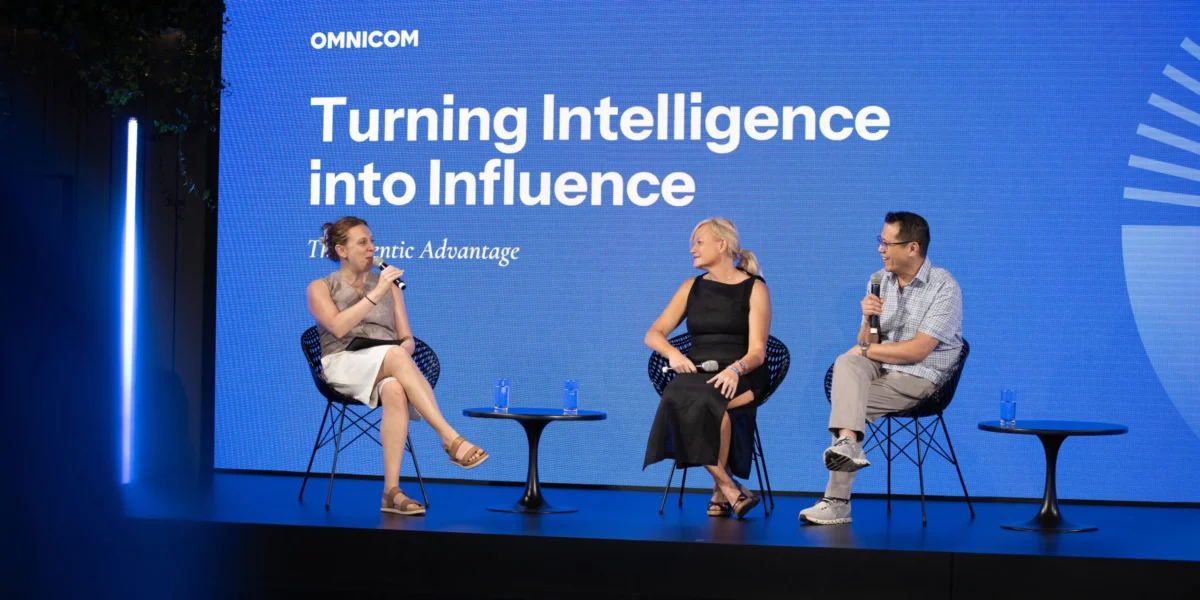
The marketing landscape is undergoing a tectonic shift, driven by the dual pressures of rapidly evolving artificial intelligence and the intensifying need for authentic, human-centric partnership. At the recent Cannes Lions International Festival of Creativity, industry leaders gathered at the Omnicom Space for a series of high-level discussions hosted by ADWEEK executive editor Alison Weissbrot.
The Adweek Press Hour served as a barometer for the industry, unpacking how agencies are rethinking the traditional pitch, integrating "agentic" AI into creative workflows, and redefining the very nature of "influence" in a fragmented, noisy media environment.
The Evolution of the Agency Pitch: From Transactional to Transformational
The opening session of the Press Hour tackled one of the industry’s most perennial—and often criticized—rituals: the agency pitch. Featuring Victoria Fox (CEO of AAR), Ryan Kangisser (Chief Strategy Officer at MediaSense), and Deepthi Prakash (COO of Omnicom Advertising Group), the discussion moved beyond the "how-to" of winning business and into the psychology of selection.
Rethinking the Pitch as an Insurance Policy
Victoria Fox framed the modern pitch process not merely as a competition, but as an essential risk-mitigation strategy. "Pitches are like an insurance policy," Fox argued. For a brand, selecting a new agency is a high-stakes decision involving significant capital and brand equity. The pitch process provides the "levels of assurance and insurance" necessary for a business to feel confident that they are making the correct strategic choice.
The Power of Vulnerability
Ryan Kangisser offered a counter-narrative to the polished, hyper-produced presentations often associated with Cannes-level agencies. He posited that a pitch does not need to be perfect to be successful; in fact, a degree of vulnerability is essential for credibility. Clients are increasingly fatigued by rehearsed "dog and pony" shows. Instead, they are looking for genuine partners. According to Kangisser, the primary goal of a pitch should be to demonstrate cultural and strategic compatibility—the "chemistry" that dictates whether a long-term partnership will flourish or falter.
Bridging the Gap: Real-World Fluidity
Deepthi Prakash provided a critical reality check, noting that pitches are, by definition, "artificial environments." They rarely reflect the messy, iterative reality of daily agency-client collaboration. Prakash emphasized that a pitch should not be a static deliverable. She warned that if the leadership team signs off on a pitch that doesn’t align with the operational realities of the staff doing the day-to-day work, the partnership is doomed to fail. "There needs to be fluidity in correspondence," she noted, particularly in an era where technological change is forcing agencies to adapt their operating models in real-time.
The Agentic Frontier: AI in the Workflow
Following the discussion on pitches, the focus shifted to the technological horizon: the rise of "agentic" tools. Jantzen Bridges (Global President of Credera) and Paolo Yuvienco (CTO of Omnicom) explored how AI is moving from a passive assistant to an active participant in agency workflows.
Defining the Agentic Shift
While generative AI (like ChatGPT or Midjourney) has dominated headlines, the shift toward "agentic" tools represents a fundamental change. These are systems capable of executing complex, multi-step tasks autonomously. Bridges and Yuvienco agreed that the industry is in the "early innings" of this transition. However, the internal dialogue regarding workflow integration has already matured from "what is this?" to "how do we apply this to improve margins and speed?"
The Culture of Innovation as an Enabler
The most significant barrier to adoption is not technological, but cultural. Getting staff to embrace AI tools requires a top-down mandate paired with a bottom-up enablement environment. Yuvienco noted that Omnicom’s success in this area is rooted in an existing culture of innovation. "If the people at the top are on board, it is easier to implement across the board," Bridges added. For Omnicom, the strategy has been to demystify the technology, framing it as an augmentation of human talent rather than a replacement.
Redefining Influence: Intelligence, Integration, and Scale
The final segment of the Press Hour featured George Manas, Omnicom Media’s Chief Growth and Solutions Officer, who outlined a new framework for how agencies should view "influence." In a world where consumers are bombarded by thousands of messages daily, the old metrics of scale—reach and frequency—are no longer sufficient.
Intelligence Over Scale
Manas argued that influence must be defined by intelligence. It is no longer enough to simply be present; agencies must create experiences that break through the "noisy environment" of modern digital life. This requires deep data synthesis and a sophisticated understanding of consumer behavior that moves beyond basic demographics.
The Seamless Integration of Touchpoints
Influence is also a matter of connectivity. Manas emphasized that consumers do not see "channels"; they see a seamless brand experience. Therefore, integration is the next frontier. By leveraging its media scale, Omnicom is working to unlock new value for clients by ensuring that every touchpoint—from social media to physical activation—is harmonized.
A New Reality for Omnicom
Reflecting on the progress made over the last 18 months, Manas noted that Omnicom has significantly bolstered its creative bench and its sports marketing capabilities. These enhancements have allowed the agency group to offer a more robust, multi-disciplinary approach to problem-solving. "We genuinely feel better positioned than ever to help clients navigate a few new realities," Manas concluded.
Implications for the Future of Marketing
The discussions at the Adweek Press Hour provide a roadmap for where the industry is heading in 2026 and beyond. Several key themes emerge that will define the winners and losers of the next few years:
- The Death of the "Perfect" Pitch: Agencies that pivot toward radical transparency and emphasize authentic partnership over glossy, unrealistic deliverables will find more success in winning and retaining clients.
- The Agentic Imperative: Firms that fail to integrate agentic AI into their core workflows will struggle to compete on speed and cost. However, the real challenge remains organizational alignment—getting human talent to work in tandem with these new digital agents.
- The Holistic Influence Mandate: Influence is no longer a media buy; it is an experience design. The ability to integrate data, media, and creative into a single, seamless narrative is now the benchmark for success.
Conclusion: The Road Ahead
As the industry moves forward, the conversations at Cannes Lions suggest a shift away from the "siloed" thinking of the past. Whether it is the collaborative nature of the new agency pitch or the integration of AI agents into the daily creative process, the future of marketing is defined by connectivity. For global networks like Omnicom, the challenge—and the opportunity—lies in maintaining that scale while ensuring the agility to solve the increasingly complex, tech-driven problems facing their clients.
As brands continue to navigate a landscape of uncertainty, the message from the Omnicom Space was clear: the agencies that thrive will be those that can successfully balance human intuition with machine-led intelligence, creating value that is as deep as it is wide.
Are you looking to stay at the forefront of these industry shifts? The future of brands is being decided at Brandweek. Join the industry’s top marketers for the ideas, insights, and connections shaping what’s next. Get your ticket here.