The promise of artificial intelligence in the modern workplace is often framed as a "set it and forget it" revolution. Yet, for many entrepreneurs, the reality is far more fragmented. They experiment with generic chatbots and one-size-fits-all automation tools, only to be met with underwhelming results that fail to capture the nuance of their specific business processes.
Keith Moehring, founder and CEO of L2 Digital, argues that the problem isn’t the technology—it’s the approach. By shifting from broad AI tools to a bespoke ecosystem of custom AI agents, Moehring has successfully automated 60% of his operational workload. In this deep dive, we explore how to move beyond basic automation into the realm of custom-built, agentic workflows that act as a "second brain" for your business.
The Reality Check: Why Most AI Deployments Fail
The internet is saturated with "build an agent in six steps" tutorials that gloss over the fundamental requirement of successful AI implementation: contextual ownership.
Moehring, who co-created a comprehensive framework for this system with Michael Stelzner, warns that you cannot simply borrow a template from another entrepreneur’s workflow and expect it to function in your business. AI agents require a precise understanding of your internal processes, your specific client communication style, and your unique operational rhythm.
"Building an AI agent that reliably performs a specific task in the way you do requires real work," Moehring notes. "You have to define the process, provide the context, and iterate until the output is indistinguishable from your own manual effort."
While the upfront investment is significant, the long-term payoff is twofold. First, it recovers lost time—an agent handling 80% of a task allows the human to focus on the final 20% that requires true creative or strategic judgment. Second, these agents serve as a living database. Everything they touch is logged, consolidated, and—most importantly—queryable.
Chronology of a System: From Task-Level to Orchestration
To build an effective system, one must understand the hierarchy of agentic workflows. Moehring categorizes the maturity of AI integration into three distinct levels:
1. The Entry Level: Task-Specific Agents
At this stage, you build agents to handle individual, time-consuming "micro-tasks." These might include drafting routine emails, summarizing specific file types, or data entry. Each agent is purpose-built for one function, ensuring high reliability and consistency.
2. The Intermediate Level: Coordination
Once you have several task-specific agents, you begin to string them together. These agents act as middle managers, taking the output of one task and feeding it into the next. This creates a chain reaction that transforms isolated tasks into cohesive workflows.
3. The Advanced Level: Orchestration
The pinnacle of this system is the "Orchestration Agent." Moehring utilizes a primary agent he calls "Leo." At the start of each month, he issues a single command: "Set up all the client tasks and start executing on the work for all distributor clients this month."
Leo immediately triggers sub-agents, creates tasks in project management tools like ClickUp, drafts necessary emails, and initiates project files. What was previously a two-week administrative slog is now reduced to a one-hour review session on the first day of the month.
Supporting Data: A Mini Case Study on Post-Meeting Follow-Through
One of the most significant pain points for any entrepreneur is "post-meeting drift"—the tendency to finish a call and move immediately to the next task, thereby losing track of critical action items and strategic decisions.

Moehring solved this by building an agent that bridges the gap between his meetings and his project management software.
- The Tech Stack: He utilizes Granola for meeting notes, which connects via the Model Context Protocol (MCP) to Cursor, his AI-powered code editor.
- Naming Convention: By using a strict naming convention (e.g., "ClientCode_meeting-type"), the agent can instantly identify, categorize, and route notes to the correct folder.
- Execution: The agent retrieves meeting notes from the previous week, cross-references them against his active client list, extracts actionable to-dos, and populates ClickUp with full context.
This level of automation ensures that no commitment is ever dropped, effectively turning his meeting notes into a self-executing task list.
The Strategic Blueprint: Implementing the System
Before writing a single line of code or prompt, Moehring insists on a foundational step: The Accountability Chart.
Map Your Org Chart
Using tools like Ninety.io or even asking Claude to visualize your business structure, you must map out your roles and recurring tasks. If you are a solopreneur wearing every hat, this step is even more critical.
- CEO/Visionary: Focuses on strategy.
- Operations: Focuses on the "how."
- Marketing/Sales: Focuses on growth.
Once you have this map, pick one recurring, low-complexity task to automate. Do not attempt to build a "Marketing Agent" in one go; build a "Social Media Caption Generator" first. Once that works, build the next component.
The Tech Foundation
Moehring recommends a three-pronged approach to the technical stack:

- The Brain (AI Model): While Claude is currently his preferred model, the system is LLM-agnostic. The key is using a tool that allows you to switch models based on task complexity (e.g., using Claude Code for advanced coding tasks vs. lighter models for summarization).
- The User Interface: Moehring advocates for Cursor. It connects the AI model directly to your local file system. This allows the AI to "read" your business context—your documents, your past notes, and your templates—without the security risks associated with cloud-based, non-private tools.
- The Context Layer: By organizing your desktop files into a structured "L2 Ops" folder, you provide the AI with a "mental map" of your business. The AI learns where to find information, effectively eliminating the need for constant manual guidance.
Official Recommendations and Best Practices
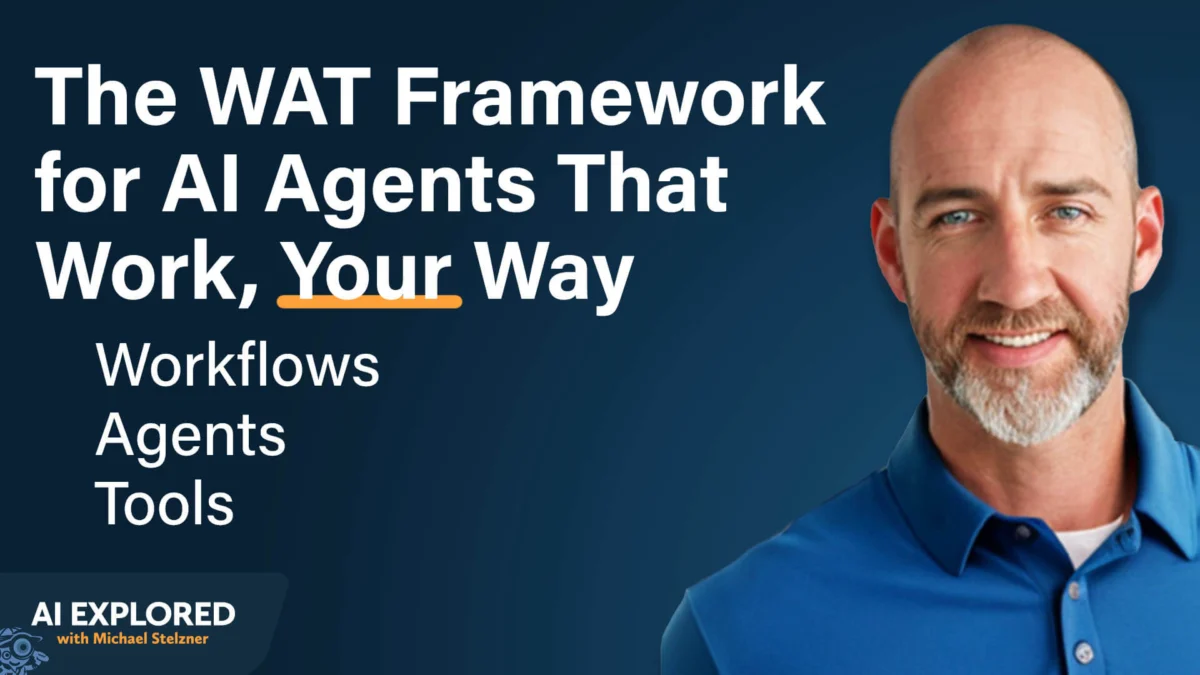
When engaging with this system, the "WAT" framework (Workflows, Agents, and Tools) is essential for success.
- Document Before Building: Write out your current process manually. If you cannot explain the steps to a human, you cannot explain them to an AI.
- Start Small: Build from the bottom up. A complex, top-down AI agent is prone to "hallucinations" and errors. A stack of reliable, small-scale agents is far more robust.
- Automate Triggers: You shouldn’t have to launch your agents manually. Use Cursor Automations or cron jobs to ensure your agents run on a schedule, such as every Monday at 9:00 AM.
Implications: The New Definition of "Founder Efficiency"
The implications of this system extend far beyond simple time-saving. By creating a digital infrastructure where processes are codified into agents, business owners are effectively building a "knowledge asset" that increases in value over time.
If Moehring forgets how a specific project was handled six months ago, he doesn’t need to dig through emails; he simply asks his system. This "second brain" allows for a higher level of cognitive bandwidth, shifting the founder’s role from "doer" to "architect."
As AI continues to evolve, the businesses that win will not be those that simply use the most advanced tools, but those that have the best-defined internal processes. By digitizing your operations into an agentic system, you are not just saving time—you are scaling your ability to think, act, and execute at a level that was previously impossible for a single individual.
The era of the "AI-augmented entrepreneur" has arrived. The question is no longer whether you can automate your business, but whether you have the discipline to map your operations well enough to make that automation a reality.