For more than a decade, WordPress has served as the backbone of the open web, powering everything from personal blogs to complex enterprise-level architectures. As the ecosystem matures, a divide has emerged between users who rely on the intuitive, visual nature of block-based site builders and those who prefer the granular control of custom-coded themes. Bridging this gap is WP Rig, an open-source theme development toolkit that is currently undergoing a renaissance under the stewardship of software architect Rob Ruiz.
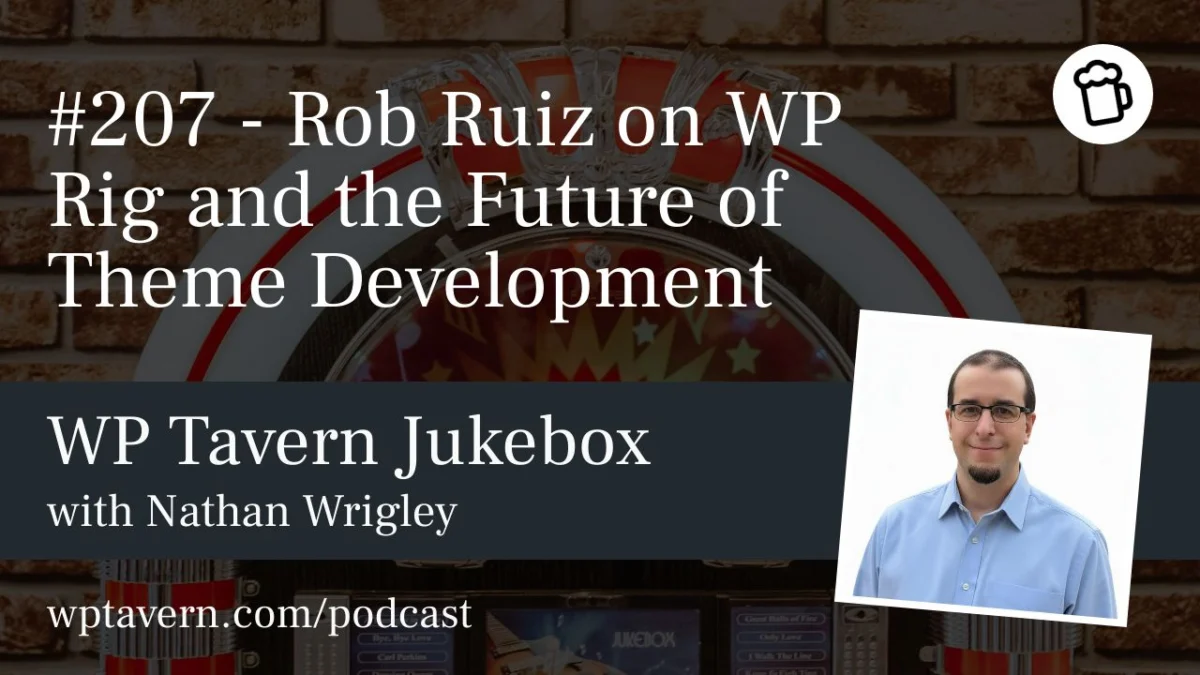
In a recent episode of the Jukebox podcast, hosted by Nathan Wrigley of WP Tavern, Ruiz discussed the pivotal role WP Rig plays in democratizing professional development standards. By providing a modern, performance-oriented framework, WP Rig is positioning itself as the go-to resource for developers looking to move beyond the limitations of pre-packaged themes and visual page builders.
The Genesis and Philosophy of WP Rig
WP Rig is not merely a "starter theme" in the traditional sense; it is a comprehensive development environment. While early WordPress development often relied on static template files and manual code updates, modern web development requires a robust pipeline. WP Rig integrates tools like Composer for dependency management and Node.js for build processes, creating a "best-practice-first" ecosystem.
For developers, this means the framework handles the heavy lifting—enforcing coding standards, optimizing assets, and providing guardrails that prevent common pitfalls. As Ruiz explains, the project was designed to be "minimal at its core," ensuring that developers are not burdened by unnecessary bloat, but are instead empowered by a scaffold that reflects the current state of modern web engineering.
A Chronology of Growth: From Designer to Architect
Rob Ruiz’s journey into the WordPress ecosystem began in 2010, marking a transition from a design-centric career to a path in software engineering. His involvement with WP Rig is a narrative of serendipity and technical curiosity.
- The Discovery: Searching for a framework that balanced aesthetic control with code integrity, Ruiz encountered WP Rig and found that its philosophy aligned perfectly with his own.
- The Transition: Shortly after adopting the toolkit, he discovered through a WP Tavern article that the project was seeking new leadership.
- The Stewardship: After attending a community call and engaging in deep-dive discussions with previous maintainers, Ruiz stepped into the role of custodian.
- The Modernization: Under his leadership, the project has evolved into "Version 3," an overhaul that integrates contemporary tooling—such as esbuild and Lightning CSS—to ensure the framework remains relevant in an era of rapid browser innovation.
Technical Infrastructure and Developer Experience
One of the most significant hurdles for those transitioning from page builders to custom coding is the complexity of the development environment. WP Rig addresses this by abstracting the "scary" parts of modern development while keeping the architecture transparent.
Key Technical Pillars
- Asset Pipeline: WP Rig utilizes sophisticated build processes that allow developers to write "future-facing" CSS. Tools like PostCSS and Lightning CSS ensure that modern syntax—such as CSS nesting—can be used today, with the framework automatically handling compatibility for older browsers.
- The "Bundle" Process: Unlike some frameworks that force a rigid structure, WP Rig includes a unique bundling command. This process generates a fresh, clean theme directory, effectively stripping away the "Rig" branding and references, allowing developers to ship a bespoke product that is entirely their own.
- Coding Standards: By baking the WordPress Coding Standards (WPCS) directly into the development workflow, the framework acts as an automated mentor. It warns developers of potential issues before they submit their work for review, significantly reducing the friction involved in community contributions or client handoffs.
The Changing Paradigm: Full Site Editing and Hybrid Themes
The introduction of Full Site Editing (FSE) and block-based themes in WordPress core sent shockwaves through the development community. For many, it raised the question: Is custom theme development still relevant?
Ruiz views this evolution not as an end, but as a new frontier. "It’s about having the right tool for the right job," he notes. WP Rig has evolved to support three distinct paradigms:
- Classic: The traditional template-based approach.
- Block-Based: Fully utilizing the WordPress FSE capabilities.
- Hybrid: A flexible middle ground that allows developers to retain control over the underlying structure while leveraging the convenience of the block editor.
By providing command-line tools that allow users to toggle between these modes, WP Rig remains platform-agnostic. It enables developers to craft custom blocks at the theme level—a feature that provides immense power, though Ruiz cautions that this effectively disqualifies a theme from the official WordPress.org repository. This distinction highlights the framework’s commitment to "ultimate control" over "canned solutions."
Educational Implications and the "Tinkerer" Spirit
Perhaps the most compelling aspect of WP Rig is its focus on education. In an age where many users are confined to the limitations of page builders, WP Rig encourages what Ruiz calls the "tinkerer mentality."
Why Education Matters:
- Demystifying the Web: By forcing users to interact with files, code, and build processes, WP Rig provides a practical education in HTML, CSS, and JavaScript.
- Preserving the Open Web: Ruiz argues that the health of WordPress is tied directly to the number of people who know how to contribute to it. If the user base becomes entirely reliant on proprietary tools, the community loses the "engineers" who actually drive the platform forward.
- The Power of Code: While page builders offer speed, they often save configurations in the database, making global changes difficult. Coding, as Ruiz points out, gives developers "superpowers," allowing for global, systematic updates that no visual builder can match in terms of efficiency and scalability.
Community and Future Outlook
While the active contributor base for WP Rig has fluctuated, the project is currently in a state of renewed activity. The introduction of Version 3 has brought performance improvements that bring the framework in line with industry standards like Vite.
Ruiz is actively seeking to foster a more vibrant community. Through a dedicated Discord server and the GitHub repository, he encourages users to get involved—not just as consumers, but as contributors. "I want to help people hold their hand if needed," Ruiz says, emphasizing that the project is built to support anyone with the curiosity to learn.
Getting Started
For those interested in exploring this path:
- Prerequisites: Familiarity with Node.js, Composer, and a local development environment (such as Local WP or Docker) is recommended.
- The Resource: Interested developers can visit wprig.io to access documentation, video tutorials, and the latest version of the toolkit.
- Direct Engagement: Ruiz invites interested parties to connect via LinkedIn or the official Discord, where he provides direct guidance to newcomers and experienced developers alike.
Conclusion
As WordPress continues to evolve, the tools used to build upon it must be equally dynamic. WP Rig represents a commitment to the foundational principles of the open web: transparency, standards-compliance, and individual empowerment. By lowering the barrier to entry for professional-grade development, Rob Ruiz and the WP Rig project are ensuring that the next generation of WordPress developers has the tools they need to build, learn, and contribute to the platform’s future. Whether for a small personal project or a complex agency site, the ability to control one’s own code remains, as Ruiz asserts, the most powerful tool in any developer’s arsenal.