In the volatile landscape of digital advertising, many eCommerce brands find themselves trapped in a cycle of diminishing returns. They generate clicks, but struggle to convert them into loyal customers, watching their ad budgets evaporate on the wrong audiences at the wrong times. According to growth expert Sam Piliero, the culprit is often a fundamental misunderstanding of what drives business health.
In a comprehensive deep dive co-created with Michael Stelzner, Piliero outlines the "M4 Method"—a strategic, four-stage framework designed to transition brands from erratic performance to predictable, high-level scaling.
The Two Primary Roadblocks to Success
Most advertisers remain tethered to two specific behaviors that stifle growth. The first is an unhealthy obsession with efficiency metrics. While Return on Ad Spend (ROAS) and Cost Per Acquisition (CPA) serve as necessary guardrails, they are not the end goal. Piliero argues that businesses must pivot their focus toward the "contribution margin."
"A 10x ROAS might look impressive on a dashboard, but a 2.2 ROAS that allows you to spend aggressively, acquire a massive customer base, and leverage compounding word-of-mouth will often build a far more substantial enterprise," Piliero explains. For most healthy eCommerce brands, a 10%–20% profit margin on revenue is the target; chasing efficiency at the expense of volume is a classic growth trap.
The second roadblock is the misconception of control. Advertisers tend to fall into one of two extremes: they either over-engineer their accounts with a chaotic array of competing campaigns or delegate entirely to the algorithm, hoping for the best. The M4 Method identifies the "sweet spot" between these extremes, enabling systematic, scalable results.
The M4 Framework: A Chronological Strategy for Growth
The M4 Method is structured as a progressive four-stage system: Account Structure, Creative, Deep Dive Analysis, and Scale. Each stage builds upon the last, requiring a disciplined, sequential execution.
Stage 1: Account Structure (The Foundation)
Piliero describes the account structure as the "house" of the business. Even with world-class creative and a high-demand product, a disorganized account will inevitably underperform.
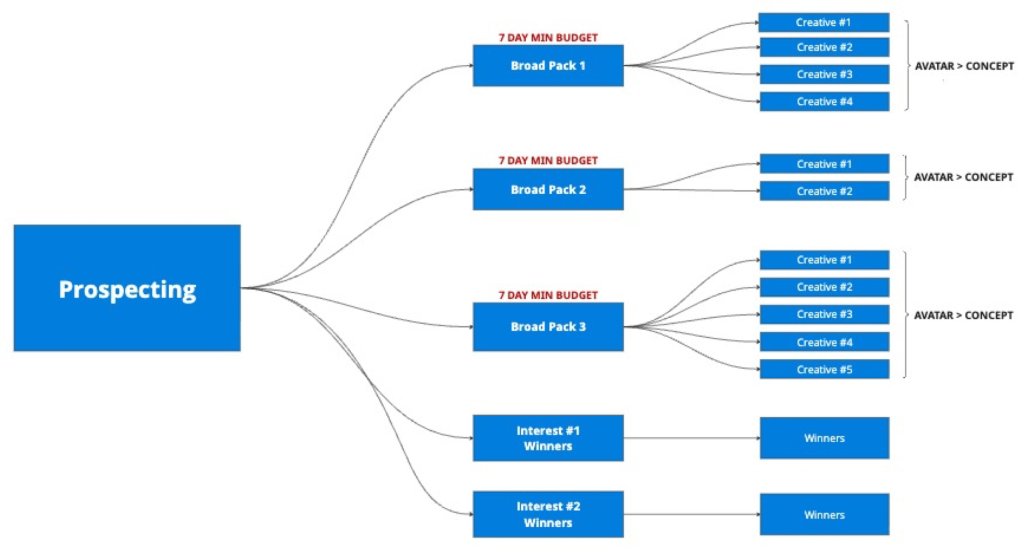
The strategy relies on a core prospecting campaign using Campaign Budget Optimization (CBO). This campaign is populated with multiple "packs"—sets of creative that the algorithm tests. By using value rules and ad set budget minimums and maximums, advertisers can force the algorithm to distribute spend toward fresh, untested assets rather than allowing it to default to older, stagnating ads.

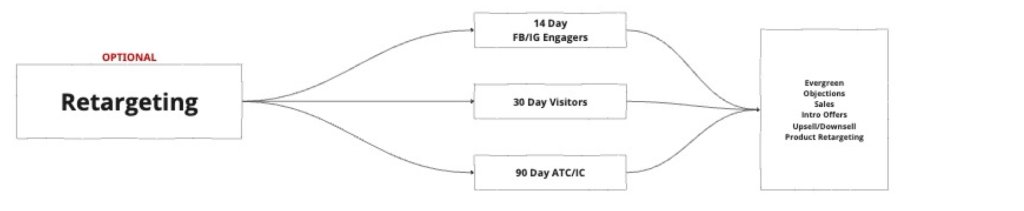
Alongside prospecting, brands should implement a dedicated retention campaign for existing customers. Separating these audiences ensures that as spend increases, the business knows exactly whether it is acquiring new customers or merely re-engaging old ones. Optional retargeting for high-intent prospects and a dedicated scaling campaign for top-performing ads complete the structure.
Stage 2: Creative (The Engine)
With the structure in place, creative becomes the primary lever for growth. In the post-Andromeda algorithm era, targeting settings are secondary to the content of the ad. The creative itself acts as the primary signal to Meta’s algorithm regarding who should see the ad.
The winning formula is the "problem-solution" approach. Instead of broad, generic messaging, ads should target a specific avatar with a specific problem and position the product as the unique solution.
Piliero suggests three tactical steps for creative excellence:
- Competitive Research: Utilize tools like the Facebook Ads Library or MagicBrief to identify ads with high longevity. Longevity is a reliable proxy for performance.
- Format Matching: Currently, video remains the king of top-of-funnel prospecting, while image and video work equally well for middle-of-funnel solution-focused messaging.
- Iterative Testing: Do not reinvent the wheel. If an ad works, iterate by changing the hook, the influencer, or the headline, rather than starting from scratch.
Stage 3: Deep Dive Analysis
Most businesses fail to realize that their conversion patterns are not uniform. By analyzing 90 to 180 days of non-promotional data, brands can identify significant spikes in performance based on day of the week, geography, or audience demographics.
"I spent months at BarkBox noticing we had exceptional performance on weekends before I finally realized we needed to change our spending to match that behavior," Piliero notes. Once a 20%–30% performance variance is identified, brands should adjust their daily budgets to capitalize on high-performing windows. The goal is to spend more on high-converting days, even if it slightly lowers the ROAS, in order to maximize the total acquisition of customers.
Stage 4: Scale
Scaling is the final step, and it should only be attempted when the preceding three stages are optimized. Piliero defines three modes of scaling:
- Vertical Scaling: Increasing the budget of an existing campaign by 10%–30% every few days to allow the algorithm to recalibrate.
- Horizontal Scaling: Launching temporary, separate campaigns for specific sales or product launches.
- Twin Engine Scaling: The combination of vertical and horizontal scaling. This involves injecting fresh iterations of "hit" ads back into the primary CBO while simultaneously increasing the campaign’s overall budget.
Supporting Data and Real-World Results
The effectiveness of the M4 Method is validated by the rapid growth of its practitioners. Five of The Moonlighters’ current clients, who were generating less than $100,000 in monthly revenue just a year ago, have now scaled to the $50 million-plus range.

While Piliero emphasizes that these results are exceptional and not the standard for every brand, they illustrate the potential of a system that prioritizes lifetime value over short-term metrics. The data consistently shows that brands that lean into creative iteration and data-backed spending patterns can maintain stability even as they dramatically increase their monthly ad spend.
Official Guidance: The "King Goal"
To avoid becoming distracted by "proxy metrics" (such as CPMs or click-through rates), Piliero emphasizes the importance of a single "king goal." Whether that goal is Cost Per Acquisition (CPA) or a specific ROAS, it must be the North Star of the advertising strategy.
If the king goal is being met, fluctuations in other metrics should be ignored. Chasing every minor metric often leads to fragmented decision-making, whereas focusing on the king goal provides the clarity required to scale significantly.
Implications for the Future of eCommerce
The implication for modern marketers is clear: the "set it and forget it" era of Facebook ads is over. Success in the current ecosystem requires a hybrid approach that respects the power of the algorithm while providing it with the right structure and high-quality, problem-solving creative.
For brands operating under supply constraints—where fulfillment capacity is limited—the strategy must shift. In these cases, the M4 Method’s scaling stage is inverted, focusing on maximizing efficiency per order rather than raw volume. However, the foundational principles of deep-dive analysis and creative testing remain essential even for smaller, controlled-growth businesses.
As the digital marketplace becomes increasingly competitive, the brands that thrive will be those that view their ad accounts not as a series of disparate campaigns, but as a compounding machine. By mastering the M4 Method—organizing the structure, refining the creative, mining the data, and scaling with precision—advertisers can move beyond the "efficiency trap" and build truly sustainable, high-growth businesses.