By Global Business Insights Staff
Co-created by Liron Segev and Michael Stelzner
In the rapidly evolving digital landscape, a quiet revolution is rewriting the rules of brand discovery. For decades, business owners and content creators obsessed over search engine optimization (SEO), tweaking keywords to land on the coveted first page of Google. Today, that playbook is rapidly losing its efficacy. With approximately 68% of search queries terminating without a single click to an external website, consumers are bypassing traditional search engines entirely. Instead, they are turning to conversational artificial intelligence tools like ChatGPT, Claude, and Perplexity to plan vacations, compare pricing, evaluate service providers, and make purchasing decisions.
This shift has profound implications for commerce. AI tools have evolved beyond simple chatbots; they are now acting as consumers’ "trusted advisors." When a user asks an AI to recommend a local contractor, plan a three-day corporate retreat, or suggest a software solution, the system synthesizes mountains of data to deliver curated recommendations. For businesses, being omitted from these recommendations is no longer just a missed marketing opportunity—it is an existential threat to market share.
In this comprehensive report, we examine how AI-driven discovery works, why traditional content strategies are failing, and the actionable structural, content, and technical steps businesses must take to become the definitive source cited by AI engines.
Main Facts: The Paradigm Shift in Digital Discovery
The transition from keyword-driven search engines to intent-driven AI platforms represents the most significant shift in digital marketing since the emergence of commercial search engines in the late 1990s.
- The Decline of Traditional Search: Industry metrics indicate that over two-thirds of search engine queries now result in zero clicks to a website. Users are increasingly having end-to-end conversations with AI systems, obtaining answers directly within the chat interface.
- The "Trusted Advisor" Phenomenon: Unlike static search result pages that present dozens of competing links, AI tools synthesize information into a singular, conversational recommendation. Because these tools maintain context regarding user preferences, budgets, and historical behaviors, their recommendations carry unprecedented weight with consumers.
- The "Fan-Out Query" Mechanism: AI tools do not merely look for a direct match to a user’s prompt. Instead, they utilize "fan-out queries"—automatically generating and executing dozens of related, background searches to deliver a holistic, multi-faceted answer that may include market analysis, comparative pricing, and logistical data the user never explicitly requested.
- The Originality Imperative: AI models are trained on billions of pages of generic content. Consequently, they filter out content that offers no unique value. If an article can have a company’s name swapped out for a competitor’s without losing its validity, AI systems will bypass it in favor of proprietary data, firsthand experience, and original case studies.
Chronology: From the Yellow Pages to the Age of Conversational AI
To understand where digital marketing is heading, industry experts trace a direct line through three distinct eras of consumer discovery.

Phase 1: The Print and Directory Era
In the early days of commercial competition, visibility was dictated by alphabetical placement and physical directories. Businesses famously named themselves "AAA Locksmith" or "A-1 Plumbing" simply to secure the first line of the Yellow Pages. The strategy was purely mechanical, designed to capture the eye of a consumer flipping through pages out of immediate necessity.
Phase 2: The Keyword Search Era
When search engines like Yahoo and Google displaced physical directories, the strategy evolved into SEO. Businesses transitioned from alphabetical naming conventions to keyword stuffing, meta-tag optimization, and backlink acquisition. Success was measured by ranking on page one for high-volume search terms. However, as the web saturated with content, this model became heavily monetized through pay-per-click advertising, forcing smaller businesses into expensive bidding wars where attention could only be "rented" rather than owned.
Phase 3: The AI-Driven Recommendation Era
We have now entered the era of the AI gatekeeper. Consumers no longer wish to open 29 browser tabs to cross-reference reviews, pricing charts, and neighborhood safety statistics. They delegate this research entirely to LLMs (Large Language Models). In this new paradigm, machines read content differently than humans do. While humans consume information linearly—moving from a dramatic hook to a narrative setup and finally a payoff—AI systems "chunk" data, extracting self-contained, highly factual pieces of information to construct synthesized answers complete with citations.
Supporting Data: Lessons from the Frontlines of AI Optimization
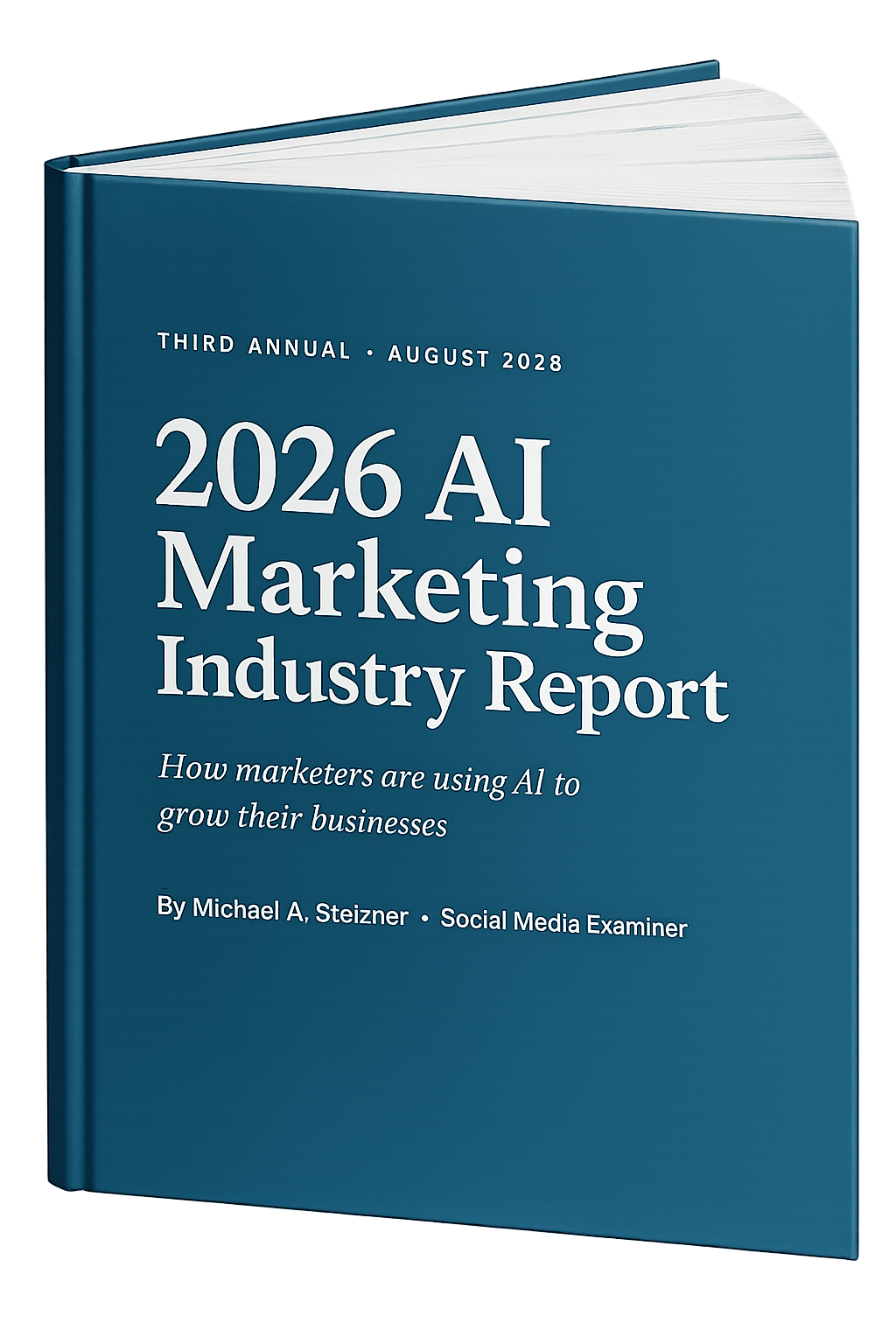
Recent industry data underscores the urgency of adapting to machine-readability. According to the AI Marketing Industry Report, which surveyed 681 marketing professionals:
- 85% of marketers are attempting to navigate the AI revolution entirely through self-directed experimentation.
- Only 7% report receiving formal training from their employers on how to optimize for AI systems.
- More than 50% of marketing professionals are personally funding their own AI exploration tools and software.
A compelling real-world case study highlights the efficacy of proper AI optimization. A mid-sized consulting firm was consistently losing market share to deeply entrenched competitors who dominated traditional ad spend. Recognizing that advertising merely "rents" attention—disappearing the moment budgets dry up—the firm pivoted its content strategy.
Instead of generating generic top-of-funnel blog posts, the company audited its existing newsletter archive, identified high-performing subscriber insights, and reformatted them specifically for machine consumption alongside human readers. Within three weeks of restructuring their digital assets, the firm captured 72% of its category’s recommendations across major AI platforms, successfully leapfrogging competitors who had maintained larger web followings and longer operational histories for years.
Official Insights and Expert Recommendations
Industry strategists emphasize that traditional marketing principles—such as understanding customer psychographics, pain points, and decision-making journeys—remain vital, but the technical execution must evolve to satisfy both human readers and machine crawlers.
1. Dual-Audience Content Architecture
Content creators must abandon the notion that a single piece of content can serve both humans and machines identically. Humans require narrative arcs, emotional resonance, and stylistic engagement. AI systems require structured, unambiguous facts.
A best practice implemented by leading digital strategists is the dual-publishing model. For instance, businesses should take a successful, proven newsletter, publish the original human-centric version on their site, and concurrently publish an AI-optimized variant utilizing distinct headings, targeted keywords, and structured formatting within the same domain.
2. The Power of "Chunking" and Direct Answers
AI does not read articles from top to bottom; it extracts self-contained data fragments, or "chunks," that directly answer specific queries. To capitalize on this:
- Apply a Q&A Format: Structure content around clear, explicit questions followed by direct answers within the first 100 words.
- Ensure Context Independence: Every section of an article must make complete sense on its own, without relying on preceding or succeeding paragraphs for context. If an AI can extract a two-sentence block that accurately answers a query, it will attribute and cite that source.
3. Technical Readiness and Machine Accessibility
Even the most brilliant content strategy will fail if AI crawlers are technically barred from accessing a website. Technical audits should immediately review the following checkpoints:
- Robots.txt File: Ensure legacy settings are not inadvertently blocking AI crawlers (like GPTBot or ClaudeBot) from indexing your pages.
- Cloudflare Settings: Verify that built-in AI blocker features are disabled unless intentionally desired.
- JavaScript Minimization: Rely on static, straightforward HTML rather than complex, dynamic, scroll-triggered rendering that confuses AI parsers.
- Comprehensive Sitemaps: Maintain both XML and HTML sitemaps. This provides machines with multiple entry points to discover deep-link content, such as archived newsletters, even if those pages are unlinked from the site’s primary navigation menu.
- Structured Data (Schema Markup): Implement FAQ schemas and list schemas to explicitly signal content organization to machine crawlers.
Implications: The Future of Brand Authority and Trust
The pivot toward AI-recommended commerce carries sweeping implications for businesses of all sizes.

First, it democratizes visibility for agile businesses. As demonstrated by the consulting firm case study, massive ad budgets and long-standing domain history are no longer insurmountable moats. A smaller business that provides highly original data, proprietary case studies, and machine-optimized content can outrank legacy players in AI-generated responses.
Second, it redefines brand trust. When an AI repeatedly cites a specific business as the definitive answer across multiple user interactions, that business builds compounding authority. Consumers who receive these synthesized recommendations develop an innate trust in the brand, viewing the AI’s citation as an objective, third-party validation.
Ultimately, the businesses that thrive in the coming decade will be those that stop writing exclusively for human entertainment and begin engineering their digital footprints for universal comprehension—speaking fluently to both the human looking for guidance and the algorithm powering the modern web.