The landscape of B2B sales has undergone a subtle yet seismic shift. While the fundamental mechanics of selling—prospecting, pitching, and closing—remain anchored in human relationships, the underlying architecture of the modern software sales organization has been fundamentally altered. According to the recently released 2026 Go-To-Market (GTM) Benchmark Report from ICONIQ, the most successful software companies are no longer operating by the 2023 rulebook.
The report, which synthesized data from over 150 B2B and AI-native software companies, suggests that while sales processes look superficially similar to the pre-AI era, the internal engines—quotas, compensation models, and pipeline generation—have been "ramped up" to unprecedented levels. For founders and CROs, the data serves as a stark warning: the gap between high-performing companies and the rest of the market is no longer a matter of strategy, but one of structural alignment.
Main Facts: The New Reality of Growth
The ICONIQ data focuses on growth-stage companies that have successfully achieved product-market fit. In these environments, the old adage of "work harder" has been replaced by "work with better architecture."
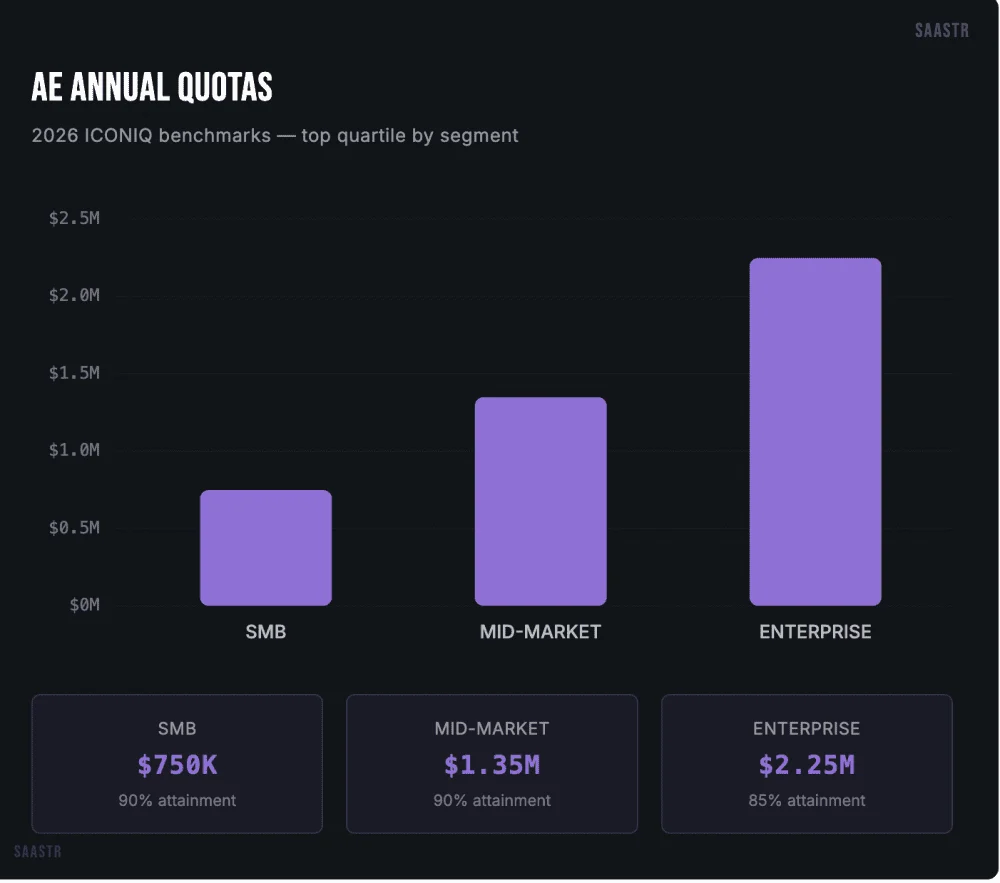
The most striking revelation is that attainment rates have climbed significantly. In traditional B2B sales organizations, it was considered standard for 65% to 75% of representatives to hit their quotas. Today’s top-tier B2B and AI-integrated firms are reporting 85% to 90% attainment. This defies the conventional economic wisdom that increasing quotas leads to a proportional drop in attainment. Instead, these companies have managed to raise the bar while simultaneously increasing the percentage of reps who clear it.
This success is not accidental. It is the result of three deliberate shifts: the integration of AI into pipeline generation, a fundamental change in how sales teams are compensated for expansion, and a broader mandate for Account Executives (AEs) to own the entire customer lifecycle.
Chronology: From Static Quotas to AI-Driven Velocity
To understand the current state of GTM, one must look at the evolution of the software sales model over the last three years.
2023: The Efficiency Pivot. Following the post-pandemic market correction, the primary focus for most SaaS companies was "efficiency." Sales teams were tasked with doing more with less, leading to a consolidation of roles and a heavy reliance on existing sales methodologies. Quotas remained relatively static, and compensation plans stayed tied to the traditional 80/20 new business versus expansion split.
2024-2025: The AI Integration Phase. As generative AI tools matured, leading-edge companies began embedding these technologies into their marketing and SDR (Sales Development Representative) workflows. This was the experimental phase, where firms tested whether AI could truly improve lead-to-MQL (Marketing Qualified Lead) and MQL-to-SQL (Sales Qualified Lead) conversion rates.
2026: The Maturity of the Modern GTM. The current era is characterized by the institutionalization of these gains. Companies have now recalibrated their quota models to reflect the increased capacity provided by AI. The "quota-setter" is no longer just the CFO or the VP of Sales; it is the data-backed reality of the pipeline capacity. The most successful firms are now forcing a realignment of compensation plans to ensure they retain the talent capable of managing this higher-velocity environment.
Supporting Data: Why Expansion is the New Frontier
One of the most profound shifts in the 2026 benchmarks is the migration of "ownership" within the customer journey. Historically, the AE was responsible for the initial sale, with Customer Success (CS) or dedicated Account Management (AM) teams handling renewals and upsells.
The ICONIQ data reveals that the top 25% of performers have dismantled these silos. Among these high performers:
- 65% have Sales owning cross-sell motions (compared to 49% of the rest of the market).
- 55% have Sales owning upsell motions (compared to 44%).
- 37% have Sales owning renewals (compared to 24%).
This shift is not merely organizational; it is economic. Because AEs are now responsible for the long-term value of the customer, compensation structures have followed suit. If a company’s compensation plan is still heavily skewed toward a 20% expansion cap, they are fundamentally out of sync with the current market. Top-tier AEs who are being asked to carry quotas in the $2M+ range expect—and receive—meaningful compensation tied to the expansion of those accounts. Those who do not offer this find themselves suffering from higher attrition rates as their best talent migrates to competitors that treat expansion as a core part of the AE’s primary income stream.
Official Responses and Industry Sentiment
Industry leaders are observing this shift with a mix of cautious optimism and urgency. The prevailing sentiment among the executives surveyed by ICONIQ is that "capacity is not punishment."
For many years, the industry viewed raising quotas as a way to "squeeze" more performance out of a team, often leading to burnout and talent churn. However, the top-performing companies are framing higher quotas as a byproduct of increased lead volume and quality.
"If your pipeline generation isn’t climbing at the same rate as your quota, attainment will of course crater," notes the report. The executives surveyed emphasize that the "AI effect" is real: companies utilizing AI-driven lead qualification are seeing a 10-11 point increase in lead-to-MQL conversion and an 8-point jump in MQL-to-SQL conversion. This increased volume provides the "fuel" that allows for higher quotas without sacrificing the sanity or success of the individual contributor.
Implications: The Baseline for 2026
For organizations looking to scale or rebuild their sales engines, the ICONIQ report provides a clear roadmap for the remainder of 2026. The baseline for a high-performing enterprise sales organization now includes:
- Quota Alignment: Enterprise AE quotas should be pushing toward the $2M–$2.5M range, provided the supporting infrastructure is in place.
- Expanded Ownership: Move away from the "land-and-hand-off" model. AEs must be incentivized to retain and expand their own customer base.
- Pipeline Tech Stack: Pipeline generation is the primary determinant of success. If a company is not using AI to automate the top of the funnel, they are operating at a structural disadvantage.
The Dangers of the Half-Measure
The report warns against the "jump" strategy—increasing quotas to $2.5M without the supporting pipeline and compensation architecture. This is a recipe for disaster. When quotas are raised in a vacuum, the most capable salespeople—those who know their value—will be the first to leave.
The gap between winners and losers in 2026 is no longer hidden in secret sales tactics or "hustle culture." It is clearly visible in the architecture of the GTM strategy. Founders and CROs who fail to modernize their comp plans and fail to invest in AI-driven pipeline generation will find that their best talent is moving to firms that have already adapted to this new, faster-paced reality.
In conclusion, the 2026 ICONIQ benchmark report is a call to action. The era of the "static sales machine" is over. The organizations that thrive in the coming years will be those that view their sales team not as a static group of individuals, but as an integrated system that balances AI-powered efficiency with compensation structures that reward the long-term value of the customer. For the modern software company, the path to growth is clear: align the money with the work, and the pipeline with the capacity. Anything less is simply playing the game by an obsolete rulebook.