The landscape of B2B software is undergoing a structural transformation so profound that the traditional playbooks of the last decade are rapidly becoming obsolete. In a recent high-level strategy session, SaaStr’s Jason Lemkin, joined by Harry Stebbings and Rory O’Driscoll, dissected the seismic shifts currently reshaping the software industry. As AI transitions from a "novelty" to the backbone of operational infrastructure, founders and executives are finding that legacy metrics—and legacy ethics—are no longer sufficient to ensure survival.
For those building in the B2B space, the message is clear: the era of "move fast and break things" has been replaced by "move strategically or get replaced by an agent."
1. The Legal and Ethical Perimeter: Talent vs. Theft
In the wake of high-profile legal battles—most notably Apple’s litigation against OpenAI—a vital distinction has emerged for startups: there is a vast legal gulf between hiring talent and stealing proprietary intellectual property.
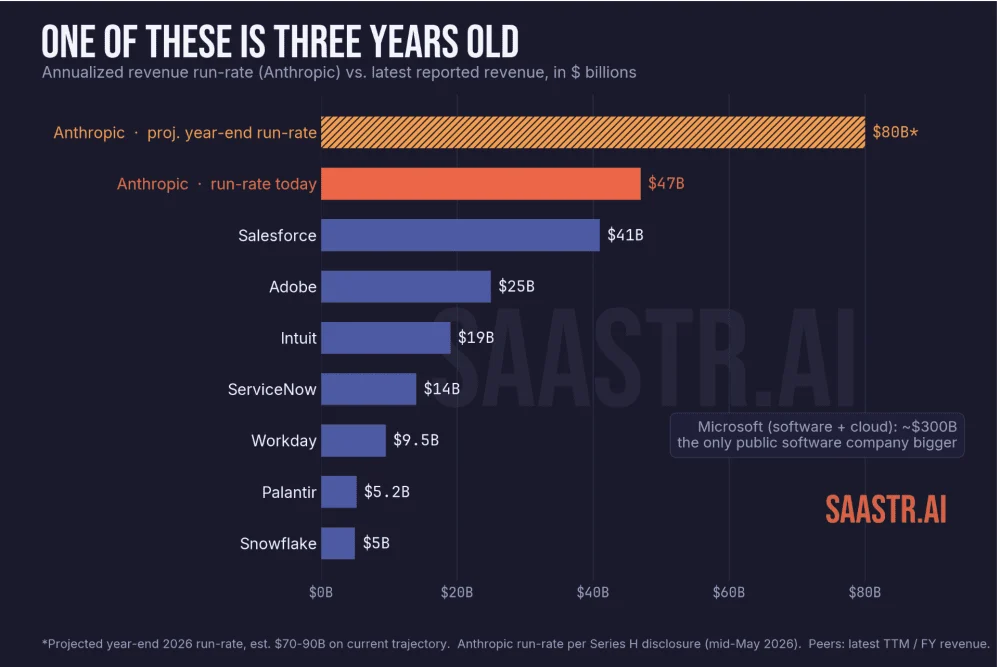
Founders must recognize that in jurisdictions like California, non-compete clauses are essentially toothless. Employees carry their domain expertise and mental models with them. This is the bedrock of modern innovation; Anthropic, for instance, was built by industry veterans who leveraged their internal knowledge to create a $50 billion entity. However, the line is crossed the moment a departing employee brings physical or digital artifacts—codebases, proprietary datasets, or confidential internal files—to a new employer.
The Implication: If you are hiring top-tier talent, prioritize the individual’s brain, not their flash drive. Companies that encourage or accept stolen data become targets for discovery, where the employee who brought the "contraband" is often the first to be sacrificed to protect the corporate entity.
2. The Rise of the Token as a Line Item
For many organizations, AI expenditure is no longer a R&D experiment; it is a burgeoning cost center. ClickHouse has reported a 60x surge in AI-related spending since February. This is not merely a fluctuation; it is a structural change in the cost of doing business.
Without a "spend governor," token consumption is an unchecked variable. In a decentralized environment, any employee with access to an API key can burn through thousands of dollars in tokens to save a few hundred dollars in labor. While this is an excellent trade-off in some contexts, it is disastrous when left unmonitored.
The Strategy: CFOs must implement strict budgetary controls on AI usage immediately. If your organization doesn’t govern its token consumption, the market will eventually force a correction that could be far more painful than proactive management.
3. Beyond Price-Per-Token: Measuring Task Completion
The industry’s obsession with "cost-per-token" is a vanity metric that obscures the true economic reality of AI. Vendors frequently market cheap base tokens, but if those models lack the reasoning capacity to solve a problem efficiently, the total cost of completion skyrockets.
The Insight: The only metric that matters is the cost to complete a specific task. If a model requires ten times the reasoning tokens of a more expensive counterpart, the "cheap" model is actually the more expensive one. Savvy B2B companies are now managing a portfolio of models, selecting the right engine for the specific job rather than chasing the lowest price-per-token.
4. The Imagination Ceiling: Scaling Token Consumption
Paradoxically, while businesses must manage token costs, many are also severely under-utilizing the potential of AI to enhance output. Most teams follow an antiquated process: create version A, refine it, and ship it.
The new paradigm involves generating A, B, C, and their "prime" variants simultaneously, shipping them to a staging environment, and allowing data-driven results to determine the winner. If your developers or creatives are not consuming significantly more tokens than they were six months ago, they are likely not exploring the full surface area of the problem. Your token spend should be limited by your imagination, not your current budget.
5. Net New Logos: The Only True Survival Metric
While SaaS companies have spent years obsessing over Net Revenue Retention (NRR), the AI era demands a return to the fundamentals. In a market defined by rapid innovation, NRR is a lagging indicator that tells you about the past.
The Survival Metric: Net new logo growth is the primary predictor of future viability. If a company fails to grow its new customer base by at least 15% annually, it is living on borrowed time. You cannot "price-hike" your way out of a broken funnel. If the funnel stops, the business is on a terminal timer.
6. The Bottom-of-Funnel Defense
There is a dangerous trend emerging where incumbents ignore "single-seat" startups or low-end agentic tools, assuming they will eventually move upmarket to "real" software. This is a fallacy.
If the next generation of users begins their journey in an agentic environment, they will never develop the muscle memory required to use legacy platforms like Salesforce or specialized workflow tools. By losing the bottom of the funnel, incumbents are not just losing current revenue; they are hollowing out their user base for the next five years. Defending the "entry point" is no longer optional—it is a defensive necessity.
7. TAM Reality: The $250 Billion Ceiling
Founders often rely on bloated Total Addressable Market (TAM) estimates to justify valuations. However, reality is beginning to set in. Take the developer market: there are roughly 1.8 million developers in the U.S., with a total wage pool of approximately $250 billion.
If frontier AI labs are already capturing a significant percentage of that market, they are hitting a physical ceiling. Even with 100% gross margins, you cannot generate more revenue than the total available spend in your vertical. Smart companies size their market using real payroll data, not speculative "future-state" multipliers.
8. Modelling AI as a COGS Tax
As software becomes agentic, AI costs should be modeled as a permanent 10% tax on revenue, similar to the "Amazon tax" or cloud hosting costs of the previous decade.
If your business model only functions at a 2% AI cost structure, it is fragile. Companies must build their pricing and margin structures to accommodate a 10% overhead. If your unit economics cannot absorb this tax, the model is likely fundamentally unsustainable in the long run.
9. The Debt Trap in Slow-Growth Businesses
The recent acquisition of TouchBistro by Constellation—for one times revenue—serves as a cautionary tale regarding venture debt. When a company misses its growth targets, debt that was meant to be a bridge becomes a noose.
For slow-growth businesses, taking on debt instead of raising equity is often a "sucker bet." It shifts power to lenders who are solely focused on principal recovery, effectively wiping out common equity holders at the first sign of trouble. Unless you are the highest-growth company in your sector, avoid debt as a replacement for equity.
10. The Erosion of Switching Costs
Perhaps the most significant realization is the rapid collapse of switching costs. Previously, companies like Marketo were protected by the sheer inertia of their customers—the "migration tax" of moving data and workflows was too high.
AI-powered migration tools have reduced this friction from a year to a single day. When switching costs vanish, revenue is no longer "sticky" by default. Renewal rates are now a direct reflection of current value, not historical inertia. If you do not provide immediate, recurring value, your customers now have the tools to leave you in a heartbeat.
Conclusion: The New Imperative
The overarching lesson from these observations is that the margin for error has narrowed significantly. Growth is still the answer, but the "growth-at-all-costs" era has been replaced by a "growth-through-efficiency" era.
If you maintain a net new logo growth rate of over 15%, you provide yourself with the runway to navigate these complexities. However, if that growth stalls, the combined pressures of token governance, decaying switching costs, and competitive agentic tools will expose every weakness in your organization. The future of B2B is not just about building better software; it is about building a business that can survive the rapid, AI-driven compression of the market.