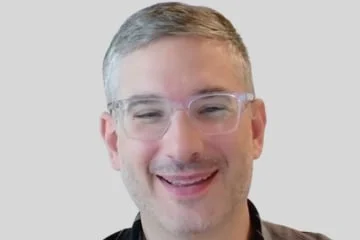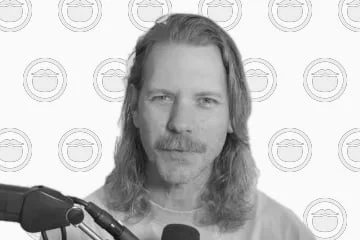
For over a decade, Beardbrand has stood as a beacon of the direct-to-consumer (DTC) movement, pioneering a lifestyle-centric approach to men’s grooming. However, the last few years have served as a sobering reality check for its founder. Navigating a landscape fundamentally altered by the post-pandemic economic shift, the company has faced a series of compounding pressures. In a candid, introspective turn, the founder has pivoted away from his traditional guest-interview podcast format to offer a raw look at the current state of his business—and his evolving philosophy on the true cost of entrepreneurship.
The State of the Business: Navigating Headwinds
The post-pandemic era has been, by the founder’s admission, a grueling period for Beardbrand. While the company is finally witnessing a return to revenue growth, that progress is being aggressively neutralized by a surging tide of operational costs.
Rising Operational Pressures
Beardbrand’s bottom line is currently being squeezed from every angle. Advertising costs on Meta—the lifeblood of many DTC brands—continue to climb, making the path to profitable customer acquisition increasingly treacherous. Beyond digital marketing, the company is grappling with systemic inflation. Manufacturing and production costs have trended upward, and logistics expenses continue to eat into margins.
The situation was further complicated by a significant supply chain disruption: the company’s primary manufacturer is shutting its doors. Finding a partner capable of maintaining the specific quality standards Beardbrand’s customers expect while keeping costs competitive has proven to be a difficult, ongoing hurdle. As the founder noted, "We can bear higher costs only temporarily, and no business is fun if it’s not making money."
The TikTok Pivot and the "Halo Effect"
Amidst these challenges, the company has found a critical bright spot in TikTok. Though the brand is in the early stages of its journey on the platform, the results have been encouraging. By utilizing tools like Euka to identify and collaborate with effective content creators, Beardbrand is seeing a rise in conversions.
Central to this strategy is what the founder terms the "halo effect." This phenomenon describes the non-attributable marketing success that occurs when a consumer engages with the brand on one channel—such as TikTok Shop—but completes the transaction on another, like Amazon or the company’s native website. This multi-touchpoint funnel is essential for growth, though it presents challenges in attribution modeling. Currently, while Amazon sales are trending upward, the founder emphasizes that they are not yet at the volume required for long-term sustainability; the target is a threefold increase in current output.
Chronology: A Decade of Evolution
The arc of Beardbrand’s history mirrors the broader evolution of the e-commerce industry over the last ten years.
- 2013–2019: The "Growth at All Costs" Phase. Beardbrand established itself as a powerhouse in the grooming niche, scaling rapidly as the DTC model exploded in popularity.
- 2020–2022: The Pandemic Disruption. Like many consumer goods brands, Beardbrand faced sudden shifts in consumer behavior, supply chain volatility, and the "bullwhip effect" in inventory management.
- 2023–2024: The Era of Rationalization. The focus has shifted from unchecked expansion to sustainable profitability. The founder began a personal transition toward intentional living, questioning the necessity of reaching "nine-figure" status at the expense of personal well-being.
- Mid-2024: Current Strategic Reset. The brand is currently rebuilding its supply chain and leaning into social-first commerce (TikTok) while the founder shifts his focus toward a more balanced, multi-faceted life.
Supporting Data and Strategic Implications
The challenges faced by Beardbrand are not unique; they represent a broader cooling of the "growth-at-all-costs" era for DTC brands. According to recent retail industry analysis, the cost of customer acquisition (CAC) has risen by over 60% across major social platforms in the last three years.
For Beardbrand, the strategic implication is clear: the company must transition from being a "growth-stage startup" to a "sustainable enterprise." This requires:
- Supply Chain Resiliency: Replacing the legacy manufacturer with a partner that can scale alongside the brand’s current TikTok-driven momentum.
- Omnichannel Synergy: Leaning into the "halo effect" by optimizing the Amazon storefront while using social media as a top-of-funnel awareness driver.
- Efficiency over Velocity: Prioritizing unit economics over total gross revenue to ensure that the business can weather future volatility without needing external capital injections.
Redefining the Entrepreneurial Identity
Perhaps the most significant development is the founder’s internal shift. For a decade, his identity was tethered almost exclusively to his status as an entrepreneur. In his recent audio series, he poses a question that few founders are willing to ask publicly: Is reaching seven, eight, or nine figures truly the goal, or is it a vanity metric that masks an eroding quality of life?
The Pillars of a Balanced Life
The founder is now explicitly prioritizing life milestones over business milestones, citing several key areas of focus:
- Marriage: Celebrating a 20-year anniversary in Norway with his wife, Jen, served as a catalyst for his reflection. He acknowledges the difficulty of maintaining a healthy partnership while running a high-pressure business and views the longevity of his marriage as a greater achievement than any revenue milestone.
- Physical Health: Training for a regatta in Michigan has become a cornerstone of his discipline. Rowing, he argues, provides a physical outlet that forces a separation from the mental burden of the office.
- Parenthood: With his son developing interests in swimming and his daughter entering her teenage years, the founder is consciously choosing to be "intentional with his time." He recognizes that his daughter will likely leave home in six years, a window of time he refuses to trade for incremental business gains.
- Global Citizenship: His pursuit of Polish citizenship—based on his great-grandparents’ heritage—is more than a bureaucratic exercise; it is an exploration of identity. It reflects a desire to move beyond the American "hustle" culture and embrace a more international, fluid way of living that allows for longer stays in Europe.
Official Perspective: The "Big Picture"
The founder’s message to his peers in the entrepreneurial community is one of caution. He argues that business can easily transition from a tool for prosperity into an addiction. When the pursuit of money begins to compromise health, family, and meaningful relationships, the business has failed its primary purpose: to serve the life of its creator.
"Is it worth trying to get to nine figures if you’re already making $300,000 per year?" he asks. The implication is that once a base level of comfort and security is met, the marginal utility of additional wealth drops sharply compared to the utility of time spent with family or on personal health.
Implications for the Future
Beardbrand’s trajectory is a case study for the modern founder. The company is currently moving through a "painful transition," characterized by the need to find a new manufacturing home, stabilize costs, and successfully scale on new platforms like TikTok.
However, the more profound story is the founder’s realization that a business should be a component of a life, not the entirety of it. By choosing to prioritize personal evolution—through travel, fitness, and family—he is attempting to build a sustainable model that doesn’t rely on the burnout-driven intensity that defined his first ten years.
As the brand moves into the next phase of its life cycle, it will be watched closely by industry observers. Can a company that built its reputation on a founder-led, high-intensity model successfully pivot to a sustainable, growth-conscious entity? If Beardbrand succeeds, it will not just be because they found a new manufacturer or mastered TikTok; it will be because the founder successfully re-engineered his life to ensure that the business serves him, rather than the other way around.
For the founder, the ultimate metric for success has changed. It is no longer found in the ledger of his company, but in the experiences he shares with his family and the health he maintains as he enters his 40s. He concludes with a final challenge to his fellow entrepreneurs: "A better addiction is leveling up your life—a healthy life with meaningful relationships—something more than a business. I hope my entrepreneur friends get the big picture."