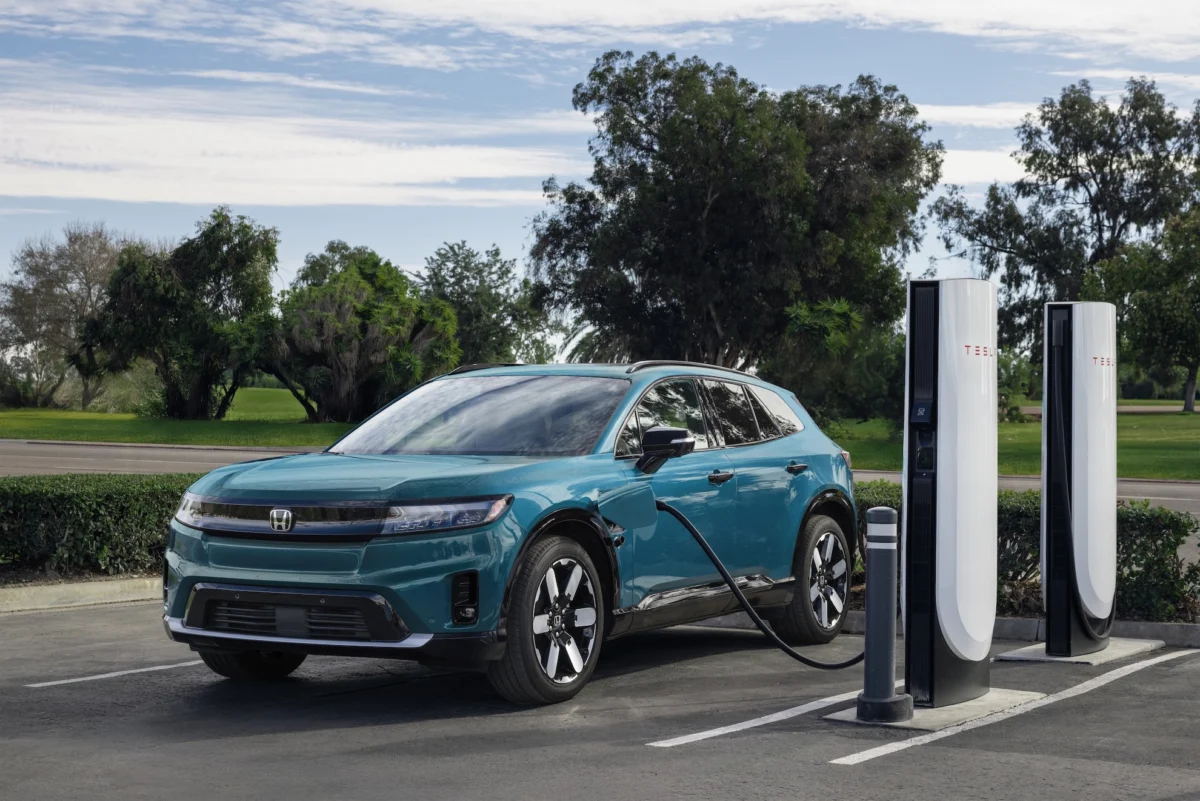
The automotive landscape in the United States is undergoing a profound and unexpected transformation. For years, the industry narrative was one of inevitable, rapid electrification—a transition fueled by government incentives, aggressive corporate targets, and a surge in consumer demand. However, as of mid-2026, the reality has shifted toward a state of retrenchment. The recent confirmation that the Honda Prologue is being discontinued—effectively stripping the Japanese automaker of its last remaining all-electric offering in the U.S. market—serves as a bellwether for a broader, industry-wide retreat.
This is not merely a Honda-specific hiccup; it is a systemic correction. As the U.S. market diverges sharply from global trends, where EV adoption continues to climb, American automakers and importers are signaling a clear pivot back toward internal combustion engines (ICE) and hybrid technology.
The Factors Driving the Exit
The "winnowing of choices" for American consumers is not the result of a single policy or economic shift, but rather a perfect storm of challenges. The primary catalyst was the sunsetting of the $7,500 federal tax credit in late 2025, which fundamentally altered the cost-benefit analysis for millions of potential buyers. Without this subsidy, the price gap between electric vehicles and their gas-powered counterparts became harder for manufacturers to justify.

Beyond the tax credit, the industry is grappling with:
- Regulatory Friction: Stricter enforcement of trade policies, including bans on specific Chinese-connected vehicle technologies, has created insurmountable hurdles for global manufacturers like Polestar.
- Tariff Pressures: Escalating trade tensions and import tariffs have rendered many popular, globally produced EVs—such as the Hyundai Ioniq 6—economically unviable for the U.S. market.
- Shifting Consumer Tastes: The initial wave of "early adopters" has been satisfied, and the broader mass market has shown a marked preference for the familiarity of hybrids and the lower entry price of traditional gas SUVs.
- Strategic Reprioritization: As evidenced by Tesla’s pivot toward AI and robotics, some manufacturers are betting that the future lies in software and automation rather than the hardware of passenger vehicle production.
A Chronology of Retrenchment: The 2026 Rollback
The 2026 calendar year will likely be remembered by automotive historians as the year of the "EV Correction." The following is a breakdown of the major models that have been sidelined or fully canceled.
1. Honda and the "Series 0" Collapse
Perhaps no company has executed a more dramatic about-face than Honda. In early 2025, the company stood at the forefront of the industry, teasing its futuristic "0 Series" Saloon and Space-Hub concepts at CES. By March 2026, those dreams were deferred indefinitely. Honda shuttered development on the 0 Series sedan and SUV, citing concerns over Chinese competition and domestic manufacturing costs. The subsequent cancellation of the Prologue, which had seen reasonable sales success (approx. 72,000 units over 2024 and 2025), confirms that Honda has effectively pressed the "pause" button on its U.S. EV ambitions to focus on hybrid bridge technologies.

2. The Afeela Mirage
The Sony-Honda joint venture, Afeela, serves as a cautionary tale of the tech-auto convergence. Initially hailed as a revolutionary partnership that would blend Sony’s infotainment prowess with Honda’s manufacturing, the brand never actually reached the consumer. Despite a multi-year marketing blitz and high-profile appearances at CES and TechCrunch Disrupt, the plug was pulled in March 2026, leaving the project as a high-tech "what-if" of the EV era.
3. Hyundai and the Tariff Squeeze
Hyundai’s experience highlights the volatility of global supply chains. While the brand continues to succeed with its Georgia-assembled Ioniq 5 and Ioniq 9, the Ioniq 6—imported from South Korea—fell victim to the harsh economic reality of new tariffs. By streamlining their U.S. lineup to focus on domestically produced models, Hyundai is attempting to insulate itself from trade-related cost spikes.
4. Nissan’s Ariya and the Fading Legacy
Nissan, once a pioneer with the Leaf, has faced a difficult road in the mid-size crossover segment. The decision to discontinue the Ariya for the 2026 model year marks a significant retreat for the brand. Without a clear successor in the pipeline for the U.S. market, Nissan’s electric footprint in America is shrinking at a time when competitors are doubling down on hybrid crossovers.

5. The Geopolitical Casualty: Polestar
Polestar’s exit is perhaps the most unique case in the current landscape. As a Swedish brand owned by China’s Geely, Polestar found itself squarely in the crosshairs of new U.S. regulations regarding "connected vehicle technology." Unlike its sibling company, Volvo—which successfully navigated the regulatory maze to receive an exemption—Polestar was denied the necessary authorizations. The result is a forced, systematic withdrawal from the U.S. market.
6. Tesla’s Pivot: Beyond the Passenger Car
Even the market leader is shifting its focus. The end of the Model S and Model X production lines in 2026 was not a failure of demand, but a strategic decision by Elon Musk to prioritize the "future"—namely, AI, autonomous robotaxis, and the Optimus humanoid robot. By repurposing the Fremont factory floor, Tesla is signaling that the era of the premium luxury electric sedan is being eclipsed by the pursuit of pure autonomy.
7. Volkswagen’s Hybrid Pivot
Volkswagen’s decision to cease U.S. production of the ID.4 at its Chattanooga plant is a direct response to a cooling EV market. The company is retooling to prioritize high-volume gas-powered SUVs like the Atlas. While the iconic ID. Buzz is slated for a 2027 return, its current absence highlights the fragility of the EV rollout in the U.S.

Data Analysis: The Cooling of the Market
Data from Kelley Blue Book and Cox Automotive confirms the severity of the slowdown. In the second quarter of 2026, EV sales totaled 247,226 units, capturing roughly 5.8% of the total U.S. market. While this represents a sequential improvement from Q1 2026, it is a stark decline compared to the same period in 2025.
The year-over-year gap remains the most concerning metric for automakers. Q4 2025 saw a 36% decline compared to Q4 2024, and Q2 2026 sales were 20.5% lower than the equivalent period in 2025. This "K-shaped" recovery suggests that while some segments are stabilizing, the broader market is failing to achieve the exponential growth necessary to justify the billions in capital expenditure required to maintain massive, dedicated EV assembly lines.
Official Responses and Corporate Strategy
The consensus among manufacturers is that the U.S. consumer is currently "priced out" or "range-anxious," and that the regulatory landscape is too volatile to bet the company’s future on a single powertrain.

Honda’s official stance, provided to TechCrunch, underscores a "flexibility-first" approach. By ending the Prologue, Honda is not necessarily exiting the electric space forever; it is realigning its resources toward the hybrid and plug-in hybrid (PHEV) vehicles that American consumers are currently buying in record numbers. This "bridge strategy" allows manufacturers to meet emissions targets without relying on a consumer base that has grown wary of pure-electric limitations.
Implications for the Future
The current state of the U.S. EV market is one of "resetting expectations." We are witnessing a transition from the hype-fueled, early-adopter phase to a more grueling, cost-sensitive, and regulated environment.
For the average American consumer, the immediate implication is a reduction in choice and a potential increase in prices for remaining EVs, as supply chains become more localized and regulatory hurdles increase the cost of compliance. However, this contraction may also lead to a more stable, albeit slower, maturation of the market. Manufacturers that survive this period—those with the capital to weather the regulatory storms and the flexibility to pivot between hybrid and electric platforms—will likely be the ones to dominate the next decade.

The U.S. is currently left behind by a global market that is accelerating toward electrification, but this is a deliberate policy and economic choice. Whether this retreat proves to be a temporary tactical withdrawal or a permanent shift in the American automotive identity remains to be seen. As the 2026 model year comes to a close, the industry is not just changing its vehicles; it is changing its very definition of what the future of mobility looks like.