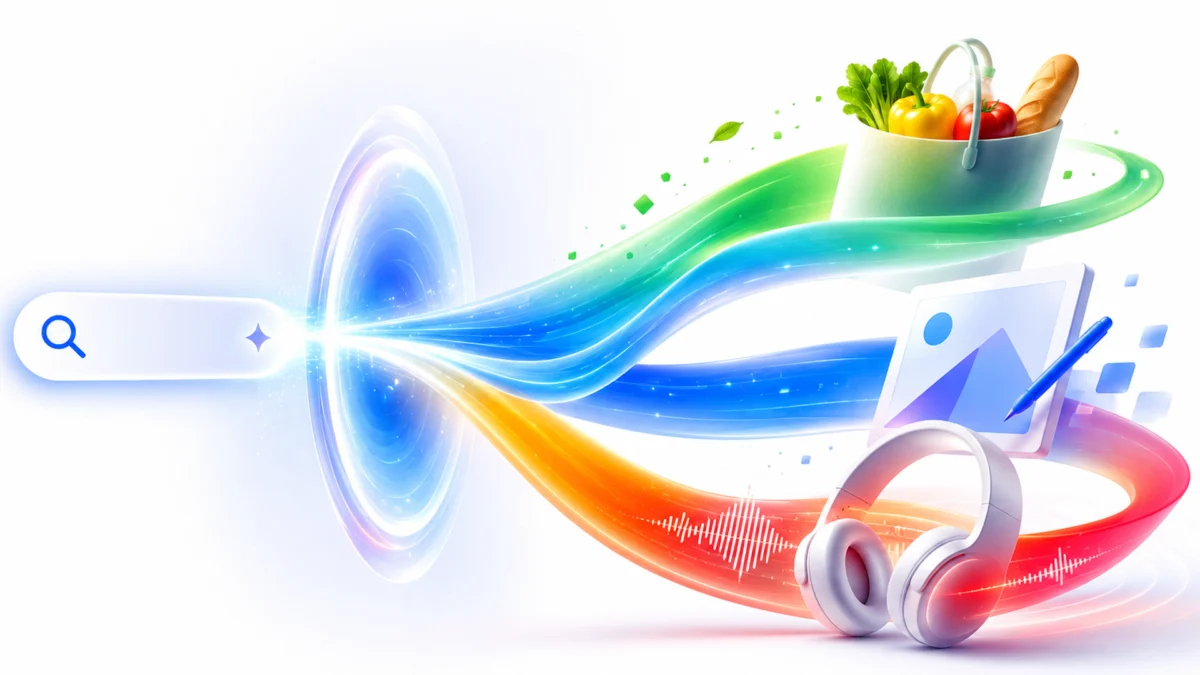
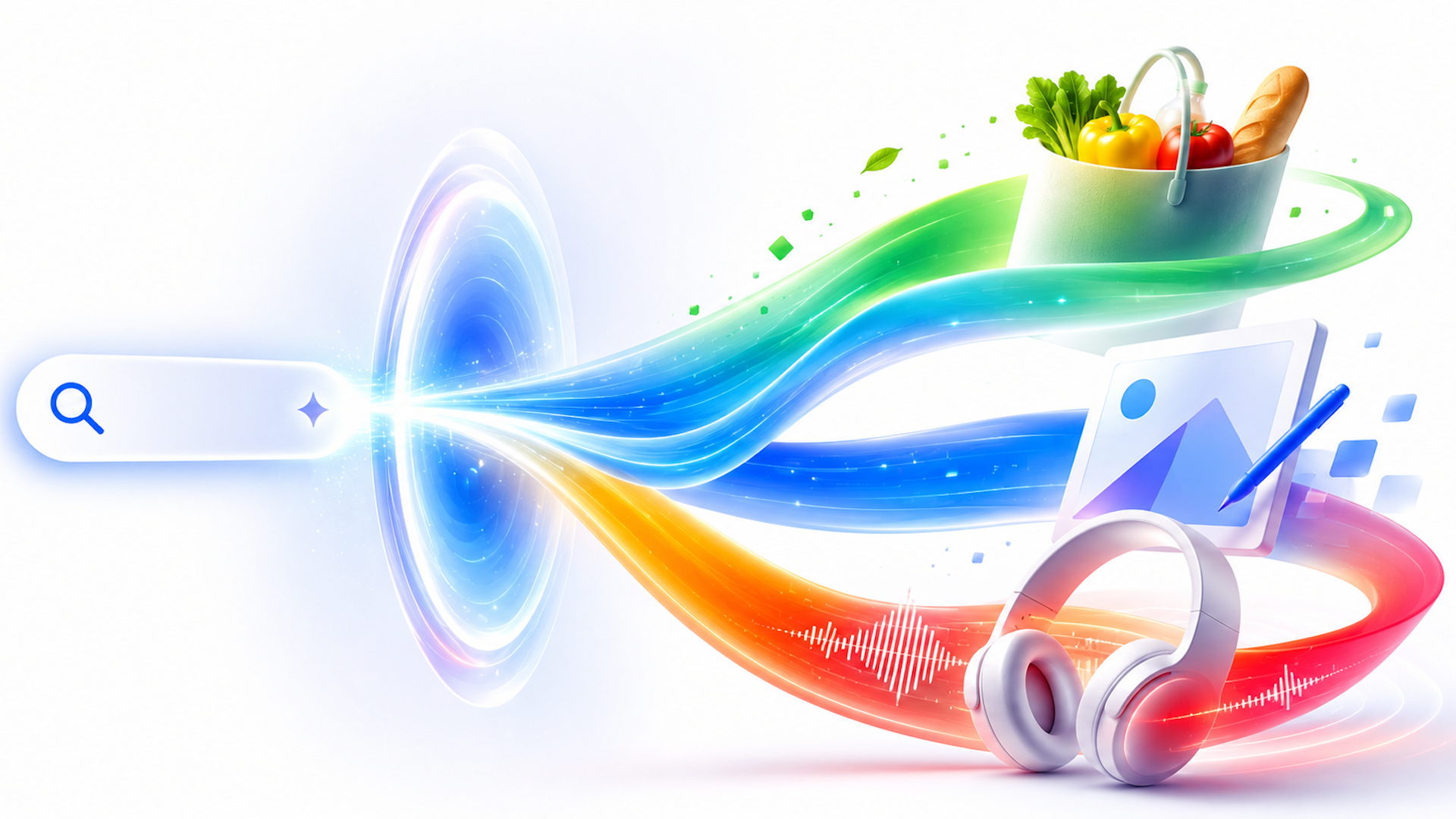
Google has officially begun rolling out connected app integrations within its conversational "AI Mode" in Search. The feature, initially launching for users in the United States, allows individuals to securely link third-party services—such as Instacart, Canva, and YouTube Music—directly to Google’s artificial intelligence interface.
This development marks a significant transition for the world’s dominant search engine. By enabling users to execute tasks on external platforms without leaving the search results page, Google is shifting its core identity from an information-retrieval engine to an action-oriented transactional platform.
Main Facts: How Connected Apps in AI Mode Work
The introduction of connected apps in Google’s AI Mode represents a fundamental redesign of the user journey. Traditionally, a user would search for information, click on a link, navigate to a third-party website or application, and manually complete their task. The new integration bypasses several of these steps by bridging the gap between planning and execution.
[Traditional Search Flow]
User Search -> Blue Links -> Click to Website -> Manual Copy/Paste -> Complete Task

[New AI Mode Flow]
User Search in AI Mode -> Connected App Action -> Direct Export/Execution -> Task Completed
The Initial Launch Partners
At launch, Google has highlighted three distinct use cases spanning shopping, design, and entertainment:
- Instacart (Grocery & Shopping): Users can plan meals or request recipes within AI Mode. Once the AI generates a recipe or meal plan, the user can instantly export the required ingredient list directly to their Instacart shopping cart with a single click.
- Canva (Design & Creativity): When users search for design concepts, presentation layouts, or visual assets, Google’s AI can generate templates or creative starting points. Users can then seamlessly transfer these AI-generated concepts directly into Canva to customize and finalize their projects.
- YouTube Music (Media & Entertainment): If a user asks Google’s AI to curate a list of songs for a specific mood, activity, or event, they can instantly convert that generated list into a playable, saved playlist on YouTube Music.
User Control and Security
Google has emphasized that these integrations are entirely opt-in. To use the feature, users must securely connect their accounts via standard authentication protocols (such as OAuth). Users maintain granular control over their connected services and can view, manage, or revoke access at any time through their Google Account settings.
Chronology: The Evolution of Google’s AI Search Ecosystem
To understand the significance of this rollout, it is essential to trace how Google’s search interface has evolved over the past two years, moving rapidly from static text outputs to an interactive ecosystem.
  May 2023                 May 2024                 Late 2024 / Present
     |                        |                              |
     v                        v                              v
[SGE Launched] ------> [AI Overviews Rollout] ------> [AI Mode & Connected Apps]
(Experimental stage,   (Default search results,       (Transactional capabilities,
 conversational focus)  informational emphasis)        action-oriented integration)
1. May 2023: The Debut of SGE (Search Generative Experience)
At its annual I/O developer conference, Google introduced the Search Generative Experience (SGE) within Search Labs. This experimental phase allowed users to test conversational AI responses situated at the top of traditional search results. At this stage, the AI was primarily informational, summarizing web content and providing source links.
2. May 2024: The Transition to "AI Overviews"
After a year of testing, Google rebranded SGE as "AI Overviews" and began rolling the feature out by default to hundreds of millions of users in the United States. This phase was met with both consumer curiosity and publisher anxiety, as the summaries threatened to reduce referral traffic to organic websites.
3. Late 2024: The Emergence of "AI Mode"
Recognizing that users wanted to do more than just read summaries, Google introduced "AI Mode"—a dedicated, highly conversational search interface designed for multi-step planning and deep-dive inquiries.
4. Present: The Launch of Connected Apps
The integration of third-party APIs like Instacart and Canva marks the latest milestone in this chronology. This phase elevates Google from an informational assistant to an "agentic" assistant capable of taking physical and digital actions on behalf of the user.
Supporting Data: The Shift to Conversational Commerce
The rollout of connected apps is backed by shifting consumer behaviors and industry-wide data regarding search trends, e-commerce friction, and the rise of zero-click searches.
The Friction Problem in E-Commerce
Industry data consistently shows that digital friction is the primary driver of abandoned shopping carts and incomplete tasks online. According to research from the Baymard Institute, the average online shopping cart abandonment rate sits at nearly 70%. A significant portion of these abandonments is attributed to overly complex checkout and navigation flows. By allowing users to populate an Instacart cart directly from a search query, Google eliminates multiple friction points, potentially boosting conversion rates for its launch partners.
The Rise of Zero-Click Searches
Data compiled by SEO analysis firms, including Semrush and SparkToro, indicates that "zero-click searches"—queries that are resolved on the search engine results page (SERP) without the user clicking on an external link—now account for over 50% of all desktop searches and an even higher percentage on mobile.
| Metric | Traditional Search | AI Mode with Connected Apps |
|---|---|---|
| User Intent | Informational / Navigational | Transactional / Action-Oriented |
| Primary Output | Ten Blue Links / Ad placements | AI-generated response with App Integration |
| Friction Level | High (Requires site hopping) | Low (Single-click API execution) |
| Traffic Destination | External Publisher Websites | Walled Garden / Select Partner APIs |
The introduction of connected apps in AI Mode will likely accelerate this trend. Instead of visiting a food blog to find a recipe and then navigating to a grocery app to buy ingredients, the user completes the entire cycle within the Google ecosystem.
Official Responses: Google and Partner Perspectives
In its official blog post announcing the feature, Google framed the update as a major step forward in user convenience and productivity.
"We’re constantly looking for ways to make Search more helpful, and that means reducing the steps between planning a task and actually getting it done," Google stated in its announcement. "By connecting the apps you already use directly to AI Mode, you can go from inspiration to action in a single, seamless experience."
Partner Reactions
Representatives from the partner launch brands have expressed optimism about the integrations, viewing them as high-intent acquisition channels.
- Instacart executives have highlighted the value of capturing consumers at the exact moment of culinary inspiration. By integrating with Google’s recipe generation, Instacart positions itself as the default fulfillment engine for meal planners.
- Canva has emphasized the democratization of design, noting that bridging the gap between a conceptual search query and a blank design canvas removes creative roadblocks for everyday users.
Implications for SEO, Brands, and the Digital Ecosystem
While the rollout offers clear conveniences for consumers, it introduces profound challenges and opportunities for digital marketers, search engine optimization (SEO) professionals, and independent publishers.
                    +----------------------------------+
                    | Google AI Mode Connected Apps    |
                    +----------------------------------+
                                     |
         +---------------------------+---------------------------+
         |                                                       |
         v                                                       v
+----------------------------------+           +----------------------------------+
|      Threats to Publishers       |           |     Opportunities for Brands     |
+----------------------------------+           +----------------------------------+
| * Loss of direct referral traffic|           | * Direct API-level conversions   |
| * Reduced ad impression revenue  |           | * High-intent customer acquisition|
| * Content bypass by AI summaries |           | * "First-mover" partner advantage|
+----------------------------------+           +----------------------------------+
1. The Threat of the "Walled Garden"
For over two decades, the web ecosystem has operated on an implicit value exchange: publishers write high-quality content (like recipes, design guides, and music reviews), and Google indexes that content and sends referral traffic back to those publishers.
With connected apps, Google risks severing this traffic loop. If a user asks AI Mode for a weekly dinner plan, and Google uses web-scraped recipes to populate an Instacart cart directly, the original publishers of those recipes receive no traffic, no ad impressions, and no affiliate revenue.
2. The Shift to "Generative Engine Optimization" (GEO)
As AI-driven actions become commonplace, traditional SEO strategies focusing on keyword density and backlink profiles will need to evolve. Marketers must pivot toward Generative Engine Optimization (GEO).
To remain visible, brands will need to ensure their products, services, and APIs are easily readable and digestible by Google’s Gemini model. Rather than optimizing for clicks to a website, brands must optimize to be the chosen "action partner" within the LLM’s decision-making matrix.
3. API Monopolization and the "Winner-Take-All" Dynamic
The rollout of connected apps raises questions about platform fairness and antitrust issues. If Google defaults to Instacart for grocery deliveries, Canva for graphic design, and YouTube Music for audio, competitors in those spaces could find themselves locked out of a massive source of transactional traffic.
While Google has stated it plans to add more partners in the future, the "first-mover" advantage for initial partners is substantial. How Google selects future partners, and whether it will charge brands a commission or toll to integrate their APIs into AI Mode, remains a critical area to watch.
4. Data Privacy and Cross-Platform Tracking
Integrating third-party apps directly into Google Search requires a deep level of data sharing. To send an ingredient list to Instacart, Google must share user-specific search data with the platform. Conversely, Google will likely gain deeper insights into what users purchase and design post-search.
Although Google guarantees that these integrations are secure and user-controlled, privacy advocates are expected to scrutinize how this cross-platform data is utilized, particularly regarding personalized advertising and profile building.
Outlook: The Future of Agentic Search
The launch of connected apps in Google’s AI Mode represents the beginning of the "agentic" era of search. In this new paradigm, search engines do not merely point to where answers are located; they act as proactive personal assistants capable of executing complex workflows.
As Google refines this technology and expands its partner roster, we can expect integrations to enter other high-value sectors, including travel booking (integrating with airlines and hotels), local services (integrating with reservation and booking platforms), and financial services. For consumers, the web is about to become significantly faster and more integrated. For the businesses that rely on the web, the rules of visibility, traffic, and transaction are being rewritten in real-time.