
In the landscape of modern e-commerce, most email marketing strategies are built upon a singular, narrow objective: conversion. Businesses obsess over open rates, click-through rates, and the seamless transition of a subscriber from a passive browser to a paying customer. While these transactional metrics are vital for survival, they represent an incomplete picture of a brand’s true potential.
The most successful brands today—those that weather market volatility, withstand the arrival of cheaper competitors, and command fierce loyalty—are not just building lists; they are cultivating communities. They are transforming subscribers into advocates who champion the brand organically, engage with its mission, and view the arrival of an email not as a disruption, but as a welcome touchpoint.
The Core Distinction: List vs. Community
To understand the evolution of email marketing, one must first recognize the fundamental difference between a "list" and a "community." A list is a passive asset—a digital directory of email addresses collected through lead magnets or point-of-sale transactions. A community, conversely, is a living ecosystem where individuals feel a sense of belonging and shared purpose.
The chasm between these two concepts is not defined by the software platform or the tactical automation sequences used. Instead, it is a philosophical shift. Many e-commerce programs are purely functional, utilizing automated sequences like browse abandonment, cart recovery, and post-purchase follow-ups. These tools are, and remain, essential for operational success. However, if a brand stops there, it neglects the most durable aspect of email: its capacity for intimacy.
Brands that successfully foster community treat the inbox as a relationship-first channel. They acknowledge that while revenue is the lifeblood of a business, it is the strength of the relationship that makes that revenue repeatable and sustainable.
The Evolution of Engagement: A Chronological Strategy
Building a community does not happen overnight. It requires a sustained, deliberate approach to communication. Below is the typical arc of a community-focused email strategy:
- The Foundation (Onboarding): This phase is about setting the tone. Rather than bombarding new subscribers with discount codes, brands that build community use the welcome series to introduce their mission, their origin story, and their "why."
- The Relationship Building (The Middle Game): This involves moving away from product-only blasts. During this stage, brands share behind-the-scenes narratives, industry insights, and challenges the business has faced.
- The Feedback Loop (Engagement): As trust is established, brands begin soliciting input. This transforms the email from a broadcast medium into a two-way conversation.
- The Advocacy (Community Maturity): At this stage, subscribers begin to act as a community. They forward emails to friends, provide unsolicited testimonials, and participate in brand-led initiatives.
Empowering Subscribers as Insiders
The most effective strategy for bridging the gap between subscriber and community member is granting a sense of "insider access." This does not necessarily require complex loyalty programs or gated membership portals. Rather, it is about the framing of information.
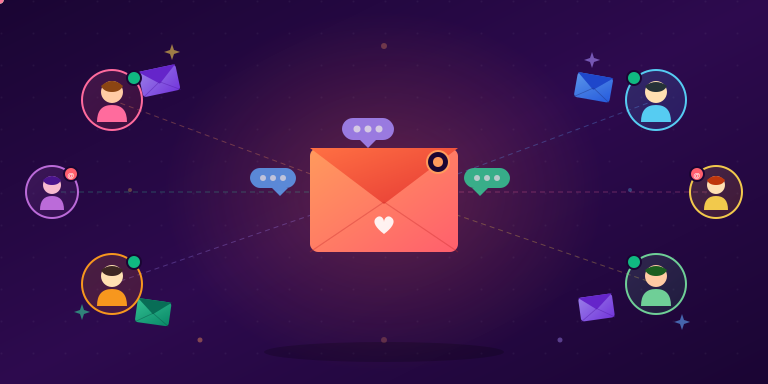
Instead of a sterile announcement that a new product has launched, an insider-focused email explains the intent behind the product. It details the problems the team was trying to solve, the prototypes that failed, and the iterative journey of development. When a brand invites its audience into the "messy" parts of the creative process, it creates a sense of shared investment.
Furthermore, founder-led emails—often characterized by a personal, plain-text format—have shown remarkable efficacy. In an era of high-production, overly polished marketing templates, a simple, heartfelt note from a founder feels human. It cuts through the digital noise and fosters a level of trust that no algorithm-driven, hyper-designed newsletter can replicate.
The Power of Two-Way Communication: Asking and Listening
Most email programs are inherently one-directional: the brand speaks, and the subscriber receives. Community requires the exact opposite. To foster a sense of belonging, brands must make it easy—and rewarding—for subscribers to reply.
This requires a departure from the "do not reply" email addresses that have become industry standard. By ending an email with a genuine question—such as, "What is the biggest challenge you’re facing with X right now?"—brands invite a dialogue.
While manual responses may not scale to a list of 50,000, they are invaluable for the first 1,000. Engaging in genuine conversations creates "power users." These individuals, heard and valued, often become the brand’s most vocal advocates, providing the kind of word-of-mouth marketing that money cannot buy.
Defining the Brand Voice
A community coheres around a shared identity, and in the digital sphere, that identity is articulated through voice. If a brand’s emails could be sent by any of its competitors without the recipient noticing, the brand has failed to cultivate a unique identity.
A consistent, recognizable voice acts as a beacon for like-minded people. It requires the brand to take a stance: What does it believe about its industry? What does it actively push back against? What does it refuse to compromise on? When these values are woven consistently into the editorial tone—regardless of whether the email is promotional or informational—subscribers begin to feel they truly "know" the brand.
Key Metrics: Measuring Connection
While community building is often qualitative, it is not immune to quantitative analysis. To determine if an email strategy is successfully fostering community, businesses should look beyond conversion rates and monitor the following:
- Reply Rate: This is the most direct indicator of two-way engagement. A growing reply rate suggests that the audience feels comfortable and empowered to participate in the conversation.
- Forward Rate: When a subscriber forwards an email, they are placing their social capital behind the brand. A high forward rate is a clear signal that the content provides value beyond simple product utility.
- Referral Growth: By tracking how new subscribers found the brand, businesses can see if their existing list is acting as a growth engine. If a significant percentage of new sign-ups arrive via referrals, the community is functioning as a sustainable acquisition channel.
- Unsubscribe Patterns: It is crucial to distinguish between natural list attrition and spikes triggered by specific content. If content-led emails retain subscribers while purely promotional emails drive them away, the brand has a clear directive on how to balance its communications.
Implications for the Modern E-commerce Entrepreneur
The shift toward community-led email marketing has profound implications for the future of digital commerce. In an increasingly privacy-centric world, where third-party data is becoming harder to acquire, the first-party relationship built within an inbox is the most valuable asset a founder can own.
This strategy democratizes growth. One does not need the largest budget or the most sophisticated AI to build a community. The entry barrier is merely a shift in mindset: moving from treating subscribers as "names on a list" to treating them as "participants in a project."
For those seeking the infrastructure to manage this transition, tools like Omnisend provide the necessary backbone. By offering robust segmentation and automation, these platforms handle the technical burden of logistics, freeing founders to focus on the human side of the equation—writing, connecting, and listening.
As the digital marketplace continues to saturate, the brands that thrive will be those that prioritize connection over conversion. By treating the inbox as a space for building relationships rather than just closing sales, entrepreneurs can create a durable, loyal, and highly engaged community that serves as a permanent competitive advantage.