The WordPress plugin directory—the heartbeat of the world’s most popular content management system—is currently standing at a critical crossroads. For two decades, this repository has served as the gateway for millions of users to extend their websites, fueled by a culture of open-source collaboration. However, the rapid ascent of generative AI and a record-breaking surge in plugin submissions have sparked a heated debate within the community.
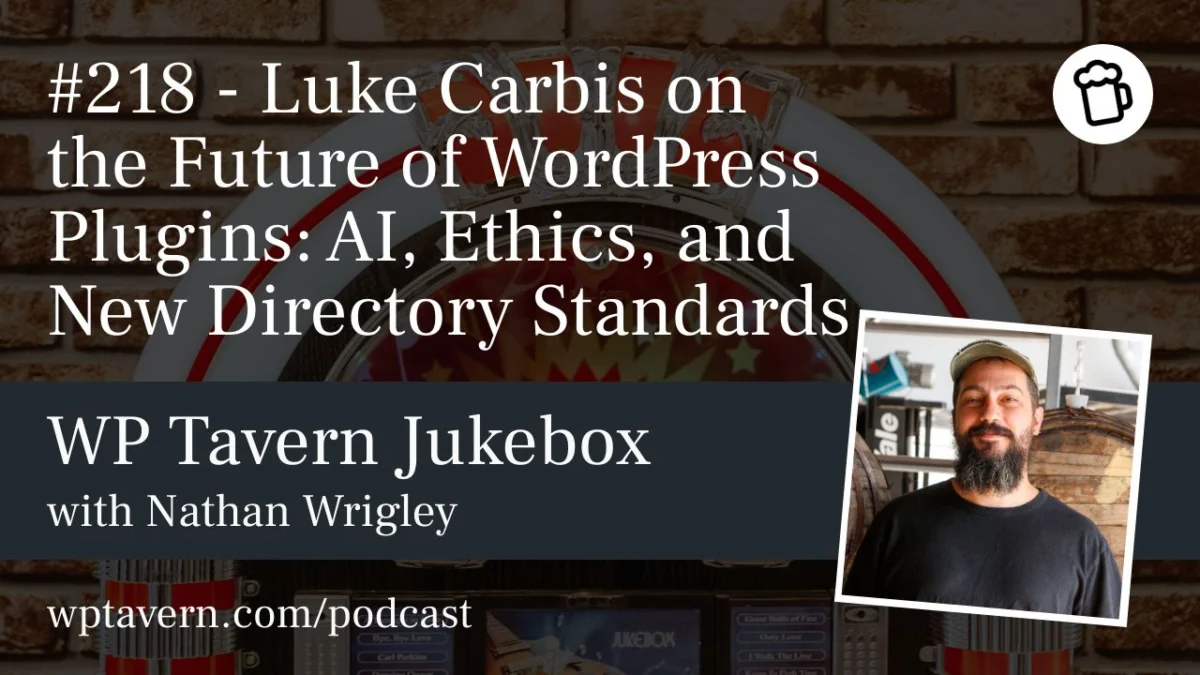
Luke Carbis, a veteran of the WordPress ecosystem and a member of the official Plugin Review Team, recently took to the stage at WordCamp Asia to address these challenges. His talk, "Beyond the Guidelines: It’s Time to Evolve Our Standards for a Safer Plugin Ecosystem," argues that the current infrastructure is struggling to keep pace with modern technological shifts, necessitating a fundamental rethinking of how WordPress approaches discoverability, monetization, and ethics.
The AI Deluge: A New Frontier in Plugin Development
The most immediate challenge facing the Plugin Review Team is volume. In the last 12 months alone, the number of plugin submissions to the WordPress directory has quadrupled. While the democratization of development is a core tenet of the WordPress mission, the ease with which AI can generate functional—and sometimes redundant—code has flooded the queue.
For the Review Team, the challenge is twofold. First, there is the technical hurdle of maintaining rigorous safety standards in an era where thousands of plugins can be generated in a matter of hours. Despite this, Carbis notes that the team has successfully managed to keep review wait times at approximately one week.
However, the second, more insidious problem is one of "signal-to-noise." With thousands of plugins offering nearly identical functionality, the directory is becoming increasingly difficult for users to navigate. For developers, this means that even a high-quality, well-maintained plugin can be buried under a mountain of AI-generated content, leading to a sense of stagnation and reduced visibility for legitimate products.
The "Algorithm" Problem and Discovery
At the center of this debate is the WordPress.org search and ranking system. Unlike the proprietary, black-box algorithms of tech giants like Google, the WordPress repository algorithm is open source. It relies on a combination of active install counts, forum support responsiveness, and keyword matching.
Carbis acknowledges that while these metrics have served the community well, they are no longer sufficient to surface the best tools in an oversaturated market. The reliance on "active installs" as a primary ranking factor creates a "rich-get-richer" scenario, making it nearly impossible for new, innovative plugins to gain traction without significant external marketing efforts.
"If you know what you’re looking for and you search specifically for it, but it comes up tenth in the search results because it lacks high active installs, that’s a hard problem to solve," Carbis explains. The community is now debating whether the directory should shift toward a more nuanced, curation-based approach or whether it should maintain its current, egalitarian, but increasingly cluttered, structure.
A Vision for Evolution: Connecting and Monetizing
To combat these issues, Carbis proposes a series of bold, experimental changes. His vision involves two major shifts:
1. Integration and Personalization
Carbis suggests a deeper integration between user WordPress.org profiles and their individual site installations. By leveraging the new "Connectors API," users could authenticate their sites to pull in favorites, trusted developers, and even custom repositories. This would allow users to create a personalized ecosystem of plugins, bypassing the generic search results for trusted, pre-vetted tools.
2. The Commercialization Question
Perhaps the most controversial of his proposals is the idea of an official commercial marketplace. Carbis posits that the lack of a standardized way to sell premium plugins has forced developers to build their own licensing, update, and distribution systems, which is inefficient and creates fragmentation.
He suggests that WordPress.org could act as a secure gateway for premium plugins, with a potential 8% transaction fee—3% for payment processing and 5% allocated to "Five for the Future" and community funding. Such a system, he argues, would not only professionalize the ecosystem but also provide a sustainable funding model for WordCamps, Core contributions, and the Plugin Review Team itself.
Ethical Implications and the Generational Divide
The discourse around AI in WordPress goes beyond mere efficiency; it touches upon the philosophical soul of the project. The mantra "Code is Poetry" has long defined the WordPress ethos, yet many contributors fear that the rush toward AI-generated code, AI-driven support, and automated pull requests risks stripping the community of its human element.
Carbis highlights a significant generational divide in these attitudes. "Every time I speak to someone from Gen Z, they are not interested in using any kind of AI whatsoever," he notes. This demographic, often viewed as the future of the open-source movement, frequently expresses deep concerns regarding the environmental cost and the perceived dehumanization inherent in AI-generated content.
This creates a paradox: while leadership encourages the adoption of AI to increase productivity and remain competitive, doing so may inadvertently alienate the very people needed to carry the project forward into the next decade.
Leadership and the "Steve Jobs" Pivot
The community has also observed a shift in leadership style. Following WordCamp Asia, project founder Matt Mullenweg has taken a more direct, hands-on role, often intervening in debates with specific directives.
For many in the community, this shift has been jarring. However, Carbis suggests a re-evaluation of this leadership style. He argues that WordPress has been "coasting" and that without a visionary leader—someone willing to make unpopular, decisive calls—the platform risks irrelevance in an increasingly AI-centric web. He compares this transition to the leadership styles of Steve Jobs or DHH (David Heinemeier Hansson), where a "rough around the edges" approach is justified by the need for clear, directional movement.
Proposed Solutions: The Path Forward
As the podcast concludes, Carbis offers a practical, low-friction proposal: AI Disclosure Headers.
Instead of creating a binary "AI vs. No AI" rule, he proposes a system where plugin authors can voluntarily specify their level of AI use in their plugin headers. This metadata would be surfaced on the directory, allowing users to make informed choices. This approach accomplishes two goals:
- Data Collection: It provides the community with a clear understanding of how AI is being integrated into the plugin ecosystem.
- Transparency: It respects the user’s right to know the provenance of the code they are installing without imposing an immediate, restrictive ban on AI tools.
Implications for the Future
The WordPress community is currently balancing two competing futures. One is a high-efficiency, AI-integrated ecosystem that prioritizes speed and commercial viability. The other is a more traditional, human-centric project that fears losing its core identity to automation.
The path forward will likely involve compromise. The success of the WordPress project has always been its ability to adapt to the changing web—from a simple blogging tool to a complex site-building platform. Whether the platform can successfully integrate the "alien" technology of AI while maintaining the trust and community spirit that made it a global powerhouse remains to be seen.
As Carbis puts it, the goal is not to decide if AI is good or bad, but to ensure that the WordPress ecosystem remains an "exciting place to be" for the next generation of developers. Whether through official commercial support, better discovery tools, or transparent AI disclosures, the community is clearly signaling that the status quo is no longer enough. The challenge now lies in finding a consensus that preserves the "poetry" of code while embracing the realities of a modern, AI-driven world.