For decades, the meta description served as the primary lever for search engine optimization (SEO) professionals looking to influence how their websites appeared in organic search results. It was the "sales copy" of the search engine results page (SERP), a 160-character opportunity to entice a user to click through to a landing page. However, as Google’s algorithms have grown increasingly sophisticated, the role of these static snippets has undergone a significant transformation.
Today, Google frequently ignores user-defined meta descriptions, opting instead to dynamically generate snippets based on the specific query a user enters and the content found within the page. This shift has led many site owners to wonder: Are meta descriptions still a necessary investment, or are they an SEO relic of the past?
The Evolution of the Search Snippet: A Chronology
The history of the meta description is essentially the history of Google’s search engine maturation. In the early days of the internet, search engines were literal; if a site owner provided a summary, the search engine would display it, provided it matched the user’s intent.
The "Golden Age" of Meta Optimization
In the early 2000s, SEO was a game of precision. Meta descriptions were treated as meta-tags that held significant weight. Marketers would obsessively stuff these tags with keywords, believing—correctly, at the time—that these descriptions would directly impact rankings and click-through rates (CTR).
The Shift Toward Algorithmic Autonomy
As Google moved toward semantic search and natural language processing (NLP), the search engine became more capable of understanding the context of a webpage. Google’s engineers realized that a static meta description might be generic or inaccurate for a complex page that serves multiple search intents. Consequently, Google began "snippeting"—the process of extracting the most relevant portion of the page content to show the user exactly why that page answers their specific query.
The Present Day: The Hybrid Model
We have arrived at a hybrid reality. Google no longer treats meta descriptions as a "command" to be obeyed, but rather as a "suggestion" to be evaluated. If a site’s meta description is high-quality, descriptive, and accurately reflects the page content, Google will likely use it. If it is missing, poorly written, or less relevant than a paragraph buried in the site’s body copy, Google will override it.
Official Guidance: What Google Says
Despite the algorithmic shifts, Google has been consistent in its documentation regarding the value of these tags. According to Google’s official Search Central documentation, the company primarily uses page content to determine the snippet, but it explicitly states:
"We may also use descriptive information in the meta description element when it describes the page better than other parts of the content."
John Mueller, Google’s Search Advocate, reinforced this sentiment in a recent discussion on the platform Reddit. When asked about the necessity of meta descriptions, Mueller noted that while they are not a technical requirement for ranking, they serve a functional purpose:
"Sometimes it helps you to figure out a clear focus for a page. Overall, I think it’s still worthwhile to do so for individual pages that you care about, but it’s definitely not a requirement."
This distinction is critical. Google is not asking for meta descriptions to help it "rank" your site; it is asking for them to help the engine "understand and present" your site.

The Case for Continued Implementation
For many businesses, particularly those operating in the e-commerce sector, the meta description remains a vital piece of the digital architecture. There is no technical downside to adding them, and for key pages, the benefits are clear.
Managing Complexity in E-commerce
Product detail pages, category pages, and high-traffic service pages are notoriously difficult for search engines to summarize. These pages are often dense with specifications, customer reviews, technical jargon, and promotional language. When a search engine crawler attempts to extract a snippet from a page loaded with, for instance, a 50-item technical spec sheet, it may fail to pull the "marketing hook" that convinces a human to click.
A carefully crafted meta description acts as an editorial filter, ensuring that the most compelling value proposition—such as pricing, warranty information, or a unique selling point—is prioritized in the SERP.
The Influence of Generative AI
The rise of Generative AI (GenAI) in search—such as Google’s AI Overviews and ChatGPT’s search capabilities—has created a new frontier for meta descriptions. When AI models crawl a site to synthesize an answer, they look for concise, accurate summaries of the page’s purpose. A well-written meta description provides a ready-made "summary" for these models to digest, increasing the likelihood that your content will be accurately represented in AI-generated responses.
Strategic Implications for Site Owners
Identifying High-Priority Pages
Not every page on your site requires a custom-written meta description. For large, database-driven sites with thousands of products, manual writing is impossible. The strategy should be tiered:
- Tier 1 (High Priority): Home page, category landing pages, and top-converting products. These should always have human-written, high-conversion meta descriptions.
- Tier 2 (Mid Priority): Frequently asked questions (FAQs) and evergreen blog content.
- Tier 3 (Automated): Long-tail product pages. For these, use programmatic generation.
Programmatic Generation via GenAI
For sites with large catalogs, relying on GenAI platforms like ChatGPT or Claude is now the industry standard. By using a "system prompt" that dictates the tone, length, and inclusion of key features, businesses can generate thousands of unique, high-quality descriptions in minutes. However, a "human-in-the-loop" review remains essential for the top 5% of pages that drive the most revenue.
Best Practices for Modern Meta Descriptions
When writing these snippets today, ignore the old "keyword stuffing" tactics of the past. Instead, focus on these four pillars:
- Relevance: Does the description directly answer the search intent of the user?
- Conciseness: Keep it between 120 and 160 characters to ensure it doesn’t get truncated on mobile devices.
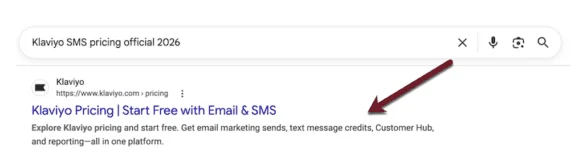
- Call to Action (CTA): Use persuasive, active language (e.g., "Explore," "Learn more," "Start your free trial").
- Uniqueness: Ensure every page has a distinct description to prevent "duplicate content" flags in search console reports.
The Future of "Search Intent"
The ultimate goal of the search engine is to provide the most helpful, accurate answer to the user as quickly as possible. If a meta description provides a better, more concise summary than the text on the page, Google will use it. If the page content is better, Google will ignore the tag.
Ultimately, the meta description should be viewed as a branding tool. It is your opportunity to speak directly to the searcher before they reach your site. In an environment where GenAI is increasingly curating the information users see, the ability to control your own narrative—and provide clear, concise summaries of your value—is more important than ever.
Conclusion: Don’t Abandon the Meta
While Google’s autonomy in generating snippets has reduced the "weight" of the meta description in terms of direct SEO ranking signals, the functional value of the snippet remains high. It is an investment in your CTR, your brand voice, and your visibility within AI-driven search models.
For the modern digital marketer, the meta description is no longer a technical requirement to be checked off a list; it is a strategic asset to be managed. By prioritizing high-intent pages and utilizing modern tools to scale, you ensure that your site remains as readable to the algorithms of tomorrow as it is to the human users of today. The search landscape may be changing, but the necessity of clear, compelling communication remains a constant.