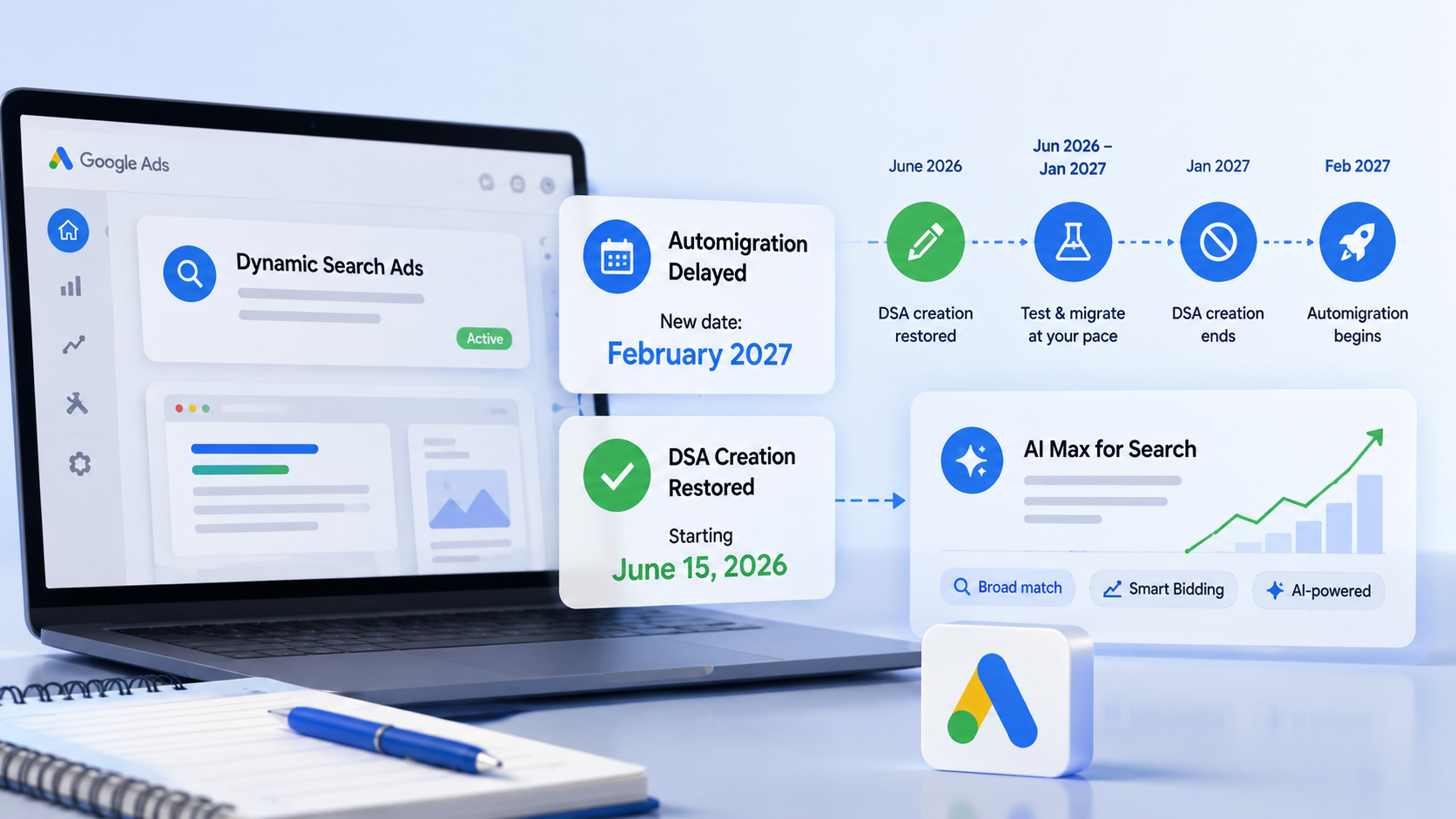
In a move that significantly levels the playing field for small and medium-sized businesses (SMBs), Google has quietly updated its official support documentation for Google Ads Lead Form assets. The most notable change is the complete removal of the long-standing $50,000 lifetime spend requirement, which previously locked smaller advertisers out of utilizing native, Google-hosted lead-generation forms.
By dismantling this financial barrier and shifting its focus toward advertiser verification and reputation, Google is opening up one of its most high-converting ad formats to millions of businesses worldwide. This comprehensive report explores the main facts of this update, the historical context of Google’s lead forms, technical specifications, industry reactions, and the far-reaching implications for the digital advertising ecosystem.
1. Main Facts: What Has Changed in Google’s Lead Form Documentation?
The recent updates to Google’s Lead Form asset guidelines represent a structural shift in how the search giant gates its ad features. Below are the key modifications identified in the revised documentation.
The Elimination of the $50,000 Spend Threshold
Previously, to qualify for Lead Form assets in certain formats, Google required advertisers to meet one of two strict criteria:
- Have a lifetime spend of more than $50,000 in Google Ads.
- Be an established advertiser with a proven track record of compliance and good standing.
The updated documentation has completely removed the $50,000 lifetime spend requirement. Now, the sole path to eligibility relies on an advertiser’s reputation, adherence to policy guidelines, and completion of the Advertiser Verification Program.
Old Eligibility Path:
[ $50,000+ Lifetime Spend ]  OR  [ Good Policy Standing + Verification ]
                                     │
                                     ▼
                        Eligible for Lead Forms

New Eligibility Path:
[ Advertiser Reputation & Verification Only ] ──► Eligible for Lead Forms
Streamlined Campaign Type Support
Google has simplified the list of campaign types that support Lead Form assets.
- Previously: Lead Form assets were documented as compatible with Search, Video, Discovery, and Display campaigns.
- Now: The updated overview explicitly lists Search and Performance Max campaigns as the primary supported types.
References to Video campaigns have been removed from the main overview, and Display is no longer highlighted. Interestingly, minor discrepancies remain within Google’s deeper support pages, where Display is still referenced in technical requirements. This suggests that while Google is consolidating its lead-generation focus around Search and Performance Max (which inherently absorbs Display and Video inventory), the documentation cleanup is still ongoing.
Expanded Integration and Delivery Options
Recognizing that manual lead downloads can lead to cold prospects, Google has expanded its documented methods for automatic lead delivery. The newly officially documented options include:
- Zapier Integration: A popular no-code automation tool that allows advertisers to instantly route leads from Google Ads to over 5,000 Customer Relationship Management (CRM) platforms, such as HubSpot, Salesforce, ActiveCampaign, and Mailchimp.
- Google Partners: Direct, native integrations with specific CRM partners.
These additions complement Google’s existing delivery systems:
- Direct Webhooks: For enterprise-level advertisers who require custom API integrations to push lead data directly into proprietary databases.
- Manual CSV Downloads: Allowing advertisers to download their lead data directly from the Google Ads UI.
Explicit Data Retention Clarifications
To align with global data privacy frameworks (such as GDPR and CCPA), Google has added clear, explicit wording regarding data retention. The documentation now clearly states that lead data is stored in Google’s systems for a maximum of 60 days. Advertisers utilizing manual CSV downloads must retrieve their lead data within this 60-day window, after which the data is permanently purged.
Geographic Expansion
Google has officially expanded the availability of Lead Form assets to more than two dozen additional countries. Newly eligible nations include:
- Middle East: Bahrain, Jordan, Kuwait, Qatar.
- Europe: Croatia, Estonia, Serbia, Slovenia.
- North Africa: Morocco, Tunisia.
2. Chronology: The Evolution of Google’s Lead Form Assets
To understand why the removal of the $50,000 spend limit is so significant, it is necessary to trace the history of native lead generation within Google’s advertising platform.
2019 (October) ──► Google introduces "Lead Form Extensions" for Search ads.
2020-2021      ──► Support expands to YouTube (Video) and Discovery ads.
2022           ──► Rebranded to "Lead Form Assets" alongside the Asset Library rollout.
                   Strict $50k spend threshold enforced to curb lead fraud/spam.
2023 (Late)    ──► Global rollout of mandatory Advertiser Verification Program completed.
2024 (Current) ──► $50k spend threshold removed; verification becomes the sole gatekeeper.- October 2019: The Launch of Lead Form Extensions
Google introduced "Lead Form Extensions" for Search campaigns to compete directly with Facebook’s highly successful Lead Generation Ads. The goal was to reduce friction by allowing mobile users to submit their contact information directly within the search engine results page (SERP) without waiting for an external website to load. - 2020–2021: Expansion to YouTube and Discovery
As mobile traffic continued to dominate, Google expanded lead forms to YouTube (Video campaigns) and Discovery campaigns. During this period, Google realized that open access to native forms attracted high volumes of low-quality leads, spam, and phishing attempts from bad actors using burner ad accounts. - 2022: Rebranding and the $50,000 Paywall
Google transitioned "extensions" to "assets" to unify its ad creation interface. Around this time, Google codified strict eligibility requirements, including the $50,000 lifetime spend threshold. This paywall served as a crude but effective shield, ensuring that only established businesses with significant financial skin in the game could collect user data directly on Google’s domain. - 2023: The Rise of Advertiser Verification
Google aggressively rolled out its mandatory Advertiser Verification Program globally. This program required advertisers to submit official business registration documents, government IDs, and proof of physical location to continue serving ads. - Current Update: Dismantling the Paywall
With the Advertiser Verification infrastructure fully mature, Google determined that a financial threshold was no longer necessary to prevent fraud. The verification process itself now serves as a highly effective gatekeeper, allowing Google to safely lower the financial barrier for smaller advertisers.
3. Supporting Data: The Impact of Native Lead Forms on Conversion Rates
Native lead forms consistently outperform traditional landing pages on mobile devices due to a massive reduction in user friction. Below is a comparative analysis of traditional landing page lead generation versus Google-hosted Lead Form assets.
Friction and Load Time Metrics
| Performance Metric | Traditional Mobile Landing Page | Google Lead Form Asset |
|---|---|---|
| Average Load Time | 3.2 to 5.0 seconds | Instantaneous (Pre-rendered) |
| User Clicks Required | 3+ (Ad Click -> Page Load -> Form Fill -> Submit) | 2 (Ad Click -> Form Auto-fills -> Submit) |
| Form Auto-Fill Capability | Limited to browser-saved data | Seamless (Pulls directly from Google Account) |
| Average Mobile Conversion Rate | 2.5% – 5.0% | 12.0% – 22.0% |
Because Google Lead Forms pre-populate a user’s name, email address, phone number, and postal code using their active Google Account credentials, the user only needs to tap "Submit." This eliminates the tedious process of typing on mobile keyboards, which is the primary cause of mobile shopping cart and form abandonment.

Technical Webhook vs. Zapier Data Flows
For automated lead delivery, advertisers have two primary technical routes. The addition of Zapier democratizes this flow for non-developers.
[ Traditional Webhook Route ]
Google Ads Platform ──► HTTPS POST (JSON Payload) ──► Client Server (Custom API Parser) ──► CRM

[ Zapier Integration Route ]
Google Ads Platform ──► Native Zapier Connector ──► Zapier UI Mapping ──► Direct CRM Input- The Webhook Route: Requires a developer to configure an endpoint URL and security key (Google-generated key). When a user submits a form, Google sends a JSON payload to the endpoint in real time.
- The Zapier Route: Requires zero code. The advertiser logs into Zapier, authenticates their Google Ads account, selects the specific Lead Form asset, and maps the Google form fields (e.g.,
user_email) to their CRM fields (e.g.,Contact Email).
4. Official Responses and Industry Reactions
Because this update was rolled out quietly via a Help Center documentation refresh, Google did not issue a formal press release. This "silent rollout" is a common practice for Google when adjusting platform eligibility requirements.
However, search marketing experts and PPC (Pay-Per-Click) professionals have reacted with widespread optimism, tempered by a few operational warnings.
What the Industry Experts Are Saying
Many digital marketing agency founders have noted that this change resolves a major point of friction when onboarding new clients. Previously, agencies working with local service businesses (e.g., plumbers, roofers, dentists, and boutique law firms) had to explain that despite having a healthy monthly budget of $2,000 to $5,000, they could not use Google’s native lead forms because their historical lifetime spend was under $50,000.
Anu Adegbola, Paid Media Editor at Search Engine Land and founder of PPC Live, highlighted that this update lowers the documented barrier to entry significantly, making Google-hosted lead generation available to a vastly larger pool of advertisers.
The Spam and Lead Quality Caveat
While PPC professionals welcome the democratization of the tool, some warn of a potential drop in lead quality. In the past, native forms have been criticized for generating "accidental" leads—users who click the ad and submit pre-filled forms without fully realizing they are requesting a business callback.
With the $50,000 spend limit removed, agencies are advising smaller clients to implement strict qualifying questions within their Lead Forms (e.g., custom dropdown questions rather than just name and email) to filter out low-intent users.
5. Implications for Advertisers and the Digital Marketing Landscape
The removal of the $50,000 spend requirement has profound implications across multiple facets of the digital advertising industry.
1. Equalizing the Playing Field for SMBs
Historically, large enterprises with massive budgets held a distinct technical advantage on Google Ads. They could leverage frictionless native forms while local SMBs had to rely on slow, unoptimized mobile landing pages. Now, a local business spending $1,500 a month can run the exact same high-converting mobile search experiences as a Fortune 500 company, provided they pass Google’s advertiser verification.
2. The Acceleration of Performance Max
By prioritizing Search and Performance Max in the updated documentation, Google is signaling where it wants lead-generation advertisers to focus. Performance Max (PMax) uses machine learning to serve ads across Search, YouTube, Display, Discover, and Gmail.
Integrating Lead Forms directly into PMax allows Google’s AI to optimize bidding based on actual form submissions rather than just website clicks, drastically improving the efficiency of automated campaigns for smaller budgets.
               ┌──► Search Ads
               ├──► YouTube Video Ads
PMax + Lead ───┼──► Gmail Sponsored Ads  ──► Instant Native Form Submission
 Form Asset    ├──► Discover Feed
               └──► Display Network
3. A Massive Win for the No-Code SaaS Ecosystem
By formally documenting Zapier and Google Partner integrations, Google is validating the reliance of modern businesses on third-party middleware. This will likely lead to an influx of small businesses adopting tools like Zapier, Make, or native CRM connectors to ensure they can contact leads within the critical "first five minutes" of submission.
4. Data Privacy and the Death of Third-Party Cookies
As third-party cookies phase out, first-party data collection has become the holy grail of digital marketing. Lead Form assets allow advertisers to collect consented, high-intent first-party data directly from users within Google’s secure ecosystem. Because the data transfer happens server-to-server (via webhooks or Zapier) rather than relying on browser-based tracking pixels, it is highly resilient against ad-blockers and privacy-focused browser updates (like Apple’s iOS App Tracking Transparency).
5. Increased Pressure on Google’s Verification Systems
With the financial filter removed, Google’s automated systems and manual review teams will face increased pressure to detect and block malicious entities attempting to use verified accounts to harvest personal data. Advertisers should expect Google to enforce its Advertiser Verification and Business Operations Verification policies with even greater scrutiny moving forward.