The WordPress ecosystem stands at a historic crossroads. For over a decade, the platform’s meteoric rise—from a niche blogging tool to the backbone of over 40% of the web—has been fueled by a culture of accessibility and the proliferation of "no-code" visual tools. Among the most influential of these is Beaver Builder, a page-builder plugin that helped define an era of web development where design became democratized.
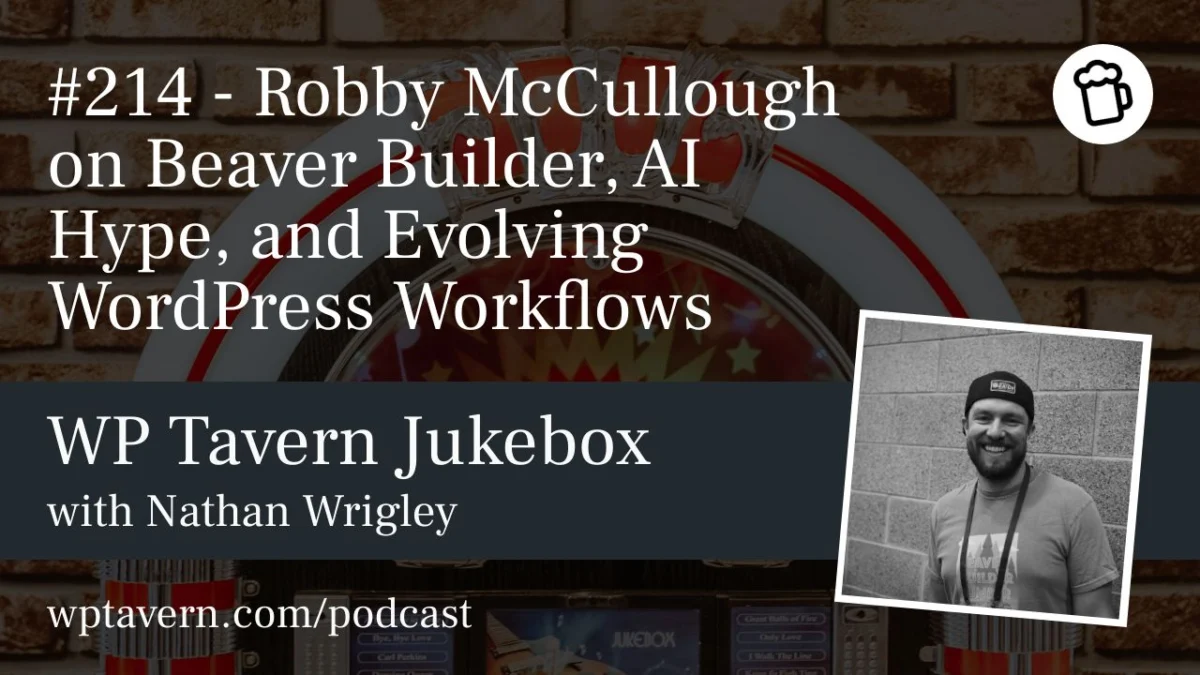
As the industry grapples with the sudden, seismic emergence of generative artificial intelligence, the pioneers of the "page builder revolution" are reflecting on where they have been, and more importantly, where they are going. Robby McCullough, co-founder of Beaver Builder, recently sat down with Nathan Wrigley on the Jukebox podcast to discuss the evolution of WordPress, the "vibe-coding" era, and why the human element of web development is more critical than ever.
The Origin Story: From Agency Life to Product Success
Twelve years ago, the landscape of web development was fundamentally different. Creating a professional website was a task often reserved for those with a firm grasp of CSS, PHP, and the intricacies of the WordPress template hierarchy.
McCullough and his co-founders began their journey as a web design agency. The motivation behind creating Beaver Builder was purely pragmatic: they needed a way to hand off sophisticated, custom-designed websites to clients who lacked technical expertise. They sought a solution that would allow clients to update text, swap images, and manage footers without having to submit a support ticket or risk breaking the site’s underlying architecture.
"We wanted it to be easy enough for someone who was non-technical to be able to get in and use," McCullough explained. "But we came from a development background, so we wanted to be able to get in and tinker with the code when we wanted to."
This balance—the ability to build visually while maintaining the integrity of the underlying code—became the core value proposition of Beaver Builder. It served as a bridge between the "hand-coding" purists and the modern era of drag-and-drop design.
Chronology of a Paradigm Shift
To understand the current anxiety surrounding AI, one must look at the historical trajectory of WordPress tooling:
- The Pre-Builder Era (Pre-2012): The era of Dreamweaver and manual HTML/CSS styling. Tools were often bloated, producing "spaghetti code" that was difficult to maintain.
- The Page Builder Revolution (2012–2018): Beaver Builder and its contemporaries arrived, introducing intuitive interfaces that lowered the barrier to entry. This period saw a massive expansion of the WordPress market share.
- The Gutenberg Era (2018–2023): The introduction of the block editor caused significant friction and existential concern among page-builder developers. Many predicted the demise of third-party builders, yet the ecosystem proved resilient.
- The AI "Vibe-Coding" Era (2024–Present): We have entered a phase where natural language prompts can generate functional websites in seconds. This is the new, and perhaps most disruptive, challenge to established workflows.
The AI Bandwagon: Why Caution Paid Off
Many software companies scrambled to integrate "GPT wrappers" into their products over the past 18 months, often simply to appease stakeholders or demonstrate innovation. McCullough admits that Beaver Builder intentionally took a different path.
"We didn’t jump on the AI bandwagon early," McCullough said. "I’m excited that we didn’t, because now I feel like AI has reached an inflection point. It’s moved from buzzword-heavy gimmicks to truly agentic tools that can code and assist in building."
By waiting, the Beaver Builder team avoided the pitfalls of low-utility integrations. They are now focusing on features that provide genuine, long-term value: using AI to handle tedious tasks, assist in writing complex code, and act as a co-pilot for the user rather than a black-box replacement for human creativity.
Implications: The Future of Web Development
The emergence of "vibe-coding"—where a user describes a website to an AI and receives a functional page in return—poses a philosophical question about the value of the "artisan" approach.
The Loss of Craftsmanship
McCullough and Wrigley both expressed a healthy dose of nostalgia for the days of hand-crafting designs. There is a palpable concern that as web development becomes more abstracted, the fundamental understanding of how the web works is being lost. If a user never touches CSS or understands the structure of a webpage, they become entirely dependent on the abstraction layer.
Maintenance as the New Frontier
While AI excels at creation, it is less proven at maintenance. A website is not a static object; it is a living entity that requires updates, security patches, and structural modifications over years.
"I still think there’s always going to be a place to go back in and edit, find the thing with the mouse, click on it, and modify it," McCullough noted. This is where the page builder retains its utility. It is no longer just a tool for creation; it is a tool for management. It allows users to take the foundation laid by an AI and customize it with precision.
The Return to Human Connection
Perhaps the most surprising takeaway from the conversation was the emphasis on human connection. In a world where AI can simulate human conversation, provide code, and even write copy, the value of real-world community—such as WordCamps and local developer meetups—becomes a form of resistance.
McCullough reflected on his own experiences with the WordPress community: "One of my favorite things ever was all the fun travel I got to do going to WordCamps all over the world… I would love to see that come back."
Official Stance: The Roadmap for Beaver Builder
While McCullough stopped short of announcing specific upcoming features, he offered a glimpse into the company’s internal philosophy regarding AI integration. The team is exploring two primary approaches:
- Drag-and-Drop Conversion: Developing tools that allow users to take a webpage created via AI, drag it into the Beaver Builder interface, and have it converted into editable, modular components.
- The Chat-Based Co-Pilot: Integrating an agentic chat experience directly into the editor. This would allow users to ask the AI to modify specific design elements—such as padding, typography, or layout—within the context of their existing site, rather than forcing them to regenerate the entire page.
"We’re not trying to make it a closed black box where you have to pay us tokens per month," McCullough emphasized. "We want to have a system where it’s a ‘bring-your-own-key’ approach, but one that gives you, as the developer, the power to tweak things, learn from the code, and deliver a site that a client can actually manage."
Conclusion: Balancing Efficiency with Understanding
The tension between the rapid pace of AI advancement and the traditional, human-led approach to web development is likely to persist for the foreseeable future. McCullough’s perspective is that of a "hopeless optimist"—someone who sees the potential for AI to liberate creators from the drudgery of repetitive tasks, allowing them to focus on high-level design and strategy.
However, the cautionary tale remains clear: as we embrace the convenience of AI, we must not lose the underlying skills that make the web an extensible, open, and human-centric platform. Whether or not AI replaces the need for traditional page building, the demand for high-quality, maintainable, and human-managed websites is unlikely to vanish.
As Beaver Builder heads into its 13th year, the challenge for McCullough and his team is not just to keep up with the vertical curve of AI capability, but to ensure that the tools they build remain rooted in the craftsmanship that has defined the WordPress community since its inception. The future of the web may be spoken into existence, but the responsibility to maintain it will remain firmly in human hands.