In an era increasingly defined by digital isolation, algorithmic echo chambers, and the erosion of traditional community spaces, the WordPress ecosystem stands as a remarkable anomaly. For millions, WordPress is far more than a content management system; it is a global social experiment that has defied the conventions of modern corporate life.
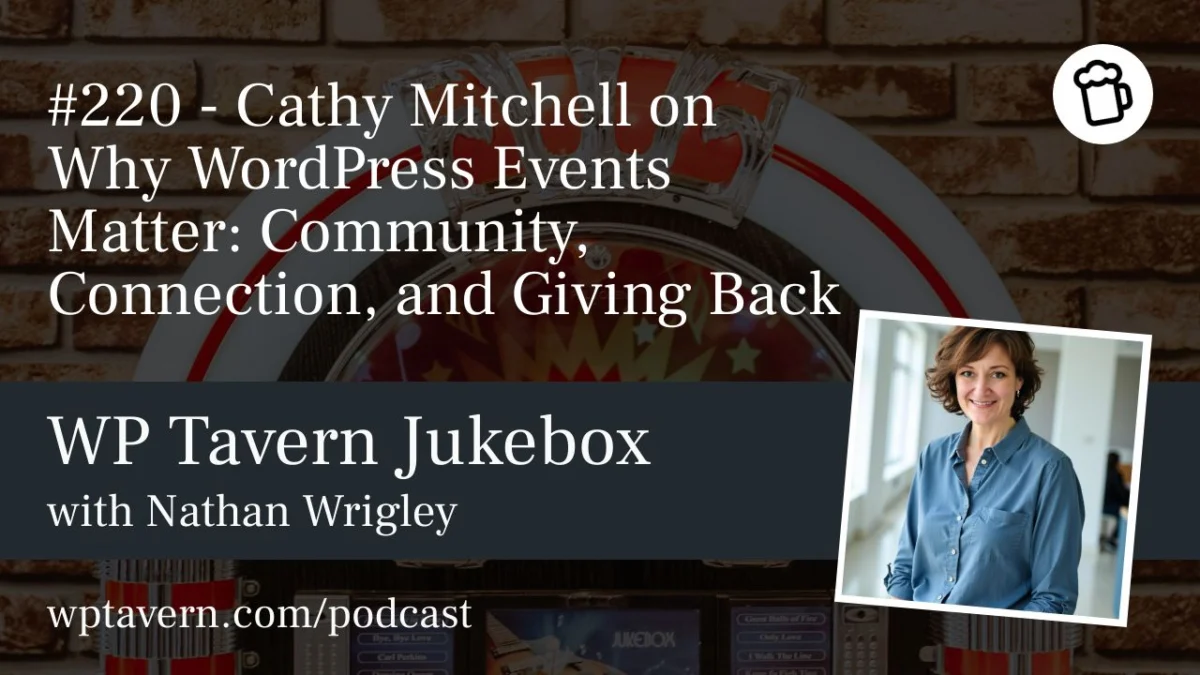
On a recent episode of the Jukebox podcast from WP Tavern, host Nathan Wrigley sat down with veteran developer and community organizer Cathy Mitchell to dissect the unique phenomenon that is the WordPress community. Their conversation peeled back the layers of what makes this open-source project a sanctuary for collaboration, personal fulfillment, and professional growth in a rapidly changing technological landscape.
The Evolution of an Open-Source Titan
To understand the significance of the WordPress community, one must look at its origins. Cathy Mitchell, who began her journey with the platform in 2007, recalls a time when the project was in its nascent stages of explosive growth. What began as a creative outlet during her maternity leave quickly transformed into a professional career with the launch of her business, WPBarista, in 2008.
For Mitchell, as for many early adopters, the initial engagement was fueled by curiosity. "I didn’t even know what the internet was as a broad concept," she admitted. Yet, she found herself navigating support forums where the architects of the software were personally answering "ridiculous questions" from newcomers. This accessibility shattered the traditional barriers of entry seen in corporate technology, creating a culture where expertise was shared freely rather than guarded behind paywalls.
A Chronology of Community Integration
The trajectory of a typical contributor often follows a pattern of serendipity. For Nathan Wrigley, the community was a hidden layer beneath the software. It wasn’t until he attended his first WordCamp in London that he realized the magnitude of the movement.
- The Early Years (2005–2010): A period of grassroots exploration. Early users found community through forums, building the foundation of support that would later characterize the project.
- The Stratospheric Growth (2011–2019): As WordPress climbed to power over 40% of the web, the community expanded globally. Regional WordCamps became major professional hubs, fostering deep interpersonal connections that transcended borders.
- The Pandemic and Post-COVID Shift (2020–Present): The digital shift accelerated by the pandemic brought new challenges. With economic uncertainty impacting businesses, the "rising tide" mentality of the previous decade gave way to a more pragmatic, intentional approach to community involvement and sponsorship.
Mitchell, now serving as the lead organizer for the 2026 WordCamp Canada, notes that this current phase is defined by a shift toward deeper, more meaningful contributions. Having moved past the "empty nest" stage of her life, she is now leveraging her organizational skills to ensure the next generation of contributors feels the same welcoming warmth she experienced nearly two decades ago.
Supporting Data: The Loneliness Epidemic and the Antidote of Service
One of the most compelling aspects of the discussion was the intersection of technology and mental health. Mitchell highlighted a sobering statistic: in 2023, U.S. Surgeon General Vivek Murthy declared a loneliness epidemic, noting that the health impacts of chronic isolation are equivalent to smoking 15 cigarettes a day.
Data suggests that younger demographics, specifically those aged 18–24, are experiencing the highest rates of loneliness, despite—or perhaps because of—the ubiquity of hyper-connected technology. In this light, the WordPress community serves as a vital, physical, and emotional counter-measure.
"Service is an antidote to loneliness," Mitchell explained. Whether through organizing a local WordCamp, teaching seniors at a college, or mentoring a new developer, the act of pulling alongside another human being toward a shared goal provides a sense of belonging that digital interaction alone cannot replicate. The data aligns with the human experience: happiness is statistically higher among those who interact regularly with others and those who engage in altruistic activities without the expectation of a return.
Official Perspectives: The Business of Volunteering
A critical tension discussed on the podcast was the "Return on Investment" (ROI) dilemma faced by business owners. When economic times are tough, why continue to sponsor or volunteer for WordPress events?
Mitchell argues that the value proposition has shifted from simple marketing to deeper talent acquisition and community health. "If you sponsor open-source projects, it makes hiring people that much easier and vetting them much easier," she noted. By contributing to the ecosystem, companies are not just buying visibility; they are participating in the cultivation of the very talent pool they rely on.
Furthermore, there is a collective acknowledgment that the health of the individual business is inextricably linked to the health of the open-source project. If the community thrives, the ecosystem remains viable. This philosophy represents a departure from short-term profit-seeking, pointing toward a more sustainable, long-term model of corporate citizenship.
Implications for the Future: Engaging the Next Generation
As the WordPress landscape faces the challenges of the AI era, the focus has pivoted to the vital need for younger generations to enter the fold. Both Wrigley and Mitchell emphasized that the survival of the open-source spirit depends on bridging the gap between current contributors and students.
The Institutional Path
The emergence of "Campus Connect" initiatives and university credit programs is a promising development. By integrating open-source contribution into academic curricula, the community is moving beyond the "hobbyist" model and into the realm of professional and educational standards. This ensures that the "harbour wall"—the foundational support structure for the community—remains strong as the industry evolves.
A Culture of Radical Inclusivity
Perhaps the most significant takeaway from the conversation is the "default to yes" culture of the community. In many corporate environments, one must "sweep the floors" for years before being trusted with significant responsibility. In the WordPress community, the threshold is different. If someone shows up with the willingness to help, they are often immediately empowered. This radical inclusivity, while occasionally chaotic, is the secret sauce that has allowed the project to scale globally without losing its human core.
Conclusion: The Unquantifiable "Nice"
Throughout their dialogue, both Wrigley and Mitchell struggled to fully quantify the "secret sauce" of the WordPress community. It is a mixture of altruism, shared technical challenges, international camaraderie, and a fundamental belief in the democratic nature of the internet.
As we look toward 2026 and beyond, the community is clearly entering a period of maturity. The explosive, uncritical growth of the past has been replaced by a more deliberate, thoughtful stewardship. Whether the economy fluctuates or new technologies like AI shift the paradigm, the core of WordPress remains the people.
As Cathy Mitchell aptly summarized, the community isn’t just about the software—it’s about the people who show up, the hallway conversations, the willingness to share knowledge, and the commitment to building something that belongs to everyone. In an increasingly fragmented world, that simple, unquantifiable feeling of "nice" might be the most valuable technology we have.
For those looking to get involved, whether as a business owner seeking connection or a newcomer looking for purpose, the doors remain open. As the organizers of WordCamp Canada and countless other events prove, you don’t need a decade of experience to start—you just need to show up.