The WordPress plugin directory—the heartbeat of the world’s most popular content management system—is currently undergoing a period of profound transformation. As the ecosystem grapples with the rapid ascent of artificial intelligence and an unprecedented surge in submissions, the community is debating how to maintain quality, ensure security, and preserve the spirit of open-source collaboration.
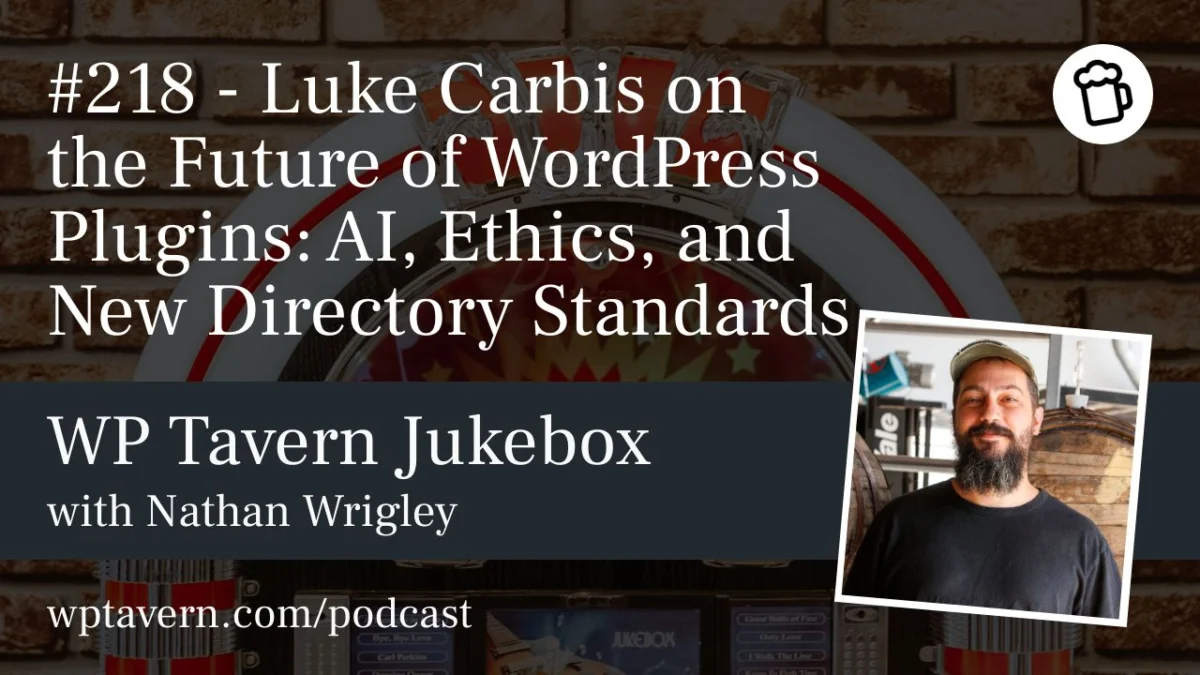
At the center of this dialogue is Luke Carbis, a seasoned WordPress contributor, developer, and member of the official Plugin Review Team. Following his keynote address at WordCamp Asia, titled "Beyond the Guidelines: It’s Time to Evolve Our Standards for a Safer Plugin Ecosystem," Carbis joined the Jukebox podcast to discuss why the current model is reaching a breaking point and what structural changes might be necessary to ensure the platform’s survival in an "AI-first" world.
The Plugin Deluge: A Symptom of AI Accessibility
The WordPress plugin repository has long served as a democratizing force for web development. However, the last 12 months have seen a seismic shift in submission volume. According to Carbis, the directory is processing roughly four times the number of submissions compared to the previous year.
This influx is directly attributable to the rise of generative AI. Tools that allow users to "vibe-code"—or generate functional code snippets with minimal technical oversight—have effectively lowered the barrier to entry. While this democratization is, in principle, a positive development for open source, it has created a massive bottleneck for the volunteer-led Plugin Review Team.
Despite the team implementing new tools and increasing personnel to handle the load, the sheer volume of submissions has created a "discovery crisis." Users are finding it increasingly difficult to identify high-quality, reliable plugins amidst a sea of AI-generated entries that often lack long-term maintenance plans or rigorous security auditing.
Chronology of a Crisis
The evolution of this challenge can be broken down into three distinct phases:
- The Pre-AI Stability: Three years ago, the Plugin Review Team successfully cleared the backlog, reaching near-zero wait times. The system was functioning as intended, with a manageable flow of human-authored, peer-reviewed code.
- The AI Inflection Point: With the mainstream adoption of LLMs (Large Language Models), the number of submissions exploded. The repository, designed for human-paced contributions, was suddenly confronted with machine-paced production capacity.
- The Current "Critical" Mode: While wait times are currently hovering around one week—a figure that is historically respectable—the pressure on the review team is constant. The focus has shifted from merely reviewing code to managing the sheer noise of the directory.
Supporting Data: Why "Discovery" is the New Battleground
The primary concern, according to Carbis, is no longer just the wait time for approval, but the efficacy of the directory’s discovery engine. Currently, the ranking system relies on a variety of signals: active installs, support forum responsiveness, and keyword density.
However, these metrics are increasingly prone to "gaming." Because the ranking algorithm is open source—a cornerstone of the WordPress ethos—it is transparent, which paradoxically makes it easier for developers to optimize for search visibility rather than user utility.
"If you have a plugin that has risen to the top, it’s going to rank better," Carbis noted. "But if you are a user looking for a specific tool, and the search results are cluttered with redundant or low-quality AI-generated plugins, you eventually stop using the directory entirely."
Proposed Remediation: Connecting the Ecosystem
Carbis proposes a two-pronged experiment to modernize the WordPress user experience:
1. The Connectors API
Carbis envisions a system where a user’s wordpress.org account is deeply integrated with their individual WordPress installs. By leveraging the new Connectors API—currently being developed for WordPress 7—users could sync their favorites and preferences across multiple sites. This would move the platform toward a more personalized discovery model, similar to modern app stores, while maintaining the open-source spirit.
2. The "Untrusted Sources" Experiment
Perhaps more radical is the proposal to allow users to link their Git repositories (such as GitHub) directly to their WordPress dashboard. Under this model, a user could pull custom or premium plugins directly from a trusted source into their site’s plugin management UI. This would solve the "distribution problem" for developers who aren’t looking for mass adoption but simply need a reliable way to deploy their code to multiple client sites.
The Commercial Marketplace Debate
Perhaps the most controversial suggestion involves the potential formalization of a commercial plugin marketplace within WordPress.org. Carbis suggests that if the foundation were to act as an intermediary for premium plugins, a portion of the revenue (e.g., 8%) could be earmarked for the Five for the Future program, supporting core contributors, WordCamps, and the Plugin Review Team.
"Introducing money into WordPress will have a big effect," Carbis acknowledged. "But we have a problem: people aren’t contributing enough. If we use a commercial model to fund the sustainability of the project, it might provide the shock the system needs."
While this remains a contentious topic—with many in the community fearing it violates the "free at the point of use" promise—Carbis argues that the current lack of momentum in the product space is equally dangerous. "We feel the ecosystem isn’t an exciting place to be anymore. There’s a lack of movement, a lack of new launches. This could be a way to generate excitement again."
Implications of Leadership and Ethics
The conversation inevitably turned to the role of WordPress leadership. Carbis highlighted a shift in the community’s mood following WordCamp Asia, noting that Matt Mullenweg has become significantly more active in directing project operations.
"I’ve decided to recast Matt in my mind from an Elon Musk-like figure to someone more akin to Steve Jobs or DHH—someone who is a bit rough around the edges, but visionary in their product thinking," Carbis explained. He argued that in a "seismic" environment defined by AI, the project cannot afford the "atrophy" of slow-moving committees.
The AI Disclosure Proposal
To address the ethical dimension of this shift, Carbis proposed a new metadata standard: AI Disclosure Headers.
By adding a simple header to plugin files, developers could voluntarily declare the extent of AI usage in their code—from "no AI" to "full AI-generated code." This would provide the community with the data needed to understand the landscape without imposing heavy-handed bans. It would allow users to make informed decisions and give the community a window into how AI is actually reshaping the software they use.
Conclusion: A Generation at the Precipice
The WordPress community is at a crossroads. As Carbis pointed out, the next generation of developers—Gen Z—often expresses a deep skepticism toward AI, viewing it through the lenses of environmental impact and human authenticity. If WordPress aligns itself too closely with an "AI-only" future, it risks alienating the very demographic it needs to remain relevant in the coming decades.
"We need to hedge," Carbis concluded. "We need to keep the humanity, the accessibility, and the community-first ethos that made WordPress what it is, while simultaneously being bold enough to experiment with new ways of working."
Whether or not the directory moves toward commercialization or adopts AI disclosure, one thing is certain: the era of "coasting" is over. WordPress is no longer just a CMS; it is a battleground where the future of open-source ethics, commercial viability, and machine-assisted creation will be decided. For now, the community watches, waits, and prepares to adapt to a landscape that is changing faster than ever before.