The digital advertising landscape has evolved into a multi-billion dollar ecosystem where the barrier to entry is deceptively low, but the cost of failure is remarkably high. In an era where Google’s advertising revenue exceeds $200 billion annually, the platform has become a primary growth engine for businesses ranging from local solo practitioners to multinational conglomerates. However, a stark reality persists: while the interface remains the same for a local plumber as it does for a Fortune 500 retailer, the margin for error has narrowed significantly.
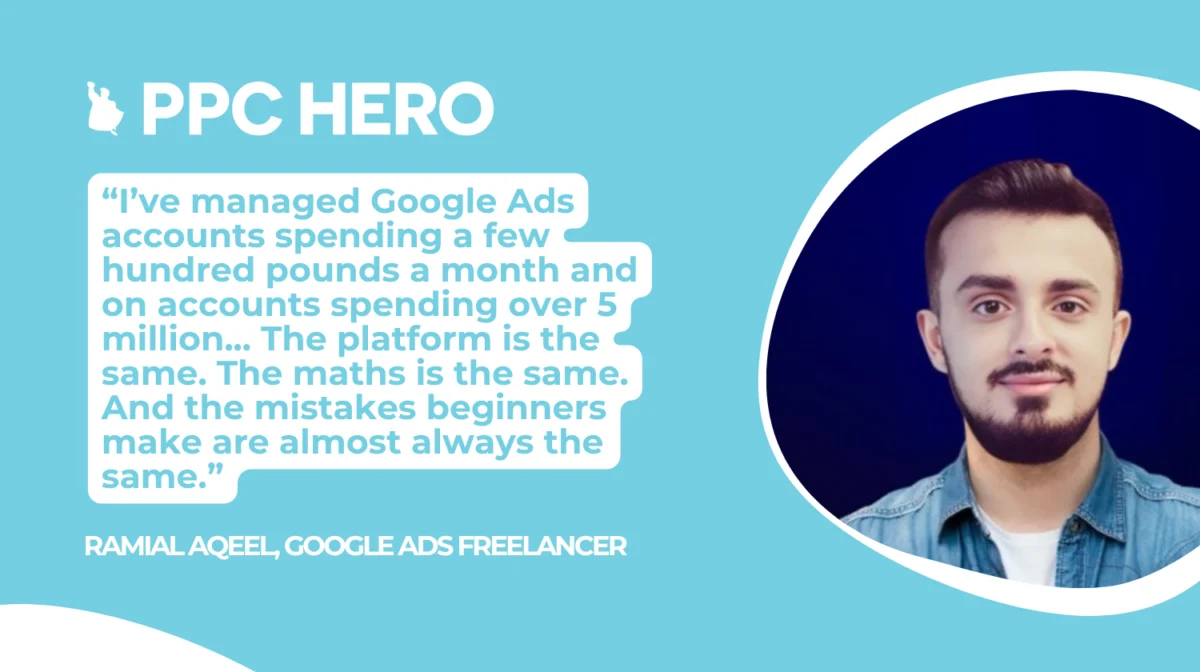
Industry veterans who have managed budgets ranging from £500 to over £5 million per month note a recurring pattern. Regardless of the scale, the fundamental mechanics of search engine marketing (SEM) remain constant. Yet, beginners consistently fall into the same traps, often depleting their entire monthly budget within the first week without generating a single viable lead.
Main Facts: The Foundation of Search Success
The core of a successful Google Ads strategy does not lie in "secret hacks" or complex bidding algorithms, but in the rigorous application of data integrity and structural simplicity. The most significant revelation from high-level account management is that the platform is essentially a mathematical engine. If the input data is flawed, the output—return on investment (ROI)—will inevitably be negative.
Experts identify several "non-negotiables" for any new account:
- Conversion Tracking as a Prerequisite: Running ads without tracking is classified as gambling, not marketing.
- Intent-Based Strategy: Prioritizing Search campaigns over automated "black box" solutions like Performance Max for initial learning.
- The Power of Negation: Understanding that what you don’t show up for is as important as what you do.
- The Landing Page Continuity: Recognizing that the ad is only 50% of the conversion equation.
Chronology: A Roadmap to Account Viability
To navigate the complexities of the Google Ads platform, practitioners recommend a disciplined, chronological approach to account setup. This sequence is designed to mitigate risk and ensure that every pound spent contributes to a learning outcome.
Phase 1: The Technical Infrastructure (Days 1-3)
Before a single keyword is selected, the technical foundation must be laid. This involves setting up conversion actions—specific behaviors such as form submissions, phone calls, or completed purchases.
"This is the part everyone wants to skip because it is fiddly and unglamorous," explains an industry consultant. "But without it, Google’s algorithm is optimizing in the dark. You aren’t running a campaign; you are guessing."
The chronology demands that these triggers be tested manually. A "fire-drill" approach—where the advertiser triggers the conversion themselves to ensure it registers in the Google Ads dashboard—is the only way to guarantee the account will receive the feedback loop it needs to improve.
Phase 2: Strategic Narrowing (Days 4-5)
Once tracking is verified, the focus shifts to campaign selection. While Google’s onboarding process frequently nudges users toward "Smart" campaigns or "Performance Max," experienced managers advocate for a "Search-First" methodology.
Search campaigns are built on user intent. When a user types a specific query, the advertiser provides a specific solution. This transparency allows the advertiser to see the "moving parts" of the auction, providing a clearer understanding of why a click happened and what it cost.
Phase 3: Structural Architecture (Days 6-7)
The final step before "Go-Live" is the organization of keywords into thematic ad groups. A common mistake is the "kitchen sink" approach, where dozens of unrelated keywords are crammed into a single group. Instead, a professional structure utilizes tight relevance: if a user searches for "Law Firm Manchester," the ad copy must explicitly reference "Law Firm Manchester." This relevance improves the Quality Score, which in turn lowers the Cost Per Click (CPC).
Phase 4: The Observation Period (Week 1 and Beyond)
After the campaign launches, the first seven days are treated as a "tuition period." During this time, the primary objective is not immediate profit, but the collection of search term data. This data reveals the gap between what the advertiser thought people would search for and what they actually typed.
Supporting Data: The High Cost of "Broad Match" Waste
Data from various digital marketing audits suggests that up to 40% of small business ad spend is wasted on irrelevant traffic. This waste is largely driven by "Broad Match" keywords—a setting that allows Google to show an ad for any query it deems "related" to the keyword.

For example, a company selling "premium leather boots" might find their ads appearing for "free boot repair" or "how to clean boots" if they utilize broad match without guardrails.
| Feature | Beginner Approach | Professional Approach | Impact on ROI |
|---|---|---|---|
| Tracking | None or "Page Views" | Hard Conversions (Leads/Sales) | High: Prevents "Ghost" Success |
| Campaign Type | Performance Max / Display | Manual Search | Medium: Increases Transparency |
| Match Types | All Broad Match | Phrase and Exact Match | High: Reduces Wasted Spend |
| Negative Keywords | None | Robust, Pre-built Lists | High: Filters Low-Intent Traffic |
Furthermore, the "Search Terms Report" serves as the primary financial audit tool. By identifying negative keywords—terms like "free," "jobs," "DIY," or "cheap"—advertisers can prevent their ads from appearing to users who have no intention of purchasing a premium service.
Official Responses and Expert Insights
While Google officially champions its AI-driven "Automated Bidding" and "Broad Match" features as the future of the platform, seasoned professionals urge caution for new accounts. The consensus among the "Hero Conf" community and veteran PPC (Pay-Per-Click) managers is that AI requires a "data runway" to be effective.
"Google needs data to work," says a senior account strategist. "You need a budget that gives the machine enough signals without bankrupting you while you figure things out. The biggest mistake is panicking on day four and changing everything. The algorithm is still learning, and constant changes reset that progress."
Google’s internal documentation often suggests that "more data is better," but experts argue that "better data is better." By starting with tighter match types (Phrase and Exact), an advertiser ensures that the data being fed into Google’s machine learning is of the highest possible quality. Only after the account has established a baseline of profitable conversions should the "guardrails" be loosened to allow for AI-driven expansion.
Implications: The Survival of the SMB in an AI Era
The implications of these findings are significant for the Small and Medium Business (SMB) sector. As Google Ads becomes increasingly automated, the "human" element of strategy shifts from manual bidding to "data feeding."
Businesses that fail to set up proper conversion tracking or fail to curate their search terms are effectively paying a "cluelessness tax." This tax manifests as high CPCs and low conversion rates, eventually pricing smaller players out of the auction.
Conversely, businesses that treat their first month as a period of "paid tuition"—setting a budget they can afford to lose while gathering data—position themselves for long-term dominance. They move from a state of "gambling" to a state of "investing."
The Landing Page Factor
The final implication involves the destination of the traffic. A common pitfall is the "cluttered homepage" syndrome. Professional analysis shows that even the most perfectly optimized ad campaign will fail if the landing page is slow, confusing, or lacks a clear Call to Action (CTA).
"Your ad is only half the job," the report concludes. "The page people land on does the rest. If the ad promised ‘Conveyancing services,’ the page should be about ‘Property Conveyancing,’ with a phone number or form they cannot miss."
Conclusion: The Path Forward
For businesses looking to launch their first Google Ads account this week, the order of operations is clear:
- Verify Tracking: Do not spend a penny until you can prove a conversion registers.
- Start Small: Use a single Search campaign with a clear, singular goal.
- Be Specific: Use Phrase and Exact match keywords to maintain control.
- Audit Daily: Check the Search Terms Report every 24 hours to add negative keywords.
- Patience: Allow the data to accumulate for at least 7-14 days before making significant structural changes.
In the high-stakes world of digital advertising, the winners are not those with the most complex setups, but those who do the "boring stuff" with the highest level of precision. By focusing on intent, relevance, and data integrity, new advertisers can transform Google Ads from a budget-burning liability into a scalable growth engine.