The landscape of digital advertising is currently standing at a precipice. As the industry approaches a critical September deadline, Pay-Per-Click (PPC) specialists and digital marketing directors find themselves caught between two extremes: a hurried, reactive implementation of Google’s latest automation suite, AI Max, or a hopeful avoidance of a transition that is, by all accounts, inevitable.
Google’s aggressive push toward AI Max—the evolution of what was once "Search Max"—represents a fundamental shift in how search intent is captured and how creative assets are deployed. For the first time, the industry is seeing the total convergence of generative AI (via Gemini), real-time intent signals, and keywordless targeting within the standard Search campaign framework.
Main Facts: What AI Max Represents for the Modern Advertiser
AI Max is not a standalone campaign type in the vein of Performance Max. Instead, it is an integrated suite of features designed to be activated within existing Search campaigns. At its core, the technology represents the final dismantling of the "manual control" era of search marketing.
The system functions through three primary mechanisms:

- Universal Broad Match Treatment: Once enabled, AI Max effectively treats all keywords as broad match, regardless of their original designation.
- Keywordless Expansion: The system moves beyond traditional keyword triggers to target users based on real-time intent signals across the Google ecosystem.
- Gemini-Powered Creative Assembly: Unlike previous iterations of Dynamic Search Ads (DSA), where advertisers maintained control over description lines, AI Max utilizes the Gemini Large Language Model (LLM) to dynamically generate headlines and descriptions in real-time.
For practitioners, the "September Deadline" is the focal point of current anxiety. This date marks the forced migration of several legacy features—specifically Dynamic Search Ads (DSA), Automatically Created Assets (ACA), and campaign-level broad match settings—into the AI Max infrastructure.
Chronology: The Road to the September Migration
The rollout of AI Max has been a deliberate, multi-year progression rather than a sudden pivot. Understanding the timeline is essential for recognizing that the current pressure to migrate is the culmination of over 18 months of development.
- Early 2025: Google quietly initiates a private beta for a feature set then referred to as "Search Max." This initial phase focused on testing the efficacy of combining keywordless targeting with traditional search structures.
- May 2025: At Google Marketing Live (GML), the company officially rebrands the suite as AI Max. The announcement highlights the integration of Gemini to handle the creative layer of search ads.
- Summer 2025: AI Max enters global beta. During this period, Google begins collecting the data that would eventually form its primary case studies, focusing heavily on enterprise-level accounts with high conversion volumes.
- April 30, 2026: Expanding the ecosystem, Google launches AI Max for Shopping in a closed beta. This version utilizes Merchant Center feeds to generate dynamic shopping ads for conversational and long-tail queries.
- Present Day: The industry enters the final countdown to the September deadline. Google begins notifying account holders that legacy DSA and ACA features will be automatically transitioned to the AI Max framework.
Supporting Data: The "Amplifier Effect" and the Case Study Gap
The narrative surrounding AI Max is often dominated by Google’s headline-grabbing performance statistics. However, independent audits and practitioners on the ground suggest a more nuanced reality. The data indicates that AI Max acts primarily as an amplifier.
The Risk of Amplifying Inefficiency
In accounts where AI Max has been reported as a failure, a consistent pattern emerges. These accounts typically suffer from:

- Poor Structure: Overlapping campaigns and mixed match types (e.g., having both exact and phrase match versions of the same keyword in one ad group).
- Diluted Signals: Low conversion volume or inaccurate tracking that provides the AI with "noisy" data.
- Query Crossover: Heavy internal competition between campaigns that AI Max exacerbates by broadening reach.
Data from independent audits shows that when AI Max is applied to a "messy" account, CPA (Cost Per Acquisition) can spike by as much as 40% as the algorithm explores irrelevant queries in an attempt to find volume.
The Mid-Market Silence
One of the most telling data points is the absence of mid-market and B2B lead generation examples in Google’s official documentation. Most featured case studies involve high-spend retail or travel brands with budgets exceeding $100,000 per month. For businesses spending between $3,000 and $10,000 per month, the lack of data suggests that AI Max may require a specific "data threshold" to function effectively—a threshold many smaller businesses have yet to reach.
Official Responses: Google’s Stance on Control vs. Automation
Google’s official communications regarding AI Max emphasize efficiency and the "intent gap." According to Google representatives, the traditional keyword-based model is no longer sufficient to capture the nuances of modern search behavior, which has become increasingly conversational and unpredictable.
Google’s core arguments for the transition include:

- Creative Agility: By using Gemini to assemble ads, Google claims advertisers can achieve higher Ad Strength scores and better relevance by matching the specific phrasing of a user’s query.
- Simplified Management: The "forced" migration of DSA and ACA into AI Max is framed as a way to reduce account complexity, allowing marketers to focus on high-level strategy rather than granular keyword management.
- Real-Time Optimization: Google asserts that AI Max can process millions of signals (location, time of day, previous search history) in milliseconds—something manual bidding and keyword matching simply cannot replicate.
However, when pressed on the issue of regulated industries (Finance, Healthcare, Legal), Google’s response has been to point toward "Text Guidelines" and "Final URL Exclusions." They maintain that while the AI generates the content, the advertiser is responsible for setting the boundaries within which the AI operates.
Implications: Preparing for the Post-September Landscape
The transition to AI Max signals the end of the "tinkering" era of PPC. The implications for agencies and in-house teams are profound, shifting the job description from "Account Manager" to "Data and Strategy Architect."
1. The Necessity of "Earning the Right" to Automate
The most significant implication is that an account must be "healthy" before it can successfully adopt AI Max. Marketers must now treat campaign readiness as a prerequisite. This includes:
- Tracking Integrity: Moving beyond basic conversion tracking to include offline conversion imports and micro-conversions (e.g., brochure downloads or pricing page visits) to provide the AI with deeper signals.
- Structural Cleanliness: The elimination of redundant match types is no longer a "best practice"—it is a requirement. AI Max requires a single, clear signal per ad group to learn effectively.
2. The Compliance and Creative Risk
In regulated sectors, the loss of control over specific headline phrasing is a significant liability. The implication is that "Final URL Expansion" must be handled with extreme caution. If an AI redirects a user to a page lacking necessary legal disclaimers, the advertiser bears the legal burden. This necessitates a more rigorous approach to URL exclusion lists and page feed management.

3. The Future of Shopping
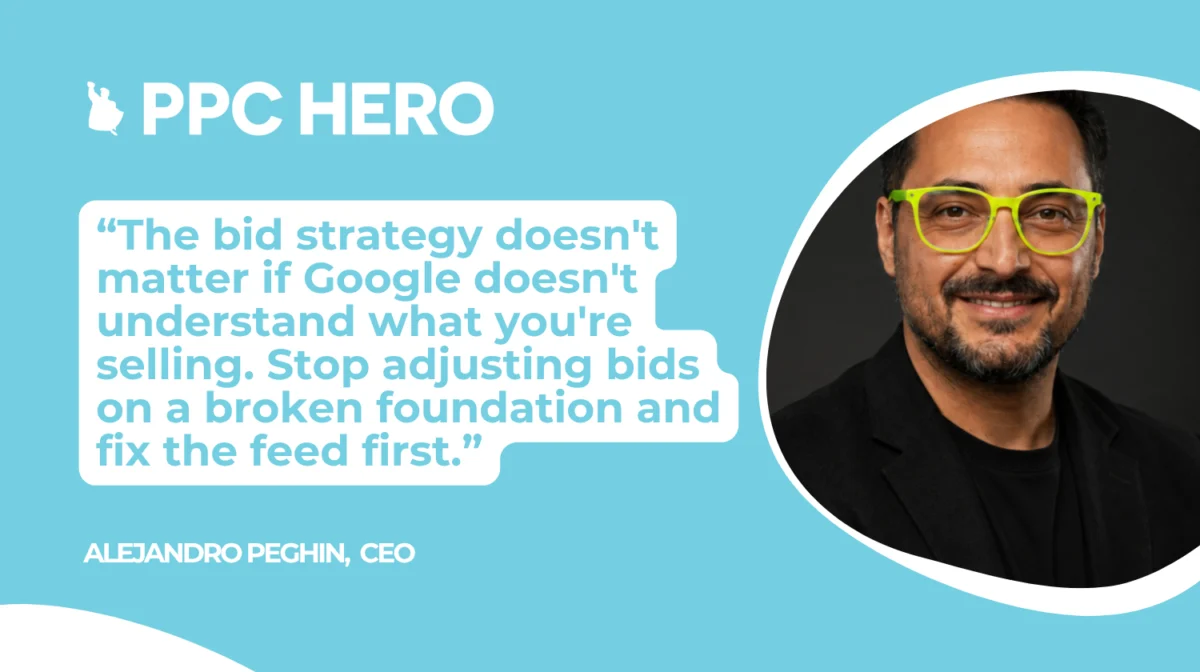
With AI Max for Shopping on the horizon, the focus shifts from bidding to Feed Health. The quality of Merchant Center data—titles, attributes, and image metadata—will become the primary lever for performance. Advertisers who have neglected their product feeds will find themselves at a severe disadvantage as the AI relies on that data to navigate long-tail, conversational queries.
4. Strategic Budgeting
AI Max requires "headroom." Enabling these features on a budget-constrained campaign is counterproductive, as the algorithm will be unable to complete the "learning phase" necessary to optimize the new, broader query set. This may force advertisers to consolidate budgets into fewer, high-volume campaigns rather than spreading spend across dozens of niche categories.
Conclusion: Strategy Over Panic
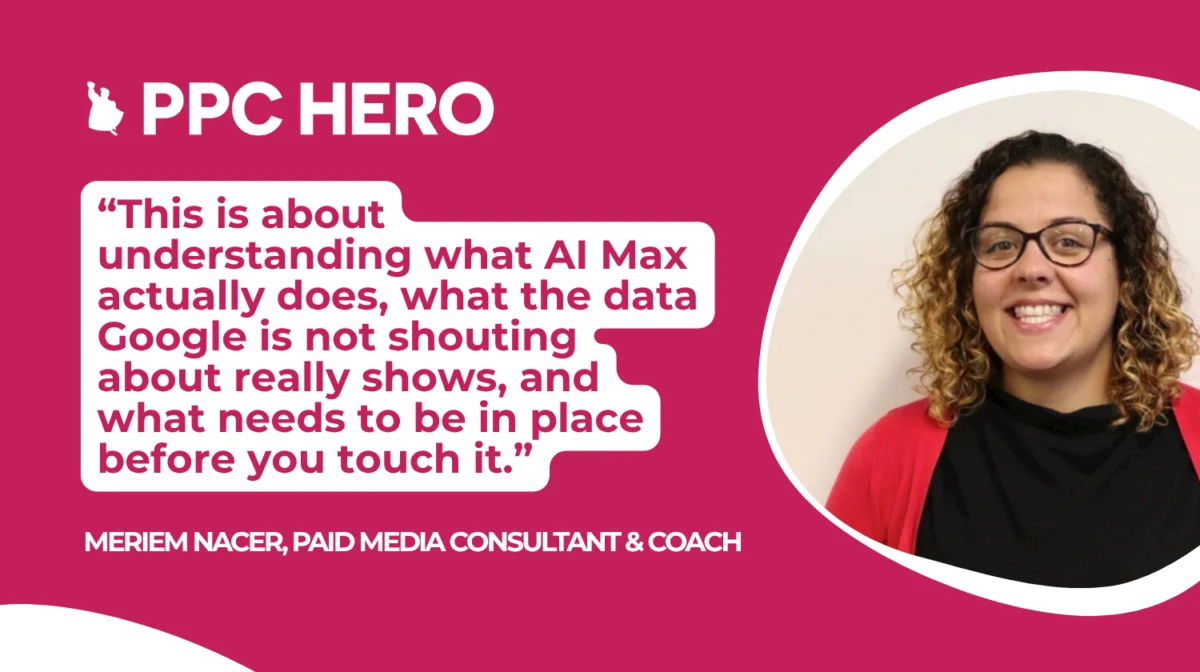
The September deadline for AI Max is not a signal to abandon search strategy, but a call to elevate it. The automation is coming, but its success is entirely dependent on the foundation it is built upon.
As the industry moves forward, the most successful PPC practitioners will be those who refuse to be rushed into "tick-box" exercises by reps or directors. Instead, they will focus on auditing their tracking, cleaning their account structures, and ensuring their landing pages have the topical depth required for an AI to interpret them. AI Max is an powerful tool, but like any tool, it is only as effective as the person wielding it. The goal for the coming months is simple: don’t just enable—prepare.