The WordPress ecosystem, long recognized for its democratization of the web, is currently undergoing a silent but seismic shift. While the project is often viewed through the lens of code commits, plugin releases, or theme design, a powerful, human-centric movement is currently taking root in classrooms, libraries, and university lecture halls across the globe. This "educational revolution" within WordPress is not merely about teaching technical skills; it is about building a sustainable future for open source by cultivating the next generation of contributors, users, and leaders.
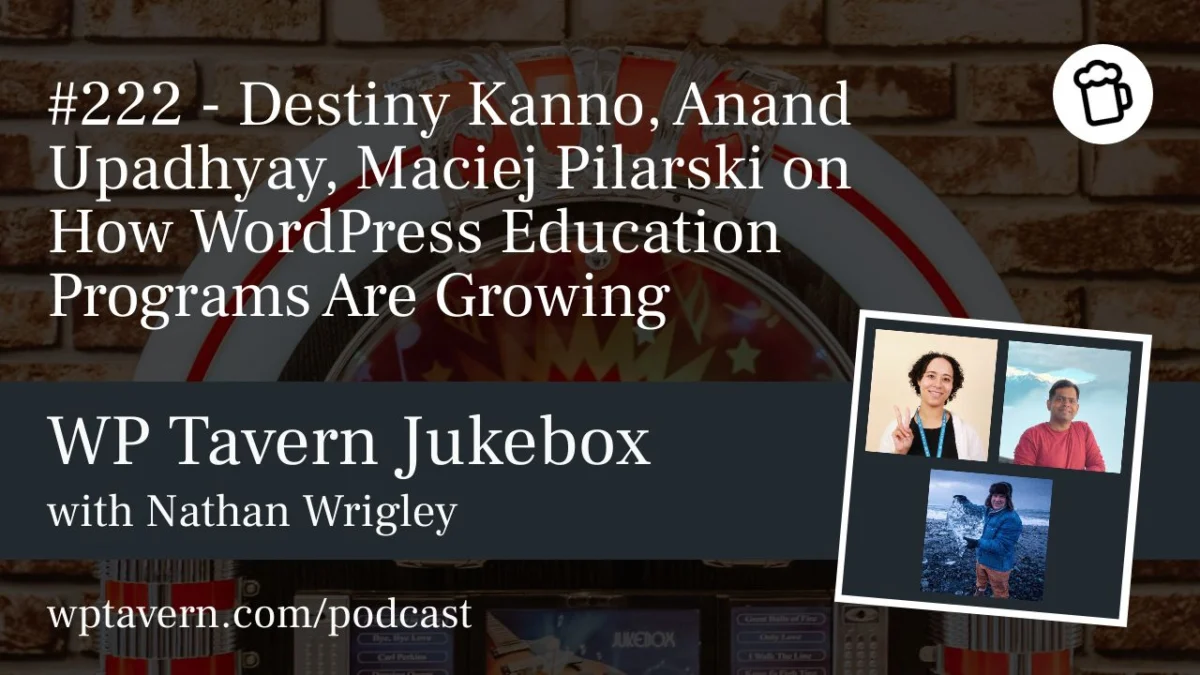
In a recent episode of the Jukebox Podcast from WP Tavern, host Nathan Wrigley sat down with three pivotal leaders in this space: Destiny Kanno, an education program manager sponsored by Automattic; Anand Upadhyay, founder of WPVibes and a key community organizer; and Maciej Pilarski, a veteran community contributor and administrator of the WordPress Credits Program. Together, they unpacked the complex, interconnected web of initiatives that are rapidly transforming how WordPress knowledge is disseminated.
The Three Pillars: Understanding the Initiative Landscape
To grasp the scale of this movement, one must first distinguish between the three primary programs currently driving this expansion. While they are often grouped together in casual conversation, each serves a specific demographic and educational purpose.
1. The WordPress Credits Program
The Credits Program is the formal academic arm of the initiative. Managed by the WordPress Foundation, it bridges the gap between higher education and the global open-source community. Students enrolled in university courses can earn official academic credit by contributing to the WordPress project.
These internships range from 50 to 150 hours, spanning an entire academic semester. The process is rigorous, involving:
- Mentorship: Students are paired with vetted community mentors who shepherd them through the project.
- Contribution Tracks: Whether it is core development, documentation, or polyglots, students contribute to official "Make WordPress" teams.
- Certification: Upon completion, students receive an official certificate from the WordPress Foundation, signed by Executive Director Mary Hubbard, and a badge on their WordPress.org profiles, creating a verifiable portfolio for future employment.
2. WordPress Campus Connect
If the Credits Program is the formal university structure, Campus Connect is the agile, boots-on-the-ground ambassador. It is a series of official WordPress events designed to be barrier-free. These events can take place anywhere—from a university lecture hall to a local public library.
Campus Connect is inclusive of all age groups and skill levels. Whether it is high school students learning the basics of site-building or vocational learners exploring digital marketing, these events focus on immediate, hands-on experience. They often act as the "foot in the door" that eventually leads institutions to consider more formal partnerships or student clubs.
3. Student Clubs
Student Clubs are the backbone of long-term sustainability. They represent an "in-campus meetup" program, driven by students for students. After an introductory Campus Connect event, the momentum is maintained through regular, peer-led meetings. These clubs function similarly to official WordPress Meetups but provide a safe, familiar environment for students to experiment, host hackathons, or teach their peers. By lowering the stakes and fostering a community of practice, these clubs ensure that WordPress remains a vibrant, ongoing interest rather than a one-off workshop.
Chronology of Growth: From Experimentation to Global Scale
The journey of these initiatives has been defined by rapid, organic growth. What started as an experiment at the University of Pisa—where humanity students were the first to participate in the Credits Program—has exploded into a global phenomenon.
- Late 2024/Early 2025: The programs began to coalesce. Initial confusion regarding naming and overlapping goals prompted leaders to formalize the distinctions between the Credits Program, Campus Connect, and Student Clubs.
- May 2025: WordPress Campus Connect was officially recognized as an event series. This status granted it the institutional weight needed to gain trust from universities and schools worldwide.
- Post-WordCamp Asia 2025: The movement saw a massive surge. Connections made during the conference led to the first partnerships in Africa, specifically in Uganda, demonstrating that the model is globally scalable.
- Current State: The initiatives are now entering a phase of professionalization. New tools, such as the "Meetup Activity Library," are being developed to provide facilitators with standardized guides and slide decks, further lowering the barrier to entry.
Supporting Data: The Impact in Numbers
While the community leaders emphasize that the true impact of education is long-term, the statistical growth of these programs is undeniable.
- Reach: Since becoming an official event series in May 2025, WordPress Campus Connect has completed 42 events across 71 institutions, reaching over 5,500 students.
- Conversion: A significant measure of success is the "repeat factor." Many institutions, such as those in Ajmer, India, have moved from hosting a single workshop to requesting ongoing partnerships, with events selling out within hours of being announced.
- Program Participation: The Credits Program currently boasts 450 students enrolled globally, with 75 graduates who have successfully navigated the program.
- Accessibility: By moving away from technical-only focus and including marketing, design, and humanity-based contributions, the program has successfully broadened its reach to students who might have otherwise felt excluded from open-source participation.
Official Perspectives: A Shift in Community Focus
The conversation around education has moved from the periphery to the center of the WordPress community. This shift is largely attributed to the support of leadership figures, including Executive Director Mary Hubbard, who has consistently championed education on the global stage.
The Role of Facilitator Training
A critical bottleneck identified by the panel was the need for scalable facilitator training. As the number of students increases, the community must ensure it has enough mentors to provide quality guidance. The ongoing development of the Facilitator Training Program is designed to empower community members, faculty, and educators to lead these sessions with confidence.
Bridging the Generation Gap
A significant motivation for these leaders is the "aging" of the WordPress contributor base. Maciej Pilarski noted that what brought the current generation to WordPress—the conditions of the early 2000s—may not be the same factors that attract Gen Z or Alpha. By bringing students into the community, these initiatives are injecting fresh perspectives into how the software and the community should function.
Implications: The Future of WordPress
The implications of these educational programs are profound. First, they address a critical risk to the WordPress project: the need for a continuous influx of new users and contributors. Without a pipeline of young, engaged talent, the community risks stagnating.
Second, these programs are fundamentally changing the culture of the community. By moving from a "code-first" mindset to an "education-first" mindset, WordPress is becoming more accessible and empathetic.
"We are building the next generation of contributors," says Pilarski. "They will bring a completely different perspective, and that is exactly what the project needs to stay relevant."
A Call to Action
The panel concluded with a clear message to the listeners: this is not an exclusive club. Whether you are an agency owner, a freelancer, or a hobbyist, there is a role for you. By volunteering to mentor a student, facilitating a workshop, or simply reaching out to a local school, community members can contribute to the sustainability of the WordPress ecosystem.
As the community looks toward the upcoming flagship events like WordCamp Europe, the focus will continue to be on showcasing student achievements and refining the pedagogical tools that make this global growth possible. The "virtuous cycle"—where one event leads to a club, which leads to a credit partnership, which inspires a new contributor—is officially in motion. The WordPress education movement is no longer just an experiment; it is the scaffolding upon which the next twenty years of the project will be built.