By Nick Babich and Gleb Kuznetsov
The digital landscape is currently undergoing a seismic shift. If you are an active user of platforms like Instagram, Twitter, or Pinterest, you have likely encountered striking, hyper-realistic, and surreal artworks generated almost entirely through text prompts. Powered by sophisticated machine learning models such as OpenAI’s DALL-E 2, Midjourney, and Stable Diffusion, these tools have democratized visual creation.
Yet, this sudden explosion of AI-generated art has triggered an existential debate across creative industries: Will artificial intelligence render human designers obsolete?
To address this question, we must look beyond the initial hype. This article explores the current state of design, tackles the most pressing questions creative professionals have about AI, and offers a strategic roadmap for how designers can leverage these emerging technologies to enhance their craft rather than replace it.
The Reality of Traditional Design: 95% Craft, 5% Art
Mastering any sophisticated discipline takes time, and design is no exception. While designers have access to a robust arsenal of digital tools, the process of honing genuine design talent demands years of dedicated practice. To reach a point where an individual can conceptualize and execute a compelling, high-quality artwork or user interface, they must invest years of trial and error.
Regardless of a creator’s innate talent, traditional design requires painstaking physical and digital execution. It is rarely possible to leap from a mental concept to a finished, polished solution in a matter of minutes. Consequently, professionals often quip that design is 95% grueling craft and only 5% inspired art.
An enormous amount of energy is poured into the visualization phase, only for designers to frequently discover that their initial ideas fail to resonate with their target audience. Once a project is published or pitched, unfavorable feedback can send weeks of meticulous work straight to the digital garbage bin.
However, the advent of AI promises to drastically compress this timeline. Soon, creators will bypass the tedious mechanics of manual execution, transitioning from traditional makers into visionary directors who instruct intelligent systems on what to build.
Burning Questions: Ethics, Employment, and the Law
As artificial intelligence reshapes the creative sector, professionals are naturally raising serious concerns regarding ownership, employment stability, and copyright law.
Can I Take Credit for AI-Generated Artworks?
The short answer is yes, legally speaking, but ethically, you probably shouldn’t. Many current AI generation platforms offer limited control over the granular creation process. Designers input a plain-text prompt and rely on the model’s internal algorithms to "work its magic," often with little visibility into how the final pixels were derived.
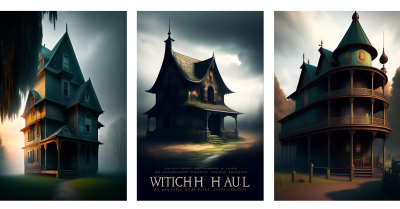
Because these models restrict deep directional control, raw AI outputs frequently lack a distinct human touch and personal resonance. However, this is rapidly changing. Future iterations of design tools are expected to offer vastly superior customization, allowing creators to imprint their distinct identity deeply into the generative pipeline.
Will AI Take My Job?
The anxiety rippling through the artistic community is palpable. With AI tools capable of generating stunning visuals in seconds, many companies are opting for automated solutions to cut costs. This trend not only displaces freelance and in-house talent but also threatens to depress the overall market value of digital art as audiences grow accustomed to instantaneous generation.
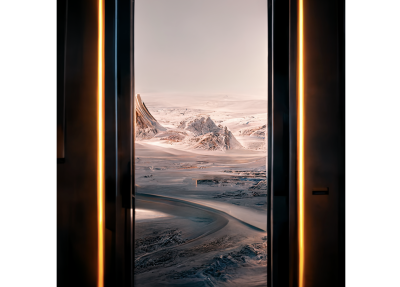
Yet, history suggests a more nuanced outcome. During the Industrial Revolution of the 19th century, textile workers smashed mechanical looms out of fear of mass unemployment. While machines permanently altered labor dynamics by absorbing heavy, monotonous tasks, they did not eliminate human workers; instead, they multiplied productivity.
The same principle applies to generative AI. As Steve Jobs famously observed when describing computers as a "bicycle for our minds," AI acts as a vehicle for human creativity. It will not replace human ingenuity; it will supercharge it.

The Looming Shadow of Copyright Infringement
In early 2023, a coalition of artists filed a landmark class-action lawsuit against Stability AI, Midjourney, and DeviantArt, alleging widespread copyright infringement. The core grievance: these models were trained on billions of copyrighted images scraped from the web without creator consent or compensation.
While determining the legal boundaries of machine learning training sets remains complex, the industry is rapidly adapting. Major stock photo repositories, such as Shutterstock, have begun forging partnerships with AI developers to offer legally compliant, AI-generated imagery while reimbursing original contributors. Clearer regulatory frameworks are inevitable as governments and courts worldwide catch up to technological reality.
A New Chapter: Co-Creation with Artificial Intelligence
Rather than acting as a replacement, AI is pioneering a new era of co-creation. Acting as a "second brain," these systems ingest vast amounts of data to provide creators with unexpected inputs, functioning as exceptional engines for discovery and exploration.
1. Visual Exploration and the Evolution of Mood Boards
AI models encapsulate the collective visual history of millions of images, enabling creators to instantly explore uncharted artistic directions. Creators can utilize two primary workflows:
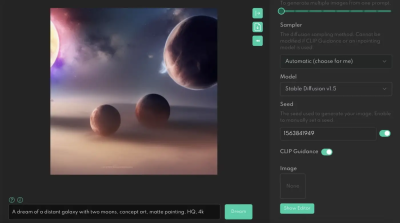
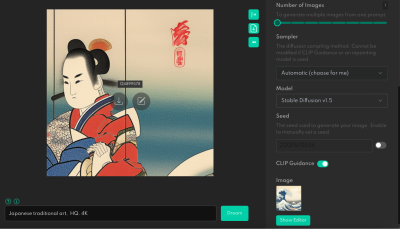
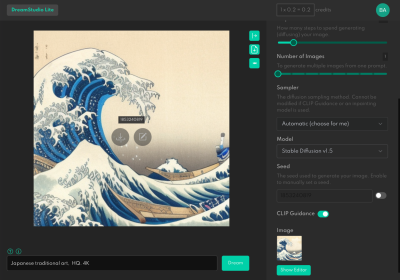
- Text-to-Image Generation: Users input descriptive prompts accompanied by technical settings. Key parameters include sampling steps (which dictate how many iterative refinements the AI performs) and seed numbers (which allow designers to replicate or closely reproduce specific stylistic outcomes).
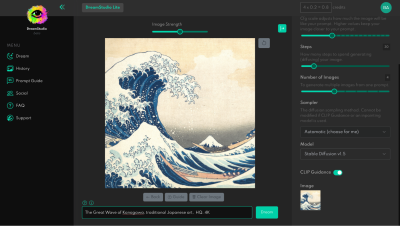
- Image-to-Image (Img2Img) Generation: Creators feed an existing image—such as a classic painting—into the system alongside an "Image Strength" parameter. Setting strength low (e.g., 5%) gives the AI total freedom to reimagine the source material, while setting it high (e.g., 95%) yields subtle variations.
This capability effectively replaces traditional manual mood boarding, allowing designers to query systems for conceptual inspiration rather than manually clipping images from Pinterest.
2. Rapid Product and UI Design Implementation
Going from a product idea to a functional prototype traditionally takes weeks. With tools like Midjourney, designers can draft wireframes, establish use-case contexts, and render high-fidelity mobile app interfaces in minutes by using targeted prompts (e.g., --v 4 --q 2 for version and quality parameters).
While current AI outputs frequently exhibit artifacts—such as distorted hands or nonsensical interface text—these limitations are rapidly diminishing. Soon, AI will inherently understand industry best practices, automating tedious UI audits and accelerating the transition from abstract brainstorming to tangible product visualization.
3. Populating Virtual Worlds and the Metaverse
As immersive digital environments expand, content production will become the primary bottleneck for platform designers. AI will be indispensable in populating the metaverse, allowing creators to act as high-level directors who generate expansive virtual cities, interactive spaces, and synthetic characters through natural language prompts.
Conclusion: Embracing the Human Future of Design
AI-powered solutions are evolving far beyond simple asset-generation utilities; they are becoming deeply integrated members of creative teams. The true power of next-generation artificial intelligence will lie in its ability to learn from and about individual creators, synthesizing aesthetics that honor personal taste and brand identity.
The future of design remains exceptionally bright. By stripping away repetitive technical friction, AI will empower a broader population of people to express their creativity, ultimately enriching our visual culture and transforming the way we build the digital world.