In the realm of digital product development, language serves as the primary conduit for connection. While writers rely on syntax and vocabulary to convey narrative, designers utilize a "visual language"—a deliberate orchestration of typography, color palettes, iconography, and spatial relationships—to facilitate communication between a system and its user. A robust visual design language (VDL) is not merely an aesthetic layer; it is the fundamental infrastructure upon which intuitive user experiences are built.
This article explores the complexities of developing a comprehensive design system, drawing on the 2016 collaboration between the design agency Fantasy and the technology giant Huawei. By examining the creation of the EMUI 5 interface, we uncover how a structured, research-driven approach to visual language can transform a fragmented OS into a cohesive, globally resonant digital experience.
The Problem: A Digital Tower of Babel
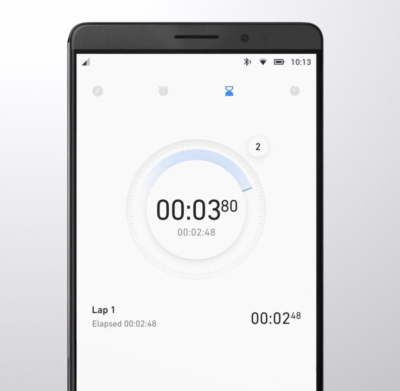
In 2016, Huawei faced a significant challenge common to rapidly scaling technology firms. Despite its massive market presence, the company lacked a unified visual identity across its mobile operating system, EMUI. The existing interface was essentially a highly customized, inconsistent iteration of Android.
The root of the issue lay in organizational silos. Multiple teams—comprising UX designers, interaction designers, and graphic designers—worked in isolation. Without a shared framework or a central "source of truth," every team relied on their own interpretations of branding and usability. The result was a disjointed experience that failed to communicate a coherent vision to the consumer. For the user, the interface felt unpredictable; for the developers, integrating new features was a logistical nightmare. It was, in essence, a digital Tower of Babel, where internal communication breakdowns manifested as external product confusion.
The Pillars of Visual Design Language
To move forward, the design team at Fantasy, led by insights from lead UX researchers and creative directors, identified four primary objectives that a new VDL must fulfill:
1. Achieving Universal Consistency
Digital design lacks the physical constraints of industrial design, which can often lead to "feature creep" or erratic styling. By defining reusable, cross-platform components, a design system ensures that every button, toggle, and menu behaves identically, regardless of the screen size or device. This standardization is critical for a global manufacturer like Huawei, which must maintain a recognizable brand footprint across millions of devices.
2. Establishing Brand Recall
In a saturated market, generic design is the enemy of recognition. A product’s personality—its "brand DNA"—is expressed through the deliberate use of typefaces, illustrations, and motion. When a design language is authentic and consistently applied, it creates an emotional anchor for the user, allowing them to instantly distinguish the product from its competitors.
3. Prioritizing Clarity through Minimalism
Complexity is often mistaken for sophistication. The team prioritized a minimalist GUI, stripping away unnecessary clutter to focus the user’s attention on the content that matters most. By reducing the number of elements on every screen, the interface becomes a guide rather than a distraction.
4. A Framework for Innovation
Visual design is often the most cost-effective and immediate way to signal innovation. In a competitive phone market, where technical specifications often converge, the interface becomes the primary differentiator. A strong VDL provides the flexibility to experiment with new interaction paradigms while remaining anchored to a recognizable core.
The Research Methodology: A Five-Stage Rubric
Creating a design language is not an act of artistic whim; it is a rigorous product development process. The team followed a specific five-stage rubric: Research, Ideate, Design, Validate, and Implement.
The UI Audit: Deconstructing the OS
Before building, one must understand what already exists. The team conducted a comprehensive UI audit of the existing Android-based OS. By breaking the OS down into "atomic" elements—shadows, line weights, color values, and transitions—they were able to see how individual components functioned in isolation versus how they formed the greater whole. This audit served as a diagnostic tool, revealing the inconsistencies that needed to be purged.
Understanding the User-Brand Gap
A successful brand identity is a bridge between the company’s intent and the user’s perception. Using demographic research, the team categorized target user groups across various global regions. They analyzed what these users cared about, their digital expectations, and their cultural sensibilities. This ensured that the design language would feel "at home" for a user in North America just as much as one in Asia or Europe.
The Competitive Landscape
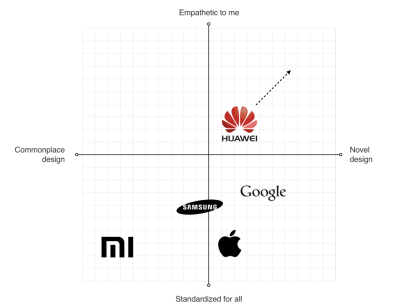
The team conducted a deep-dive analysis of four major market competitors. By mapping these competitors on a quadrant diagram based on their design philosophies, the team identified "white space" in the market. They evaluated strengths (e.g., Apple’s scalability and standardization) and weaknesses (e.g., inconsistent iconography or the overuse of blur effects) to carve out a unique position for Huawei.
Ideation: The Philosophy of Organic Design
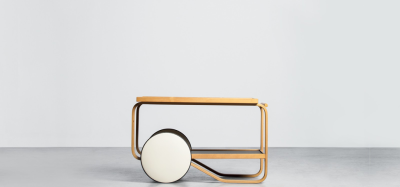
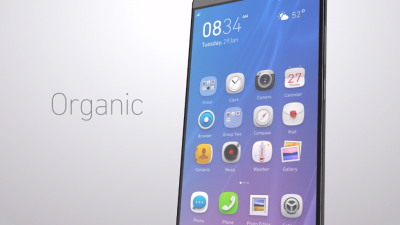
To achieve global resonance, the team drew inspiration from "Organic Design," a philosophy pioneered by figures like Frank Lloyd Wright. The premise is simple: design should foster harmony between humans and nature. By incorporating smooth curves, natural color gradients, and fluid, intuitive shapes, the team sought to make the EMUI 5 interface feel less like a machine and more like an extension of the human experience.
Motion as a Narrative Tool
Motion design was not treated as a decorative afterthought but as a functional necessity. A "Motion Manifesto" was drafted to ensure every transition had a purpose—whether to provide haptic-like visual feedback or to bridge the gap between two app states. This approach utilizes the "aesthetic-usability effect," which suggests that users are more forgiving of minor functional issues when they perceive an interface as beautiful and "alive."
The Testing Loop: Build, Measure, Learn
The team adopted a rapid, iterative approach. They integrated the VDL into high-fidelity functional prototypes, employing a "dogfooding" strategy where the design team and employees used the software daily to find friction points.
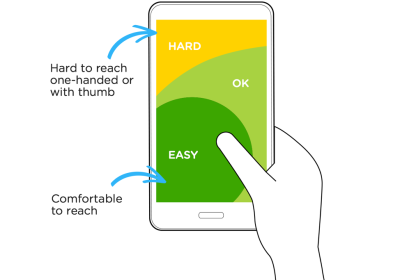
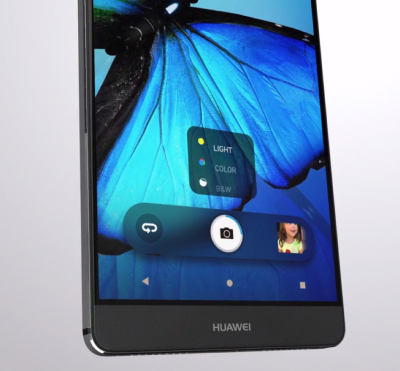
One major breakthrough involved the "Thumb Zone" research. Analyzing typical mobile usage, the team realized that while screens were getting larger, the most critical functional elements remained at the top of the interface—the most difficult area to reach with a thumb. Despite the technical difficulty, they successfully advocated for moving these controls to the bottom of the screen, a change that eventually became an industry standard.
The Reality of Implementation: A Cautionary Note
The transition from a high-fidelity design concept to a production-ready OS is where many ambitious projects falter. While the design team envisioned a seamless experience, the reality of working within a massive, multinational corporation meant that some compromises were inevitable.
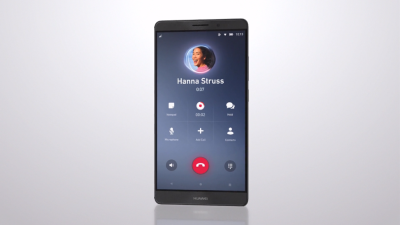
In many large-scale organizations, engineering teams—often pressured by strict launch timelines—may sacrifice design nuances for technical expediency. This highlights a critical lesson: a design language is only as strong as its enforcement. When the creators of a design system are not included in the implementation process, the final product often deviates from the original vision.
The success of a product like macOS serves as the gold standard here. Its iconic window-minimization animation was initially deemed "impossible" by engineers, but Steve Jobs’ refusal to compromise forced the engineering team to find a solution. It is this level of top-down support for design integrity that separates good products from great ones.
Implications for Future Design Systems
The story of EMUI 5 is a testament to the fact that visual design is not just "how it looks." It is the heartbeat of the user experience. A well-constructed design language acts as a universal solvent, clearing away the friction between teams and ensuring that the final user journey is clear, consistent, and delightful.
As the digital landscape continues to evolve, the demand for cohesive visual systems will only grow. Organizations that treat their design language as a core asset—investing in deep research, rigorous testing, and, crucially, defending that vision during implementation—will find themselves better equipped to navigate the complexities of the modern global market.
In conclusion, a robust visual design language is not a static set of rules; it is a living ecosystem. It empowers teams to collaborate, enables users to navigate with confidence, and, ultimately, ensures that technology feels like a natural, helpful, and sophisticated partner in the user’s daily life.