Across the corporate landscape, the narrative surrounding Artificial Intelligence has shifted. A year or two ago, the primary obstacle to AI adoption was skepticism. Today, that barrier has largely evaporated. Employees are actively integrating AI into their daily routines, using Large Language Models to draft emails, summarize meetings, and generate code. Yet, despite this bottom-up enthusiasm, many organizations find their AI initiatives trapped in a "pilot purgatory"—stalled experiments that never mature into enterprise-level assets.
The core issue is no longer resistance; it is organizational readiness. According to the 2026 State of AI Report, while more than 50% of professionals have successfully moved beyond the initial experimentation phase, a staggering 71% of organizations still lack a formalized AI roadmap. This misalignment creates a vacuum where individual innovation occurs without strategic oversight, leaving companies vulnerable and inefficient.
The State of AI: Bridging the Strategy Deficit
The data from the 2026 report paints a clear picture of a disconnect between workforce agility and corporate governance. While employees are pushing the boundaries of what is possible, leadership often lacks the structured framework necessary to harness these efforts.
An AI strategy is not merely a technical deployment; it is a holistic business evolution. To move beyond the hype, leaders must audit their organizations across six critical dimensions: strategy, human capital, data infrastructure, governance, technology stacks, and operational workflows. Failure to address any of these pillars can lead to fragmented, unscalable, and potentially risky outcomes.
1. Strategic Alignment: Beyond the Hype
The most frequent cause of AI project failure is a lack of purpose. Organizations often adopt tools because they feel pressured by the "AI race," rather than because they have identified a specific, high-impact business problem.
The Diagnostic Phase
To achieve readiness, leaders must ask: Are our AI goals tethered to our quarterly business objectives? Does every department have a shared definition of what "success" looks like?
At the upcoming Marketing AI Conference (MAICON 2026), sessions such as The AGI Chronicles: The Final Frontier will address the critical skill of separating genuine value from marketing noise. By focusing on ROI rather than novelty, organizations can prioritize high-impact use cases that demonstrably improve bottom-line results.
2. The Human Capital Factor: Empowering the Workforce
Technology is a catalyst, but people are the engine. An organization cannot rely on a handful of "AI champions" to carry the load; it requires a baseline of AI literacy across every department.
Bridging the Knowledge Gap
True readiness involves more than providing access to a ChatGPT subscription. It requires:
- Clarity: Employees must understand how AI augments, rather than replaces, their specific expertise.
- Guidelines: A clear policy on which tools are approved for use and which proprietary data is strictly off-limits.
- Cultural Buy-in: Encouraging a shift from being passive users to active "AI builders."
Sessions at MAICON 2026, such as AI Adaptation: The People Side of Scale, dive deep into the behavioral changes required to make AI adoption stick. Furthermore, From AI Users to AI Builders provides a roadmap for non-technical teams to move toward developing their own lightweight, custom solutions.
3. Data Integrity: The Foundation of Intelligence
AI is only as reliable as the data it consumes. Many organizations are discovering that their "data lake" is actually a "data swamp"—unstructured, outdated, or inaccessible information that leads to hallucinations and inaccurate outputs.
Measuring What Matters
Before scaling AI, companies must conduct a data audit:
- Locality: Where does the data live?
- Usability: Is the data clean, tagged, and accessible?
- Governance: Is the information sensitive or proprietary?
Measurement is equally critical. In the era of AI-driven search and content generation, traditional KPIs are being rewritten. Presentations like Redefining ROI and AI-Driven Content Performance Monitoring at MAICON will provide frameworks for tracking the business impact of AI across the entire advertising funnel, utilizing lessons from global leaders like General Motors, Shell, and The Home Depot.
4. Governance and Guardrails: Responsible Innovation
There is a common misconception that governance is an anchor meant to slow down innovation. In reality, effective governance is a safety rail that allows teams to move faster with confidence.
Establishing the Rules of Engagement
An AI-ready organization has pre-established policies regarding:
- Data Privacy: Protecting PII (Personally Identifiable Information).
- Compliance: Adhering to evolving global legal standards.
- Accountability: Defining who is responsible when an AI system produces an error.
The session The Playbook for Marketing Transformation at MAICON 2026 offers a blueprint for strategic governance, ensuring that scale does not come at the cost of legal or brand risk.
5. Technology Integration: Right-Sizing the Stack
The temptation to "buy everything" is high, but true AI maturity is about integration, not accumulation. Many organizations are already sitting on a goldmine of AI capabilities within their existing SaaS stack.
The "Build vs. Buy" Dilemma
Leaders should first audit their current technology for existing AI features before commissioning expensive custom builds. For those gaps that remain, a systematic onboarding process is essential to ensure new tools don’t create "silos" of information. A Beginner’s Guide to Vibe Coding and various Tech Demos at MAICON 2026 will show attendees how to evaluate platforms and build lightweight, high-utility solutions that solve specific bottlenecks.
6. Workflow Reinvention: Redesigning the "How"
The most profound impact of AI occurs when organizations stop using it to automate old, inefficient processes and start using it to create entirely new workflows.
Challenging the Status Quo
True AI-readiness requires a "blank slate" approach. Instead of asking, "How can we make this report 10% faster?" companies should ask, "How should this process look if we could eliminate the manual heavy lifting entirely?"
At MAICON 2026, How to Reimagine and Build Workflows That Weren’t Possible Before explores the transition from manual, linear processes to agentic, automated systems. This is where organizations move from "doing the same thing with AI" to "doing things that were previously impossible."
Implications for the Future
The divide between the 29% of organizations with an AI roadmap and the 71% without will only widen as the technology matures. We are moving from the era of "AI exploration" into the era of "AI industrialization."
Organizations that fail to formalize their approach will find themselves managing a chaotic web of shadow IT, while those that prioritize governance, data hygiene, and workforce training will gain a significant competitive advantage. The goal is to build an ecosystem where AI is a transparent, reliable, and scalable partner in the business process.
Conclusion: Preparing for the Next Phase
The path forward is not found in the latest headline-grabbing tool, but in the deliberate, incremental work of aligning technology with human intent. For those looking to bridge the gap between experimentation and enterprise-level execution, the opportunity to learn from industry peers is vital.
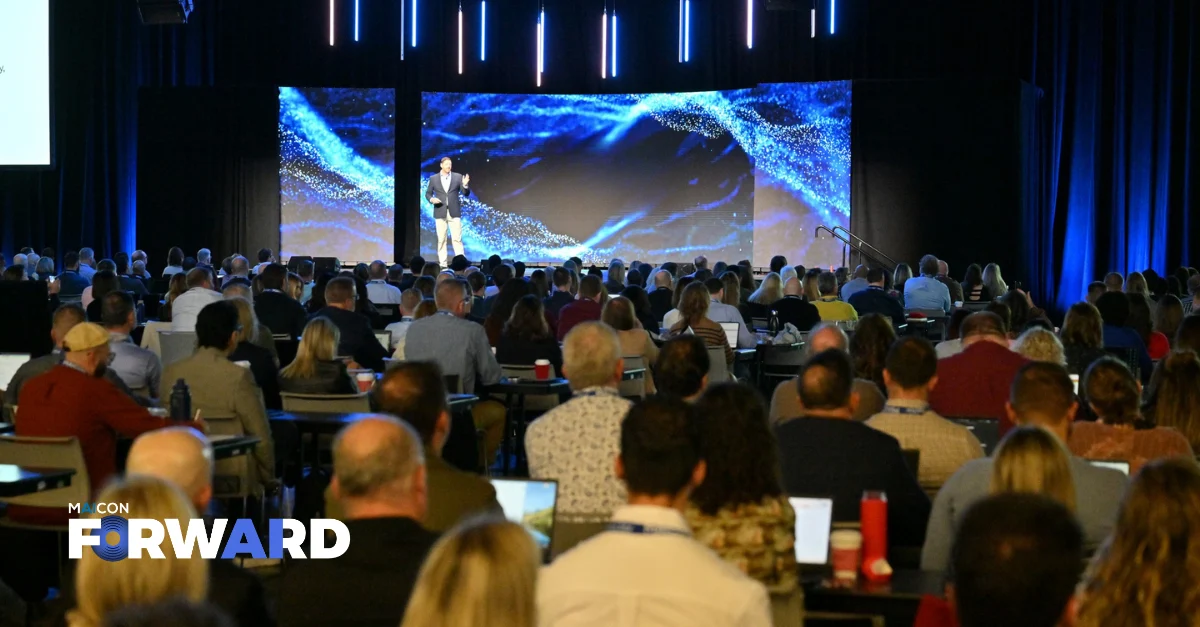
Join us at MAICON 2026, held October 13–15 in Cleveland, Ohio. This three-day immersion is designed for leaders and practitioners who are tired of the hype and ready to build. Through hands-on workshops, case studies from global brands, and strategic framework sessions, you will leave with a clear, actionable roadmap to turn your AI initiatives into tangible, measurable business results.
The future of your organization depends on the strategy you set today. Don’t let your AI potential remain trapped in the experimental phase—join the conversation at MAICON and start building for the future.