Main Facts: The Shift in Freelance WordPress Economies
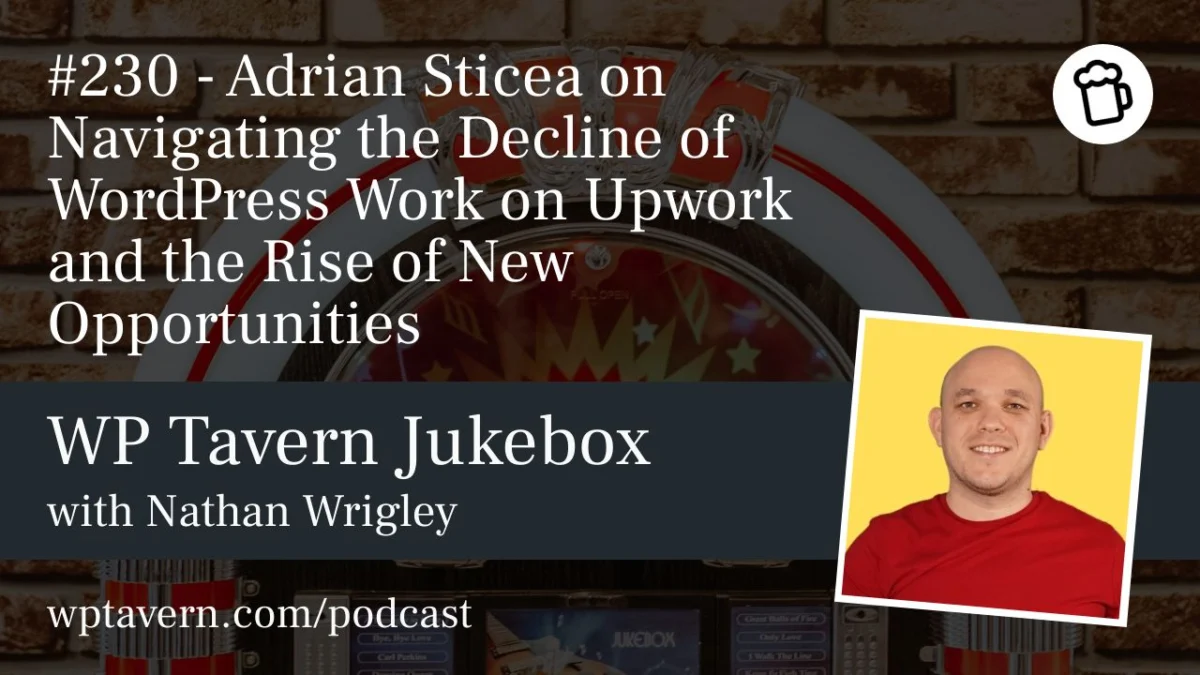
The digital freelance landscape is undergoing a profound structural transformation, particularly for seasoned developers working within the WordPress ecosystem. For over a decade, platforms like Upwork served as lucrative hubs connecting highly skilled professionals with global clients. However, a recent viral LinkedIn post by veteran WordPress developer Adrian Sticea has cast a sharp spotlight on a sobering reality: the near-complete evaporation of high-level WordPress project work on the Upwork marketplace.
Sticea, an industry professional with over a decade of experience spanning enterprise-level clients, agency stints, and major contributions at companies like IBM and StellarWP, shared data illustrating a stark trajectory. Over a period of several years, his incoming project volume from Upwork steadily declined from supplying nearly 100% of his freelance pipeline down to zero.
Rather than signaling the death of WordPress itself, this trend highlights a broader realignment within the digital economy. The intersection of artificial intelligence tooling, macroeconomic tech sector corrections, market saturation, and evolving client preferences has fundamentally shifted how companies source technical talent. For freelancers accustomed to the frictionless, transactional nature of online marketplaces, the message is clear: the era of passive lead generation via platforms like Upwork is closing, forcing a return to traditional, relationship-driven business models.
Chronology: A Decade of Transition in the WordPress Marketplace
To understand how the freelance pipeline shifted so dramatically, it is necessary to examine the trajectory of the WordPress market alongside platforms like Upwork over the past ten to fifteen years.
- 2013–2016 (The Foundation): Adrian Sticea entered the WordPress space, initially balancing local customer support and web development before transitioning into full-time freelancing. During this era, WordPress was enjoying massive mainstream growth. Marketplace platforms provided an accessible bridge for developers seeking clients without the friction of traditional networking.
- 2016–2020 (The Enterprise Pivot): Sticea relocated to the US, working through digital marketing agencies before landing a role at IBM in 2018 to work on massive educational WordPress platforms. Simultaneously, marketplaces like Upwork maintained a steady stream of secondary income and side projects, functioning as a reliable, automated fountain of leads.
- 2020–2022 (The Pandemic Boom and Saturation): The global shift to remote work catalyzed a massive surge in demand for digital infrastructure. Tech companies hired aggressively to support quarantined populations. However, this period also marked the beginning of saturation on freelance platforms as an influx of new developers entered the market.
- 2022–2024 (The Tech Correction and AI Acceleration): Following the post-pandemic normalization, the tech sector experienced widespread layoffs. Concurrently, the rapid evolution of generative AI tools drastically increased developer efficiency. Sticea’s internal data shows the first significant erosion of his Upwork pipeline during this window—dropping from 100% to 80%, and subsequently down to 40%.
- 2025–2026 (The Zero Point and the Pivot): By early 2025, Sticea returned to full-time freelancing after a tenure at StellarWP. By 2026, his Upwork project volume hit zero. Recognizing the platform’s dried-up reservoir for complex, developer-centric projects, he pivoted successfully toward LinkedIn networking, direct agency partnerships, and temp agency recruiters.
Supporting Data and Market Dynamics: Why Did Upwork Dry Up?
The visual representation of Sticea’s data—a line graph showing a prolonged plateau followed by a steep descent to zero—resonated deeply across the professional tech community, sparking viral discussions and corroborating testimonies from agency owners and fellow freelancers.
Several intersecting factors explain why complex WordPress work has diminished on Upwork:
1. The Efficiency Paradox of Artificial Intelligence
AI has fundamentally altered the economics of coding. While AI has not replaced the need for human developers—clients still require professionals to build and maintain robust systems—it has dramatically accelerated developer output. A task that previously required a team of engineers can now be managed by fewer individuals. Consequently, the raw volume of required engineering hours has contracted.
2. Commoditization of Simple Builds vs. Migration of Complex Work
The types of projects available on marketplaces have polarized. Simple brochure websites and presentation sites are increasingly built using streamlined visual page builders (like Wix, Squarespace, or Framer) or rapidly prototyped via AI "vibe coding." Meanwhile, complex enterprise-level projects, custom plugin developments, and legacy codebase maintenance have largely migrated away from Upwork entirely. Companies seeking specialized, high-tier engineering talent now prefer vetted ecosystems (such as Codeable or Toptal) or enterprise staffing firms.
3. Economic Pressures and Price Sensitivity
Following macroeconomic shifts and widespread tech layoffs, corporate budgets have tightened. Platform users report that increasing hourly rates on Upwork immediately results in zero client engagement. The marketplace has become hyper-sensitive to pricing, driving developers into a race to the bottom that seasoned, high-rate professionals refuse to enter.
Industry Perspectives: Adapting to the New Paradigm
The experiences shared by Sticea reflect a broader industry reckoning. The convenience of digital marketplaces—where a developer could secure contracts through back-and-forth messaging without ever stepping outside their comfort zone or engaging in face-to-face networking—created a false sense of security.
Relying exclusively on a single marketplace carries structural vulnerabilities:
- Zero Long-Term Network Effects: Marketplace interactions are transactional. A satisfied client may leave a platform review, but they rarely fold the developer into their broader professional network or provide organic referrals.
- The "Handcuffed" Effect: Developers who anchor their businesses to a single platform risk finding their pipelines instantly severed if algorithms change, platform fees escalate, or client demographics shift.
- Erosion of Perceived Seniority: Platforms flatten expertise. A developer with two decades of hardcore WordPress architecture experience can find themselves competing on paper with junior developers backed by AI tools, complicating the justification of premium hourly rates.
Despite these challenges, professionals who proactively diversify their acquisition strategies are finding that the work has not vanished—it has simply relocated.
Implications: The Return to Relationship-Driven Business
For WordPress freelancers and agencies watching the marketplace model stutter, the path forward requires a return to foundational business principles that predate the internet.
Sticea’s successful pivot offers a blueprint for navigating this new era:
- Embracing Direct Professional Networking: Leveraging platforms like LinkedIn not merely as broadcasting channels, but as tools for organic relationship-building.
- Cultivating Agency Partnerships: Rather than hunting for isolated, one-off clients, establishing ongoing relationships with digital agencies that require specialized, advanced WordPress development or legacy code maintenance on an as-needed basis.
- Engaging with Vetted Tech Recruiters: Partnering with specialized temp agencies and tech recruiters who pre-vet candidates, allowing developers to command appropriate rates through human-to-human validation.
- Playing the Long Game: Shifting away from the disposable, transactional nature of marketplace gigs and focusing on sustainable, long-term client relationships that naturally generate recurring work and peer-to-peer referrals.
The decline of WordPress work on Upwork is not an indictment of WordPress’s viability as an enterprise CMS, nor is it the end of freelance web development. Rather, it marks the end of an era of passive digital prospecting. For developers willing to step away from the keyboard, engage in real-world networking, and lean into their deep technical expertise, the modern web ecosystem continues to offer rich, highly rewarding opportunities.