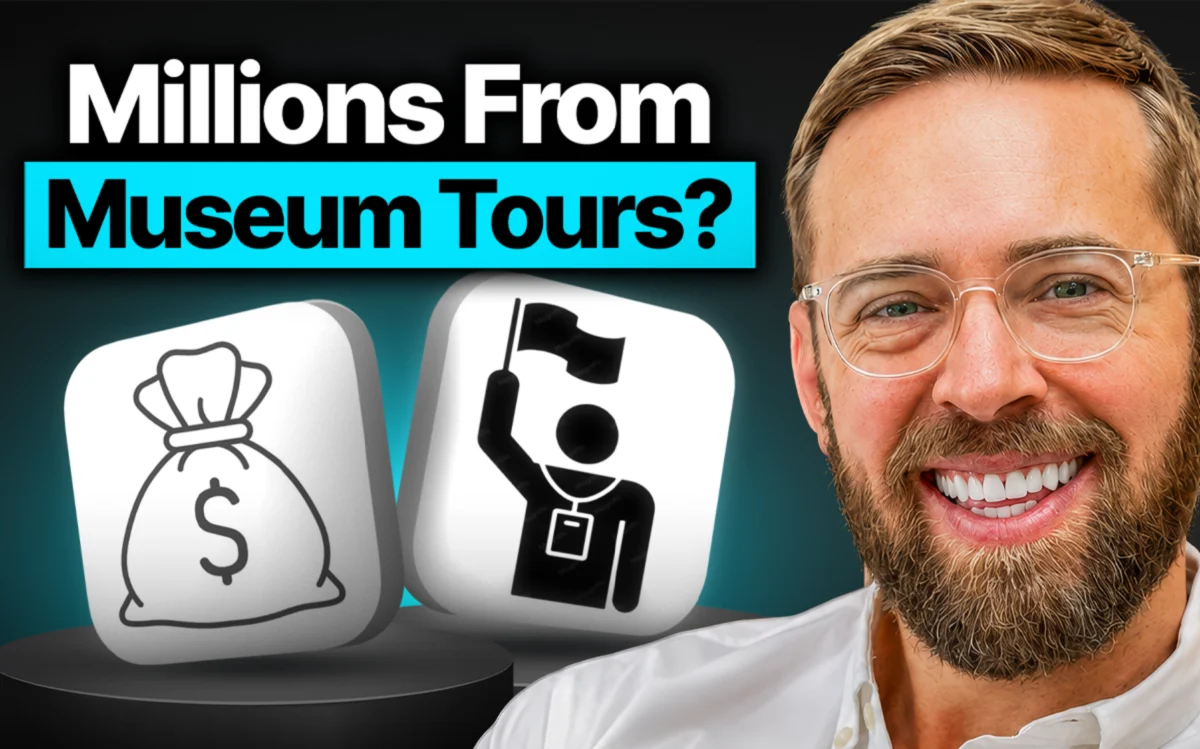
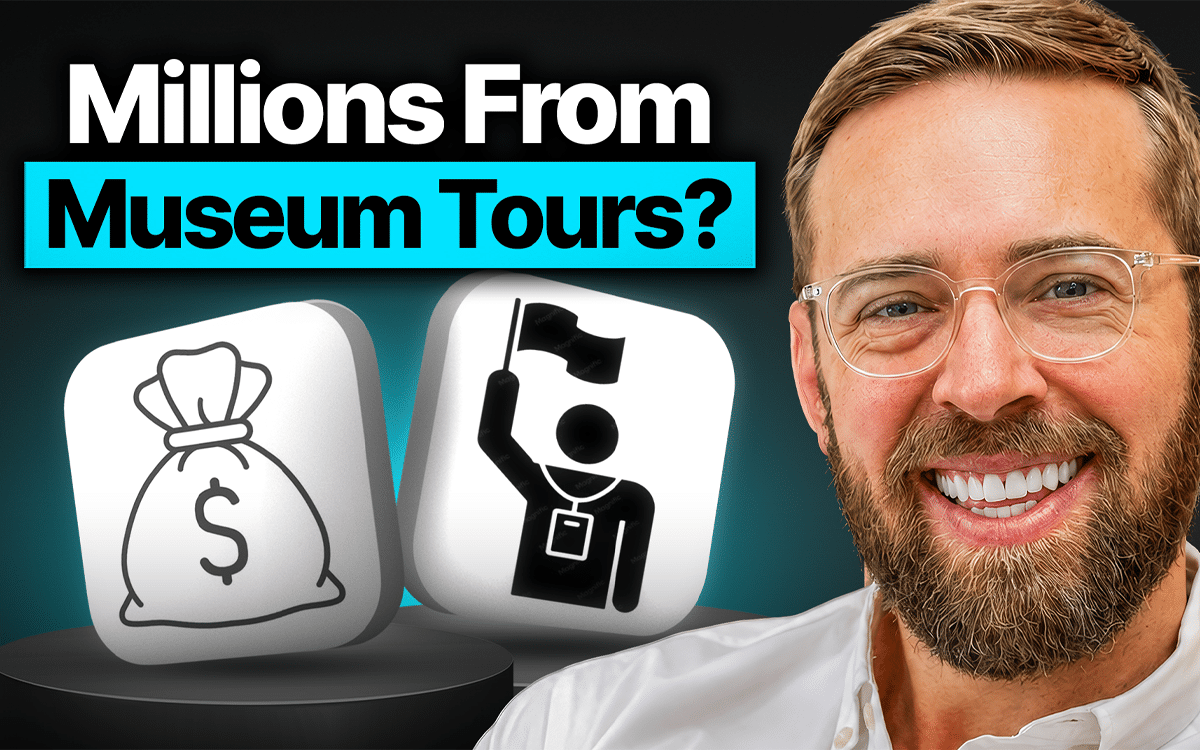
In the fast-paced landscape of digital marketing and business acquisitions, few founders carve paths as idiosyncratic as Nick Gray. Known best as the founder of Museum Hack—a disruptive tour company that sold for millions—Gray has spent his career identifying overlooked industries, injecting them with unorthodox engagement strategies, and scaling them.
In a recent episode of the Niche Pursuits podcast, Gray sat down for an atypical interview that challenged conventional marketing wisdom. The conversation bridged two distinct eras of Gray’s entrepreneurial career: how he scaled a side hobby in New York City’s Metropolitan Museum of Art into a multi-million-dollar acquisition, and why he believes the humble personal website is making a powerful comeback in the age of generative search engines and Artificial Intelligence (AI).
Main Facts: The Evolution of Nick Gray’s Ventures
The discussion on Niche Pursuits highlighted three major milestones in Gray’s entrepreneurial evolution:
- Museum Hack: A rogue, highly entertaining museum tour business that scaled to multiple cities, generating between $5 million and $10 million in revenue before its eventual acquisition in 2019.
- The 2-Hour Cocktail Party: A 2022 bestselling, workbook-style guide designed to help professionals master the mechanics of hosting small, high-impact gatherings of 15 to 25 people.
- PersonalWebsites.org: Gray’s newest venture, launched roughly a year prior to the interview, which builds and manages fast, static personal websites for roughly $29 per month.
Rather than adhering to rigid, traditional business frameworks, Gray’s career underscores a single, overarching philosophy: take undervalued, personal, or analog experiences, strip away the corporate stiffness, and rebuild them to be inherently shareable, human, and optimized for modern trust dynamics.
Chronology: From Casual NYC Tours to the Personal Web
The Genesis of Museum Hack
Gray’s entrepreneurial journey did not begin in a venture capital boardroom; it started inside the halls of the Metropolitan Museum of Art. After moving to New York City, Gray began visiting the Met regularly, casually showing friends around for fun.
Unburdened by an art history degree or traditional tour-guide training, Gray approached the museum from an outsider’s perspective. Instead of focusing on dry dates and textbook facts, he curated stories around gossip, wealth, romance, historical rivalry, and the strange, hidden details that traditional museum docents typically skipped. His target audience wasn’t fine-art aficionados; it was people who actively believed museums were boring.
Crossing the Monetization Rubicon
Word of mouth quickly expanded Gray’s circle of friends. After a prominent blog featured his tours as one of the top things to do in New York City, demand surged past 1,000 interested participants.
Faced with overwhelming demand, Gray had to decide whether to keep the tours as a hobby or monetize them. He implemented a modest ticket price of $19 to $29. Ironically, on his very first paid tour, he refunded everyone’s money simply because he was having so much fun.
However, charging for the experience fundamentally changed the customer dynamic. It introduced accountability, increased perceived value, and shifted the positioning from "free museum access" to "an elite, highly curated entertainment experience."
Scaling Beyond the Founder
A major pitfall for personality-driven enterprises is the founder’s inability to step out of the daily delivery role. Critics warned Gray that Museum Hack could never scale because he was the product.
Gray defied this assumption by developing a rigorous, unconventional hiring strategy. He sought out performers, freelancers, and high-energy personalities who could replicate his style and stage presence. Once the formula was proven in New York, the company expanded to Washington, D.C., and eventually other major urban markets like Los Angeles and San Francisco. Success hinged on two primary operational pillars: high visitor demand and a deep, flexible pool of freelance talent.
Bridging the Gap with Institutions
In its early days, Museum Hack operated as a renegade entity. The company was unsanctioned by the museums, leading to institutional friction and occasional attempts by venues to shut them down.
Over time, the relationship matured into a strategic partnership. Museum Hack began purchasing standard $79 tickets that fully covered the museum’s baseline admission fees (often around $25 per guest). This alignment of financial incentives transformed Museum Hack from an outsider threat into a dependable revenue partner for major cultural institutions.
The 2019 Acquisition and Pandemic Pivot
By 2019, Museum Hack had scaled into a multi-million-dollar operation. Although the company generated between $5 million and $10 million in total system-wide value, it plateaued near $3 million in direct annual sales. Having successfully removed himself from daily operations, Gray was approached by his leadership team with an offer to buy the company.
The acquisition relied on an uncommon full-seller-financing structure: the buyers put down zero dollars upfront, agreeing to pay Gray out over time using company profits—a testament to the high level of internal trust he had cultivated.
Months after the sale, the COVID-19 pandemic struck, shutting down physical museums worldwide and dropping the company’s revenue to zero. The new owners executed a strategic pivot into remote, virtual team-building experiences. Looking back, Gray views this painful reset as a blessing in disguise that ultimately drove the company toward leaner margins and a more resilient business model.
The Authorial Pivot: The 2-Hour Cocktail Party
In 2022, seeking a new creative challenge, Gray published The 2-Hour Cocktail Party. While the project served a branding function, Gray wanted it to be intensely tactical rather than a generic thought-leadership essay.
Investing roughly $60,000 into top-tier design, layout, and publishing assistance, he created a step-by-step workbook for hosting gatherings. The book reinforced a core marketing truth: long-form educational products build deep trust far more effectively than fleeting social media posts or short-form video clips.
Entering the Personal Website Space
Gray’s most recent endeavor, PersonalWebsites.org, stems from a 25-year personal habit. Having maintained his own personal website for a quarter-century, Gray credits the asset with generating career opportunities, facilitating high-level introductions, and shaping his digital reputation.
Priced at approximately $29 per month, the service targets founders, executives, freelancers, and local business owners who need a clean, authoritative hub on the web.
Supporting Data and Technical Architecture
During the Niche Pursuits interview, the conversation turned technical when Gray evaluated the personal website of host Jared Bauman (JaredBauman.com). Gray praised the site’s use of professional photography, speaker highlight reels, and strong social proof, while recommending the expansion of the site’s "surface area" to give search engines and AI models richer context.
To understand the mechanics behind Gray’s new agency, consider the following structural metrics:
- Pricing Model: ~$29/month baseline service fee for setup and management.
- Current Traction: Roughly 80 active clients generating between $3,000 and $4,000 in monthly recurring revenue (MRR) within its first year.
- Technical Stack: Migration of client sites from traditional WordPress environments to a static setup utilizing Payload CMS and Astro.
- Performance Impact: Moving to a static architecture routinely boosted Google PageSpeed Insights scores from the high 80s (87–88) to a near-flawless 99.
Official Responses and Industry Perspectives
The interview also addressed the changing landscape of business literature in the age of Large Language Models (LLMs). Gray questioned whether writing traditional business nonfiction books still yields the highest return on investment for entrepreneurs. With generative AI tools summarizing books and answering complex queries instantly, traditional formats face intense competition from newsletters, podcasts, and video essays.
Furthermore, Gray emphasized the growing importance of Entity Clarity in Search Engine Optimization (SEO) and Generative Engine Optimization (GEO). Many entrepreneurs and local business owners make the mistake of blurring their personal identity with their corporate entity.
For search engines and AI models (such as ChatGPT, Claude, and Google Gemini), distinguishing between Jared Bauman the person and 201 Creative the business is vital. A dedicated personal website acts as a foundational anchor, allowing machines to accurately attribute achievements, relationships, and expertise to the correct entity.
Implications for Modern Entrepreneurs
Gray’s trajectory from museum disruptor to personal web advocate offers several critical takeaways for contemporary business owners:
- Reputation is a Proactive Asset: Waiting until a negative search result or crisis occurs to manage your digital footprint is a reactive mistake. Owning a clean, authoritative personal website allows individuals to control their primary narrative before AI algorithms write it for them.
- Lean Architecture Wins: By shifting personal sites to static frameworks (Payload CMS and Astro), businesses can achieve lightning-fast load times and pristine mobile performance with minimal maintenance overhead.
- The Power of Human Connection: Whether running quirky museum tours, hosting intimate 15-person cocktail parties, or building a personal website, Gray’s career proves that scaling a business does not require losing its human element.
As digital algorithms continue to evolve, the businesses and individuals who thrive will be those who clearly define who they are, build deep trust through authentic mediums, and take control of their digital identity across the open web.