As artificial intelligence rapidly transitions from a novelty chat tool into an enterprise-grade infrastructure, businesses face a critical crossroads. While the vast majority of professionals routinely use models like ChatGPT or Claude for one-off tasks, a much smaller, highly efficient tier of organizations is harnessing these tools to build fully autonomous "AI employees."
According to workplace automation experts, building an AI employee is an entirely different discipline than casual prompting. It involves transforming transient chat interactions into permanent, trained, and scheduled systems capable of running core business functions autonomously.
Main Facts: Moving Beyond the Chat Window
The core thesis advanced by enterprise automation specialists—such as Callan Faulkner, co-creator of this operational framework—is that most teams underutilize AI. A typical employee might spend an hour conversing with Claude to draft a custom sales proposal, only to repeat the exact same manual, scratch-pad process the next time a similar task arises. They rarely save reusable instruction sets, accumulate knowledge bases, or train the AI to function as a predictable, repeatable system.
By contrast, an AI employee is defined as a trained, reusable AI system designed to perform a specific business function consistently—often matching or exceeding human execution speed and accuracy.
- The Scale Advantage: Organizations adopting this model achieve remarkable revenue-to-headcount ratios. For instance, businesses implementing these frameworks are scaling toward tens of millions in revenue with lean core teams of human workers.
- Redefining Productivity: Rather than replacing human staff, AI employees relieve human workers of tedious, repetitive tasks (such as formatting carousels, writing routine copy, or researching competitors), elevating them into roles focused on strategy, editing, and creative direction.
- The Emerging Skills Gap: The modern workplace is already bifurcating. Professionals who fail to learn how to direct AI systems find themselves outpaced by colleagues who can produce tenfold the volume of work in a single day, shifting the value proposition from raw output generation to high-level strategic oversight.
Chronology: The Step-by-Step Blueprint to Building Your First AI Employee
Transforming a raw language model into a reliable autonomous worker requires a structured, methodical approach. Industry practitioners recommend a four-stage implementation lifecycle.
Phase 1: The Self-Audit and Workflow Identification
The process begins with an internal audit of daily, weekly, and monthly tasks. Professionals examine how they spend their hours, identifying tasks that generate revenue but fail to spark creativity, or those operating below a high hourly value threshold (e.g., routine content creation, slide deck outlining, or newsletter drafting).
- The Mindset Shift: Workers must learn to embrace "shortcut-seeking as a new work ethic." Finding the fastest path to an A-plus output is no longer a professional liability, but a competitive advantage.
- The Creator-to-Editor Transition: Even tasks where a professional excels should be audited. When trained properly on historical workflows, AI can frequently match or surpass individual output quality, turning the human operator into an editor and supervisor.
Phase 2: The AI Interview Method and Context Building
Once a target task is selected, creators open a fresh chat session in an advanced environment like Claude. Instead of commanding the AI to execute immediately, the user establishes context—describing their role, company objectives, and standards for excellence—and issues a specific directive: Interview me with a series of high-impact questions to extract my exact process.
- Leveraging Voice Input: Because AI requires rich context to deliver exceptional results, experts strongly recommend using voice-to-text transcription tools (such as Wispr Flow). Speaking naturally allows users to articulate complex nuances and domain expertise far faster than typing, which naturally invites self-editing.
- The Board of Directors Technique: For complex decisions, users can instruct the AI to simulate a panel of domain experts—drawing on the frameworks of notable industry leaders—to debate strategies before drafting final instructions.
Phase 3: Codifying Skills and Assembling the "Business Brain"
After successfully navigating a task collaboratively, the interaction is packaged into a reusable asset.
- Creating Claude Skills: A skill is a saved, persistent set of instructions that functions as an advanced prompt triggered by a single command. It acts as the core operating logic of the AI employee.
- Building the Business Brain: AI employees are only as valuable as the data they access. Companies must centralize their institutional knowledge—including brand voice guidelines, pricing tiers, ideal client profiles, historical wins, and objection-handling frameworks—into organized repositories (such as Claude Projects or Notion workspaces).
- Establishing Connectors: To execute work end-to-end, skills are linked via API connectors to external software, enabling the AI to pull and push data directly across CRMs, email clients, and project management tools.
Phase 4: Rigorous Testing and Autonomous Scheduling
Once a skill is established, it must undergo intensive stress-testing.
- Pushing Past Mediocrity: Operators must reject B-minus or C-plus outputs. When an AI returns a mediocre result, operators push back explicitly, demanding higher-tier performance and requesting that the system analyze its own instructions to correct the underlying error.
- Autonomous Execution via Scheduling: Utilizing desktop integration features (such as the Claude Co-work app), fully refined skills can be scheduled to run automatically at designated intervals (e.g., every Monday at 6 AM). Running on dedicated office hardware, these scheduled agents can scrape competitor data, analyze trending hooks, and populate content management systems before human staff even log in for the week.
Supporting Data: The Current State of Workplace AI Adoption
As organizations grapple with these workflow transformations, industry data highlights both the urgency and the current friction points in AI integration:
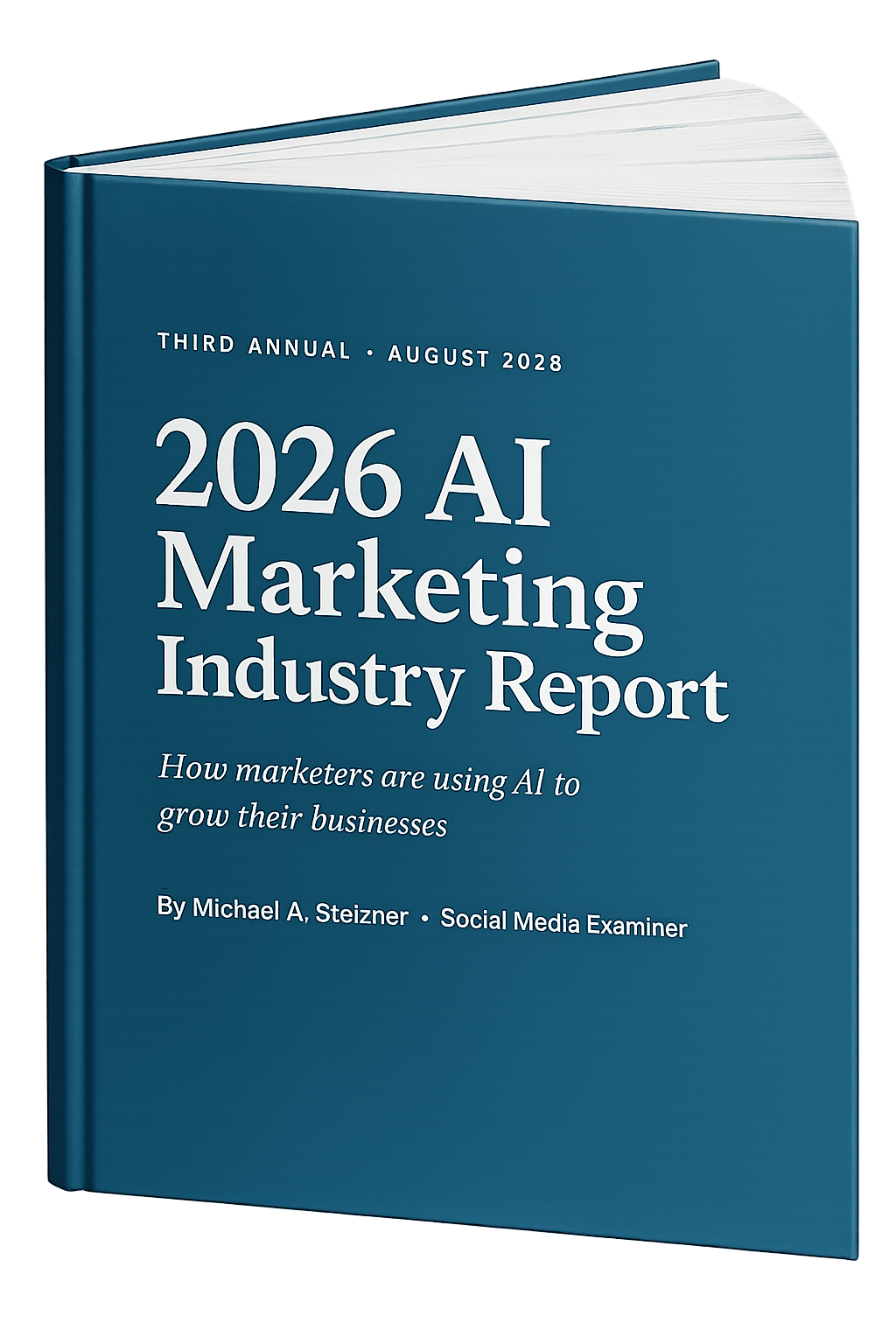
- The Autodidact Dilemma: Survey data from the AI Marketing Industry Report reveals that 85% of professionals learn AI entirely through independent experimentation. Only 7% receive formal company training, and more than half spend their own personal funds on specialized tools.
- The Training Discrepancy: While training a human employee to master a brand voice or complex operational workflow can take months of close mentorship, training an AI employee through iterative feedback cycles typically requires an upfront investment of 10 to 15 hours—yielding exponential dividends in speed and consistency thereafter.
- Operational Efficiency: Companies leveraging structured AI skill repositories report dramatic output multipliers, allowing small core teams to operate with the output capacity of organizations many times their size.
Official Responses and Industry Perspectives
Business leaders and operational strategists emphasize that the integration of AI employees is not about headcount reduction, but about resource reallocation.
According to executive feedback from organizations actively scaling with AI frameworks, the primary barrier to digital transformation is not technological capability, but institutional inertia. Companies that treat AI merely as a search engine or an ad-hoc drafting tool find themselves mired in repetitive manual loops. Conversely, enterprises that treat AI integration as a formal management challenge—complete with quarterly reviews, version-controlled skill databases, and department-owned knowledge repositories—are establishing dominant market advantages.
Industry thought leaders maintain that the future belongs to organizations that systematically document their institutional knowledge. As AI models grow increasingly sophisticated, the competitive edge shifts away from raw technical programming and toward clear human communication, strategic vision, and rigorous quality control.
Implications: The Future of Work and Organizational Structure
The mainstream adoption of AI employees carries profound implications for the modern enterprise:
- The Death of Messy Data: The era of disorganized Google Drives and unsearchable institutional knowledge is drawing to a close. Because AI employees require structured, accessible data to function, businesses are forced to codify their standard operating procedures, pricing strategies, and brand guidelines into clean, centralized repositories.
- Evolution of Middle Management: Management roles are shifting toward "AI coaching." Team leaders are increasingly evaluated on their ability to design, audit, and optimize automated workflows rather than merely managing human task execution.
- Redefining Job Descriptions: Hiring profiles are changing rapidly. Organizations no longer seek workers who excel at executing repetitive tactical deliverables; they seek strategic directors who know how to brief, supervise, and scale teams of AI employees to execute complex projects at unprecedented velocity.